
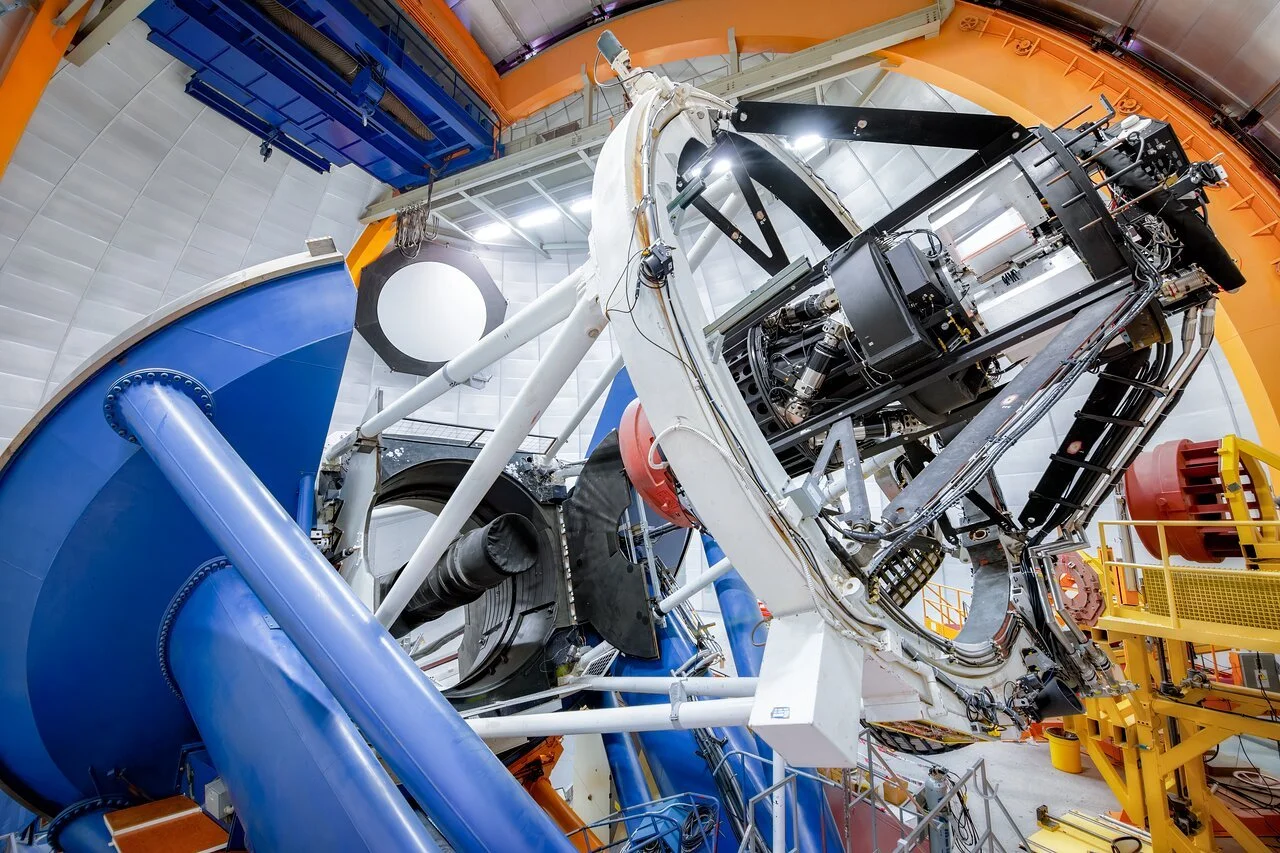
Tracing the Earliest Stars: A Guide to the DECam MAGIC Survey
The paper presents high-resolution observations of six extremely metal-poor stars selected with DECam MAGIC photometry, confirming the survey’s ability to identify ancient stellar fossils. One star, J0433−5548, is an ultra metal-poor, carbon-enhanced second-generation star likely enriched by a single Population III supernova. The stars’ chemical patterns and orbital motions link them to major Galactic structures, offering insights into the Milky Way’s early formation.
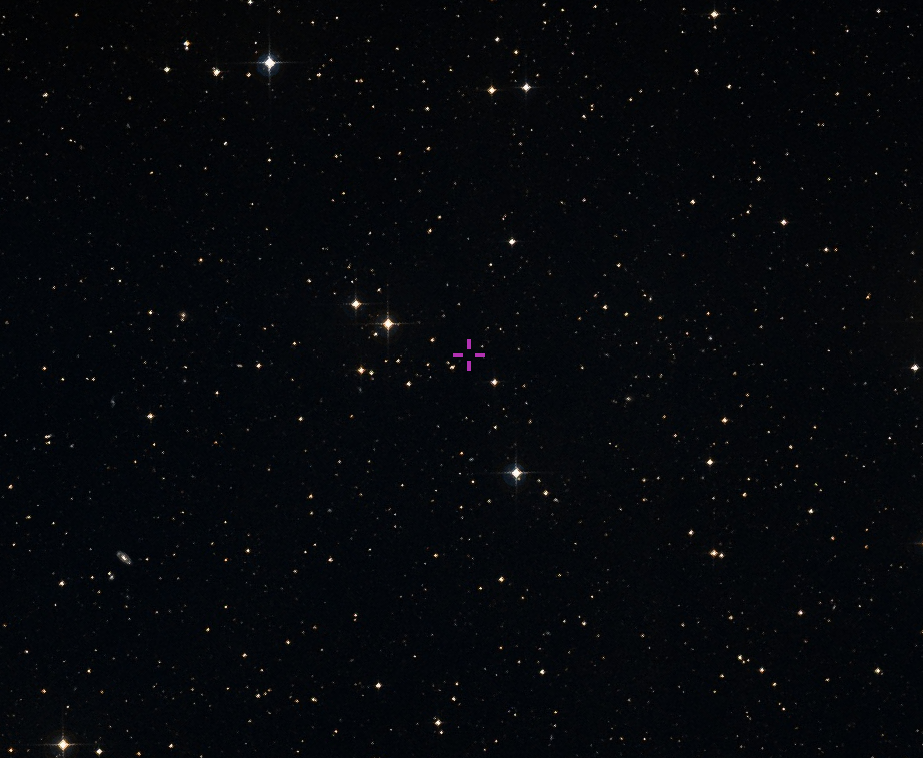
Crater II: A Ghostly Galaxy Losing Its Grip
Crater II is a faint Milky Way satellite that is clearly being torn apart by tidal forces. Using deep DECam imaging, Vivas et al. mapped 46 variable stars and uncovered long stellar tails stretching nearly 10° across the sky. These stars show a strong distance gradient, confirming that Cra II is losing mass as its stars are stripped away. The study strengthens the view that Cra II is in an advanced stage of tidal disruption.
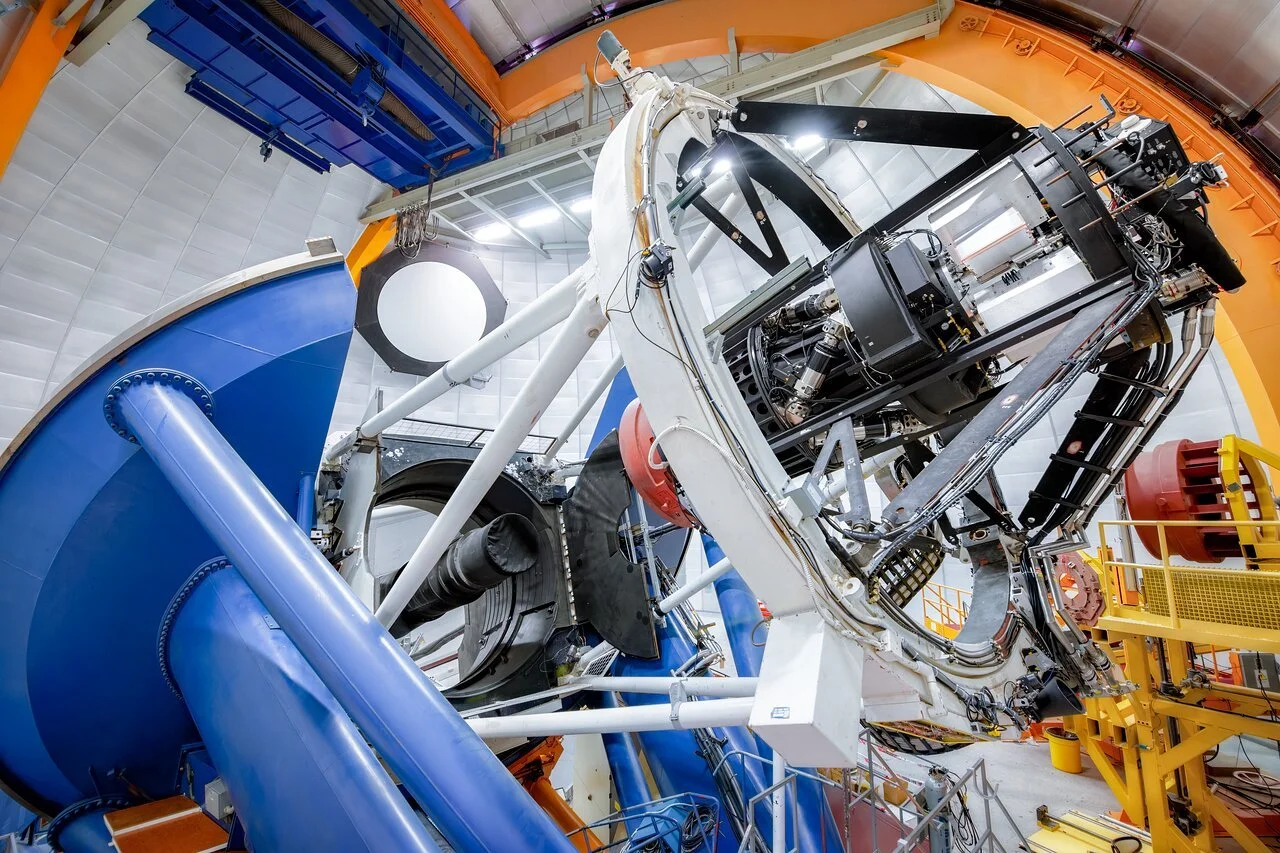
Ancient Relics in the Milky Way: The DECam MAGIC Survey Uncovers the Galaxy’s Most Metal-Poor Stars
Vinicius Placco and collaborators used the DECam MAGIC Survey to identify six extremely metal-poor stars in the distant Milky Way halo, including one ultra metal-poor star. Spectroscopic analysis confirmed their low metallicities and revealed one likely formed from a single early supernova. The study validates MAGIC’s photometric methods and shows how such stars trace the Galaxy’s earliest chemical enrichment and evolutionary history.
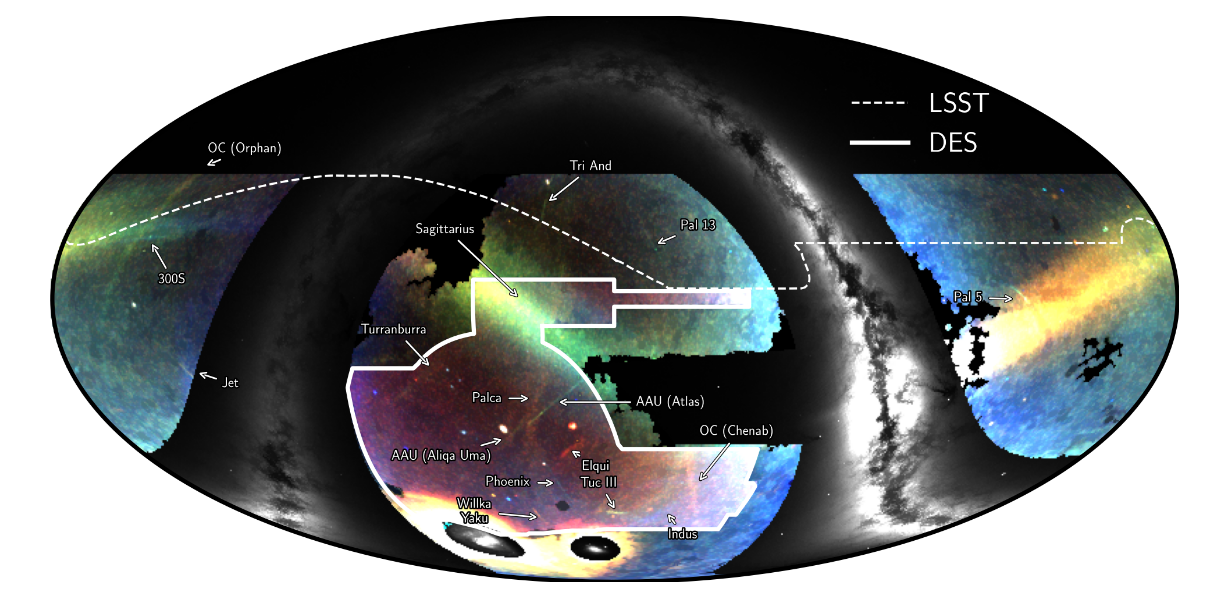
A New Map of Our Galactic Neighborhood: The DECam Field of Streams
Ferguson and Shipp present a new map of the Milky Way’s stellar halo using DECam data, revealing numerous stellar streams and substructures. By selecting old, metal-poor stars at various distances, they highlight how our galaxy was built from smaller systems. Their work sets the stage for even deeper surveys with the upcoming LSST.