
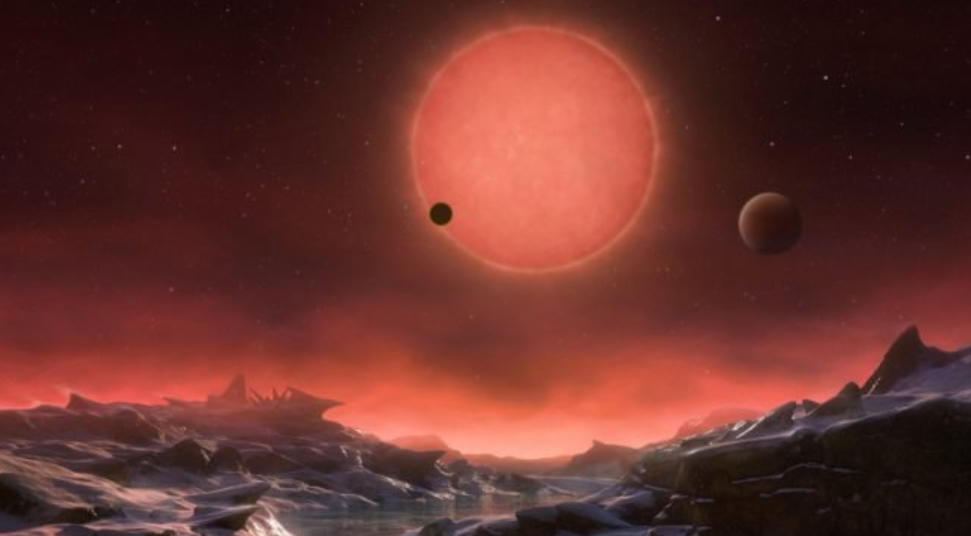
When Atmospheres Vanish, and Come Back: How Impacts Can Revive Air on Rocky Worlds Around Red Dwarfs
This paper shows that rocky exoplanet atmospheres around M-dwarfs may repeatedly collapse and reform rather than evolve smoothly. CO₂ can freeze onto the nightside as ice, protecting it from loss, and later be vaporised by moderate meteorite impacts. As a result, some planets may host detectable, but transient, atmospheres for much of their lifetimes.
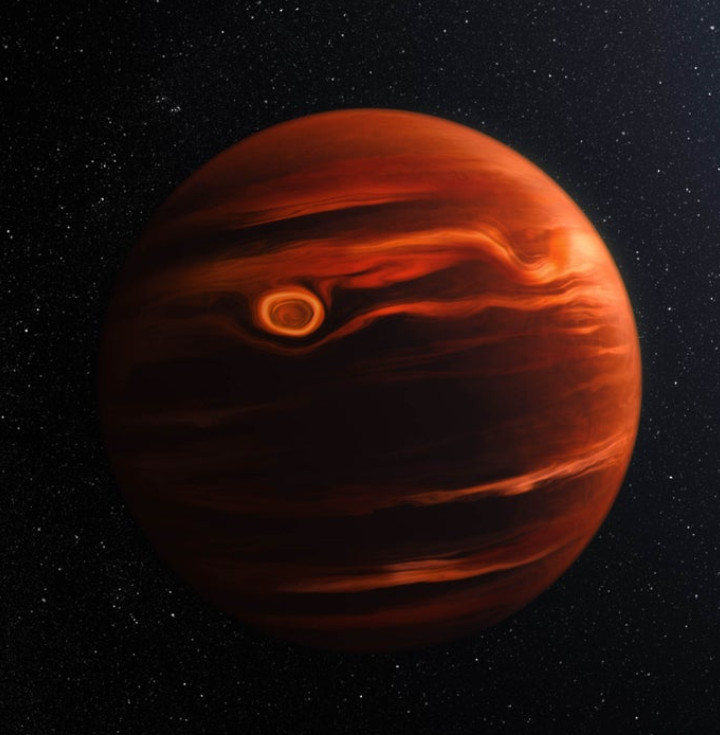
How Disc Conditions Shape Giant Planet Atmospheres
The paper investigates how different protoplanetary disc conditions affect the atmospheric composition of giant planets. Using simulations that track pebble drift, evaporation, and planetary migration, the authors find that most disc parameters have little influence on final atmospheric abundances. Instead, a planet’s composition is shaped mainly by where it forms and which evaporation fronts it crosses. This means atmospheric ratios like C/O, C/H, and O/H primarily trace formation location rather than disc details.
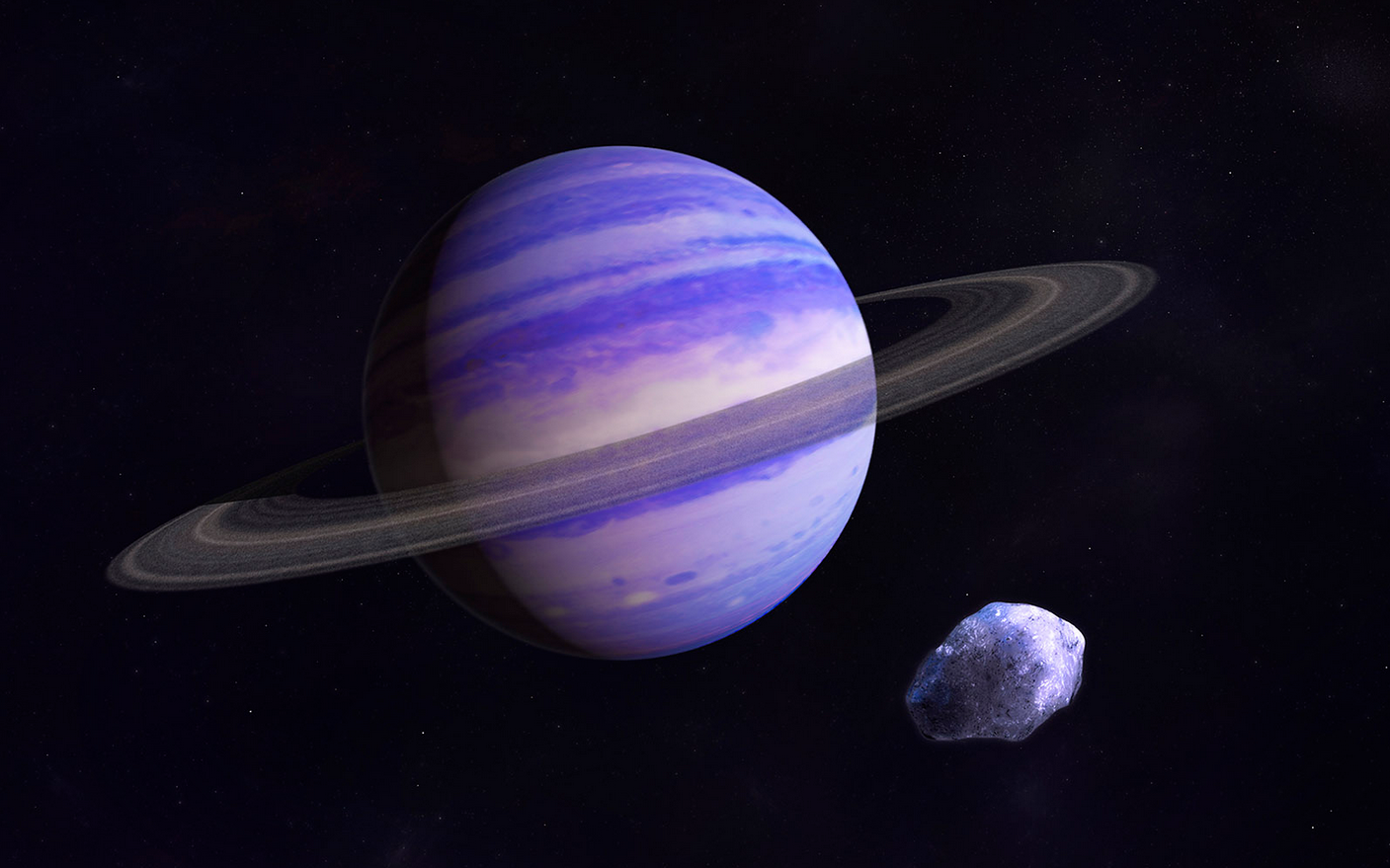
From Star Dust to Planets (and Back Again): Tracing Worlds Across a Lifetime
This white paper by Akke Corporaal examines how dust shapes planet formation and survival from a star’s birth to its late evolutionary stages. It highlights current limits in observing key dust-related processes and argues that next-generation infrared interferometry will be essential for resolving the tiny regions where planets form, migrate, and endure. The authors ultimately call for future facilities capable of mapping dusty environments at unprecedented resolution.
Flaring Stars and Fragile Worlds: Can Planets Around Red Dwarfs Be Habitable?
This white paper by Rebecca Szabó examines whether planets orbiting active, flaring M-dwarf stars can remain habitable. While these stars host many planets in the habitable zone, frequent high-energy flares may strip atmospheres or damage ozone layers, threatening life. The authors argue that large-scale, high-cadence observations are needed to determine whether stellar flares ultimately hinder or help planetary habitability.
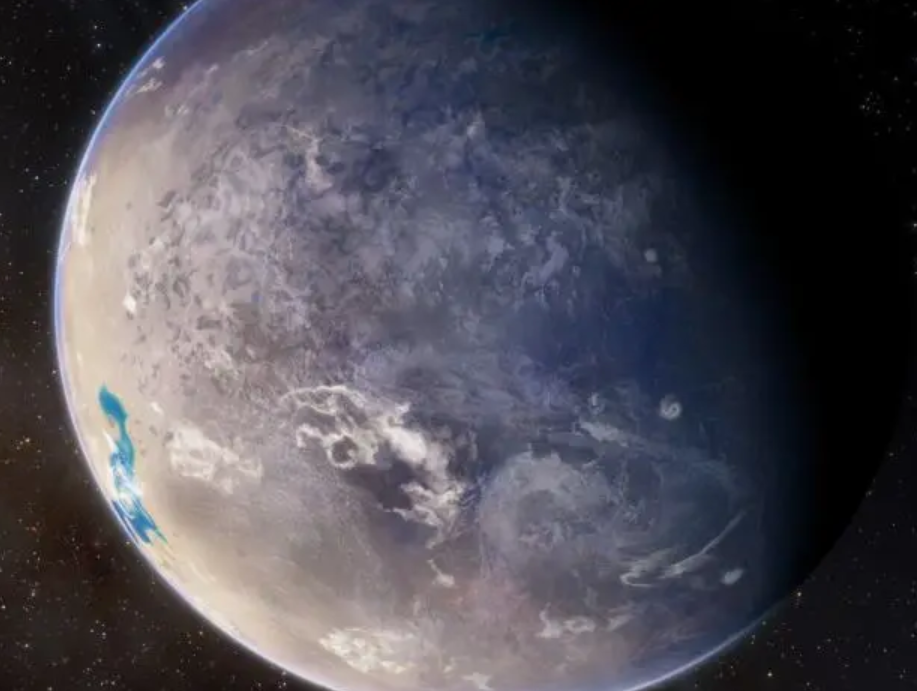
Heavy Atmospheres and Hidden Birthplaces: Tracing Where Giant Planets Form
This paper shows that many giant exoplanets are rich in heavy elements because they likely formed in the inner regions of their protoplanetary discs. There, inward-drifting pebbles evaporate and enrich the gas, which planets then accrete into their atmospheres. By matching simulations to observed planets, the authors link heavy element content and atmospheric composition to planetary birth locations.
JEWELS: Reading the Chemical Fingerprints of Planet-Hosting Stars
The JEWELS survey presents precise chemical abundances for 20 FGK stars observed in JWST Cycle 2, enabling consistent comparisons between stellar compositions and exoplanet atmospheres. Sun and collaborators identify wide chemical diversity, including carbon-enhanced and α-rich stars, which may shape planet interiors and atmospheric chemistry. This uniform stellar dataset forms a foundation for linking JWST atmospheric measurements to planetary formation pathways.
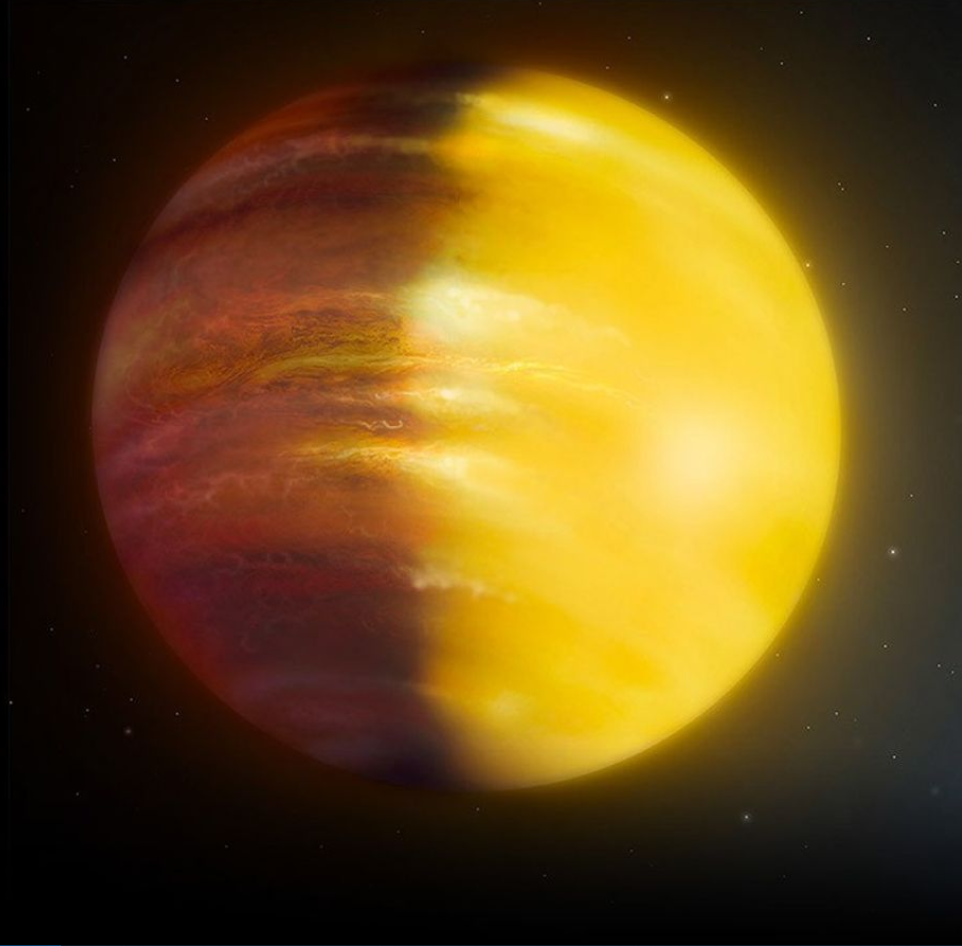
When Growing Giants Push Back, How Gas Accretion Drives Planets Outward
Ida and collaborators show that gas-accreting giant planets can migrate outward rather than inward, thanks to an asymmetry in gas flow around the planet created during accretion. This effect occurs only when the planet opens a moderate-depth gap in the disk, captured by the range (0.03 <= K' <= 50). The authors develop a semi-analytical formula describing this behavior and demonstrate that such outward migration helps explain why many gas giants are found beyond 1 au.
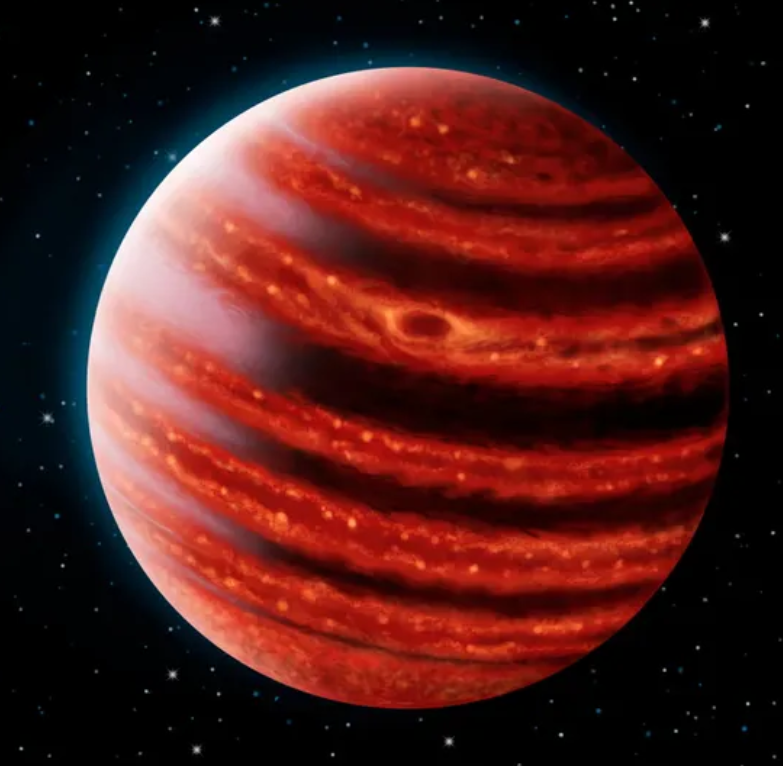
Born to Be Habitable: How the First Moments of Planet Formation Shape Worlds Like Ours
The paper argues that a planet’s ability to host life is shaped very early, during its formation in the protoplanetary disk. Farcy and collaborators highlight how bulk composition, volatile elements, core structure, and internal heat all arise from these initial conditions and later control atmospheres, magnetic fields, and surface environments. They conclude that comparative planetology, studying planets alongside their host stars, is essential for understanding how habitable worlds emerge.
A Fossil Star Without Planets? A High-Precision Look at BD+44°493
BD+44°493 is an ancient, extremely metal-poor star whose chemistry preserves the imprint of a single early-Universe supernova. Using new high-precision NEID spectra, the authors refined its elemental abundances, age, and Galactic orbit, confirming it as a second-generation star about 12–13 billion years old. Ultra-precise radial velocities show no evidence of planets and rule out companions more massive than ~2 Jupiter masses on short orbits.
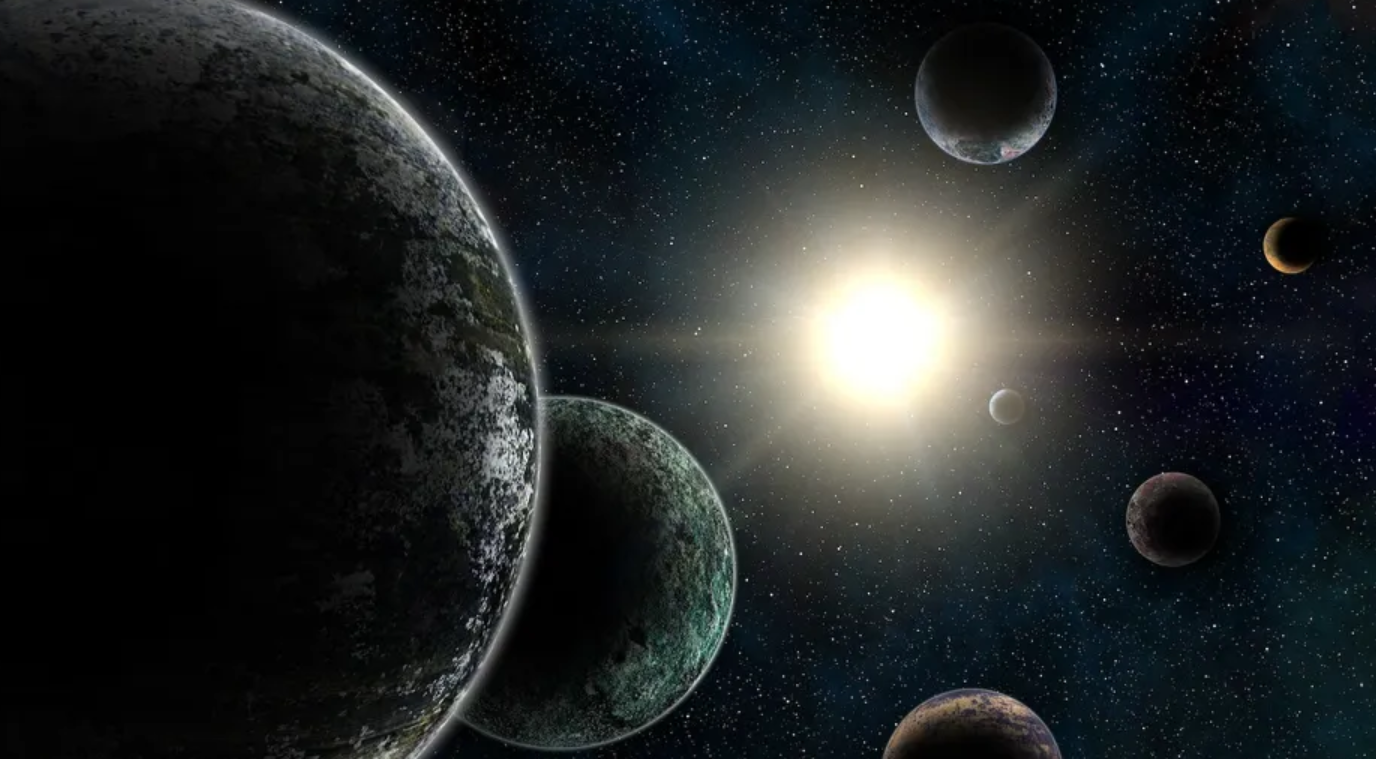
Milky Way Worlds: A High-Resolution Look at Our Galaxy’s Exoplanets
The paper combines detailed Milky Way simulations with planet-formation models to predict exoplanet populations across the Galaxy. In the simulated solar neighbourhood, most planets are Earth-like or super-Earth/Neptunes, with about a quarter in the habitable zone. A forward model of the Kepler field reproduces many observed trends but overpredicts planets around hotter stars. Across different Galactic regions and simulated galaxies, planet-type proportions remain broadly consistent.

Where Planets Become Brown Dwarfs: Tracing a Hidden Boundary in the Metal Content of Stars
Giacalone et al. analyze companions between 1–50 au and find that host-star metallicities split into two groups at a transition mass of about 27 MJup. Lower-mass companions orbit metal-rich stars, consistent with bottom-up planet formation, while higher-mass companions orbit stars with near-solar metallicity, indicating star-like formation. Orbital eccentricities also differ, supporting two distinct formation pathways.
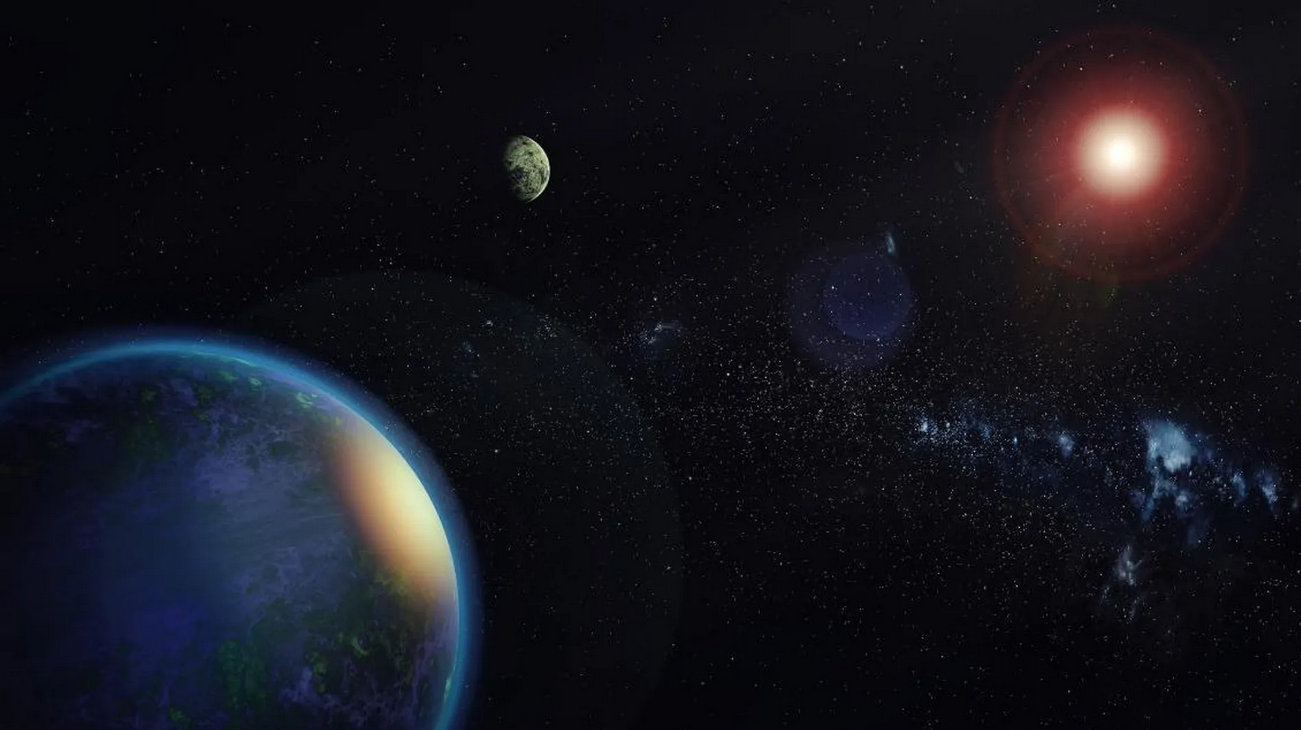
Are We There Yet? Understanding How Often Earth-like Worlds Exist Around Other Stars
Rachel Fernandes and colleagues review the difficulty of determining η⊕, the fraction of Sun-like stars hosting Earth-like planets in the habitable zone. Using Kepler data, they find estimates vary widely due to differing definitions, limited detections, and hidden factors like binary stars, planet multiplicity, and stellar chemistry. They conclude that future missions and improved data will be essential to refine η⊕ and guide the search for life.
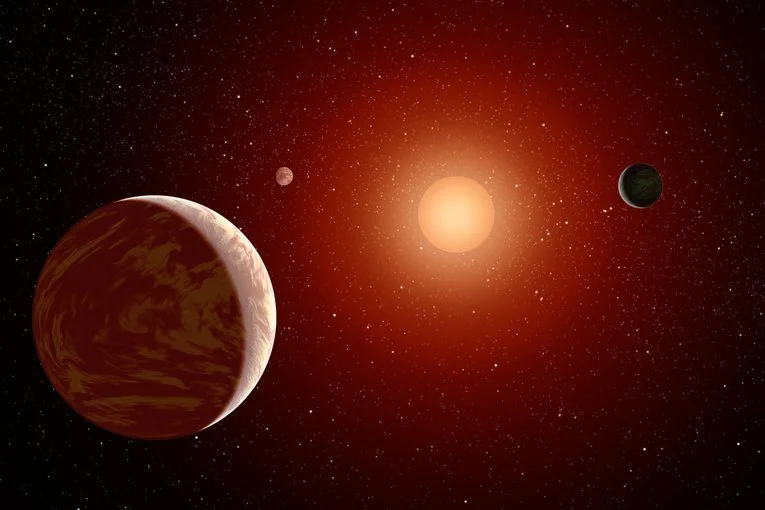
When Impacts Bring Back the Air: How Collisions Could Revive Atmospheres on M-Dwarf Worlds
Prune C. August and colleagues show that rocky planets orbiting M-dwarf stars may repeatedly lose and regain their atmospheres. When gases like CO₂ freeze on the nightside, meteorite impacts can re-vaporize them, temporarily restoring an atmosphere. Their models predict that such planets could spend up to 80% of their lifetimes with these transient atmospheres, reshaping how astronomers interpret atmospheric “non-detections.”
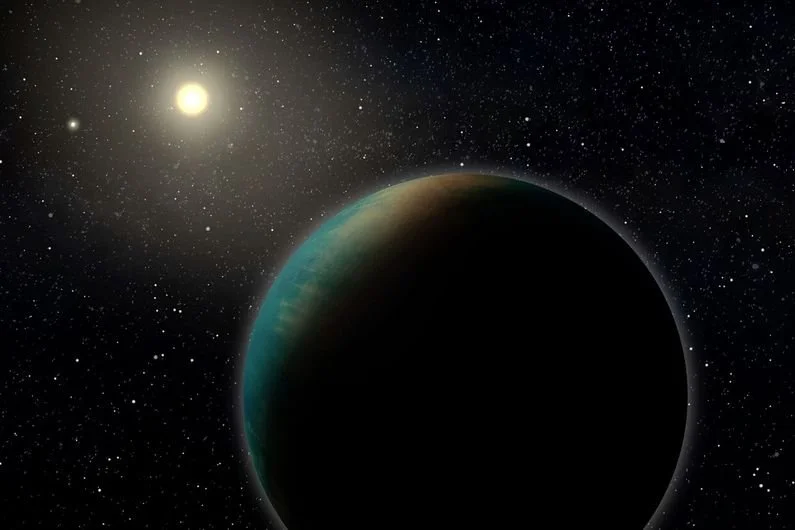
Tracing Planet Formation Through Stellar Fingerprints: A Spectroscopic Look at C/O Ratios in Directly Imaged Exoplanet Hosts
Baburaj et al. conducted a high-resolution spectroscopic survey of five stars hosting directly imaged exoplanets to measure their elemental abundances. They found solar-like C/O ratios for HR 2562, AB Pic, and YSES 1, but significantly sub-solar ratios for PZ Tel and β Pictoris. These differences suggest diverse formation environments and highlight how stellar chemistry can trace planet formation processes.

Tracing the Chemistry of Exoplanet Hosts: What K2 Stars Reveal About Planets and Their Parent Stars
Loaiza-Tacuri et al. analyzed 301 K2 exoplanet-hosting stars using high-resolution spectra to measure stellar temperatures, metallicities, magnesium abundances, and activity levels. They confirmed the planetary radius gap near 1.9 R⊕, found that larger planets orbit more metal-rich stars, and showed stellar activity decreases with planet size. Most hosts belong to the Galactic thin disk, linking stellar chemistry to planetary formation.
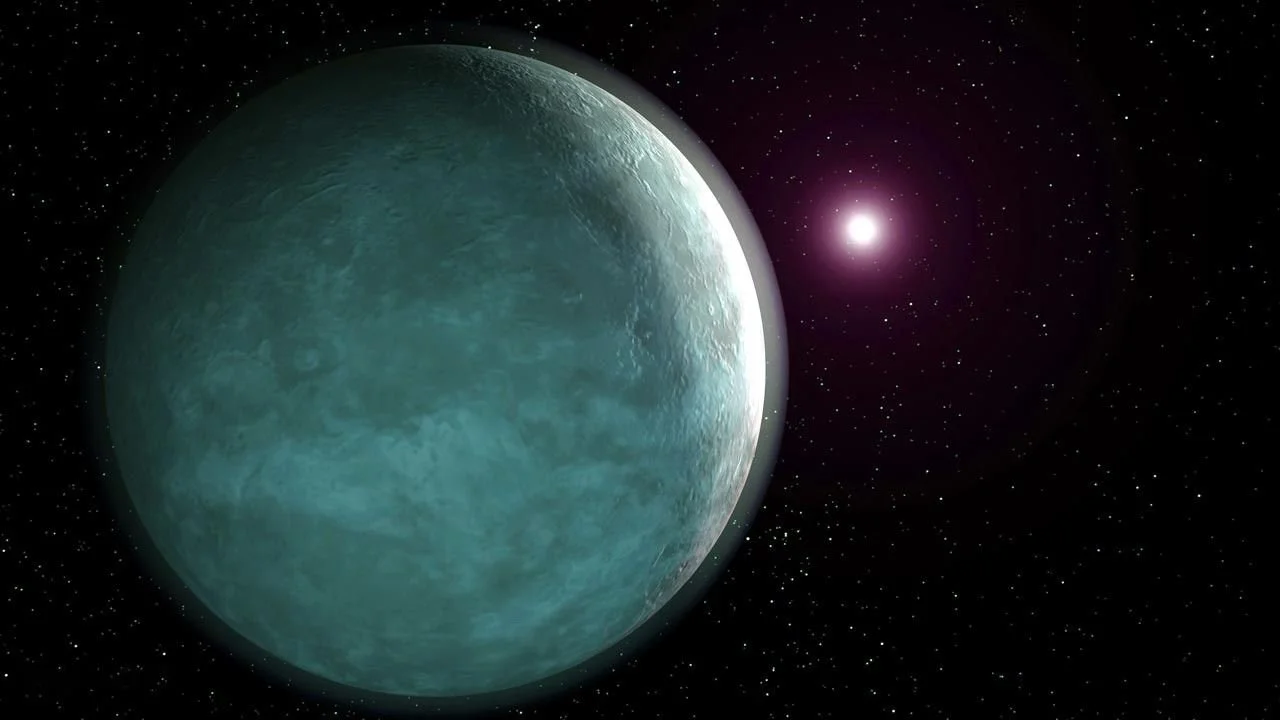
A Planet of Fire and Gas: How Magma Oceans May Explain TOI-270 d’s Mysterious Atmosphere
Matthew C. Nixon and collaborators show that magma-ocean interactions between TOI-270 d’s molten interior and gaseous atmosphere can naturally explain JWST’s detection of H₂O, CH₄, and CO₂ without invoking icy material. Their integrated models link interior chemistry to observable spectra, reproducing the planet’s high metallicity and low C/O ratio. This work suggests that sub-Neptunes’ atmospheres may be strongly shaped by deep, ongoing magma processes.

Peering Into TRAPPIST-1e: JWST’s First Glimpses of a Habitable-Zone Rocky World
Espinoza and collaborators used JWST to observe four transits of TRAPPIST-1 e, a rocky planet in the habitable zone. They found that stellar activity strongly contaminates the data but developed new statistical methods to handle it. Their results rule out a thick hydrogen-rich atmosphere, suggesting TRAPPIST-1 e, if it has an atmosphere, likely hosts heavier gases such as carbon dioxide.
TRAPPIST-1 d: Searching for Signs of Air on a Nearby Earth-Sized World
Astronomers used JWST to study TRAPPIST-1 d, an Earth-sized planet near the habitable zone of its star. The data revealed a flat transmission spectrum, ruling out thick atmospheres of hydrogen, methane, water vapor, or carbon dioxide. This suggests TRAPPIST-1 d is either airless, has only a very thin atmosphere, or is shrouded by high-altitude clouds, offering key insights into how rocky planets around small stars evolve.
Tracing the Heavy Elements: How Neutron-Capture Chemistry Connects Stars and Planets
Sharma et al. studied 160 planet-hosting stars, measuring nine neutron-capture elements to explore links between stellar chemistry and planet formation. Most abundances match normal Galactic evolution, but zirconium, lanthanum, and cerium are often enhanced. In giant stars, several elements correlate with higher planet masses. Younger, metal-rich systems tend to be richer in refractory elements, hinting at possible chemical fingerprints of planet formation.
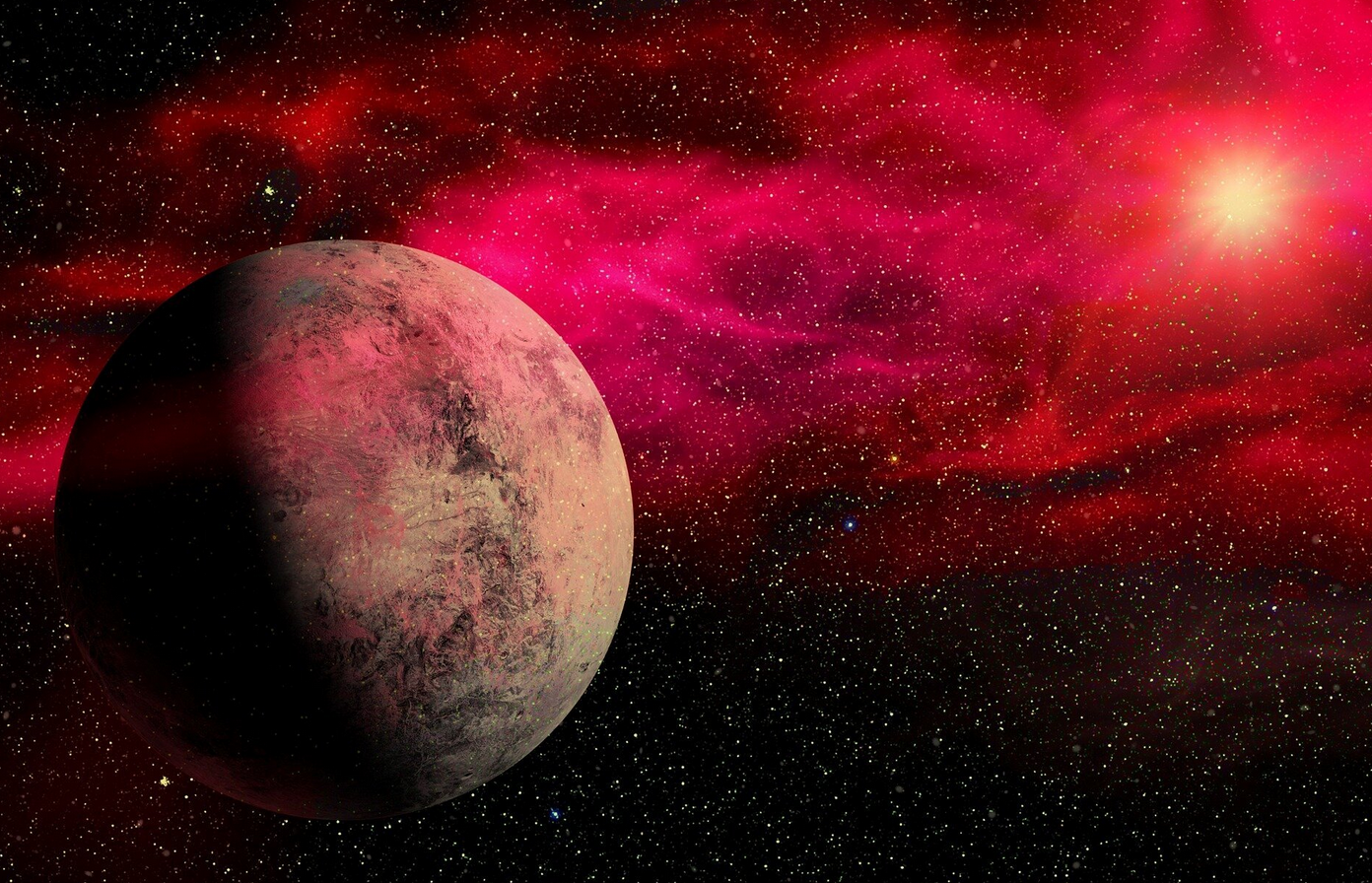
Hunting for Air: Testing the Cosmic Shoreline Around M Stars with JWST
The paper by Jegug Ih and collaborators uses simulations and statistical modeling to determine whether rocky planets around M stars have atmospheres. By framing target selection as an optimization problem, they test different observation strategies with JWST. Results show that a “wide and shallow” survey can efficiently limit atmospheric occurrence rates and, if a Cosmic Shoreline exists, detect it within ~500 hours.