
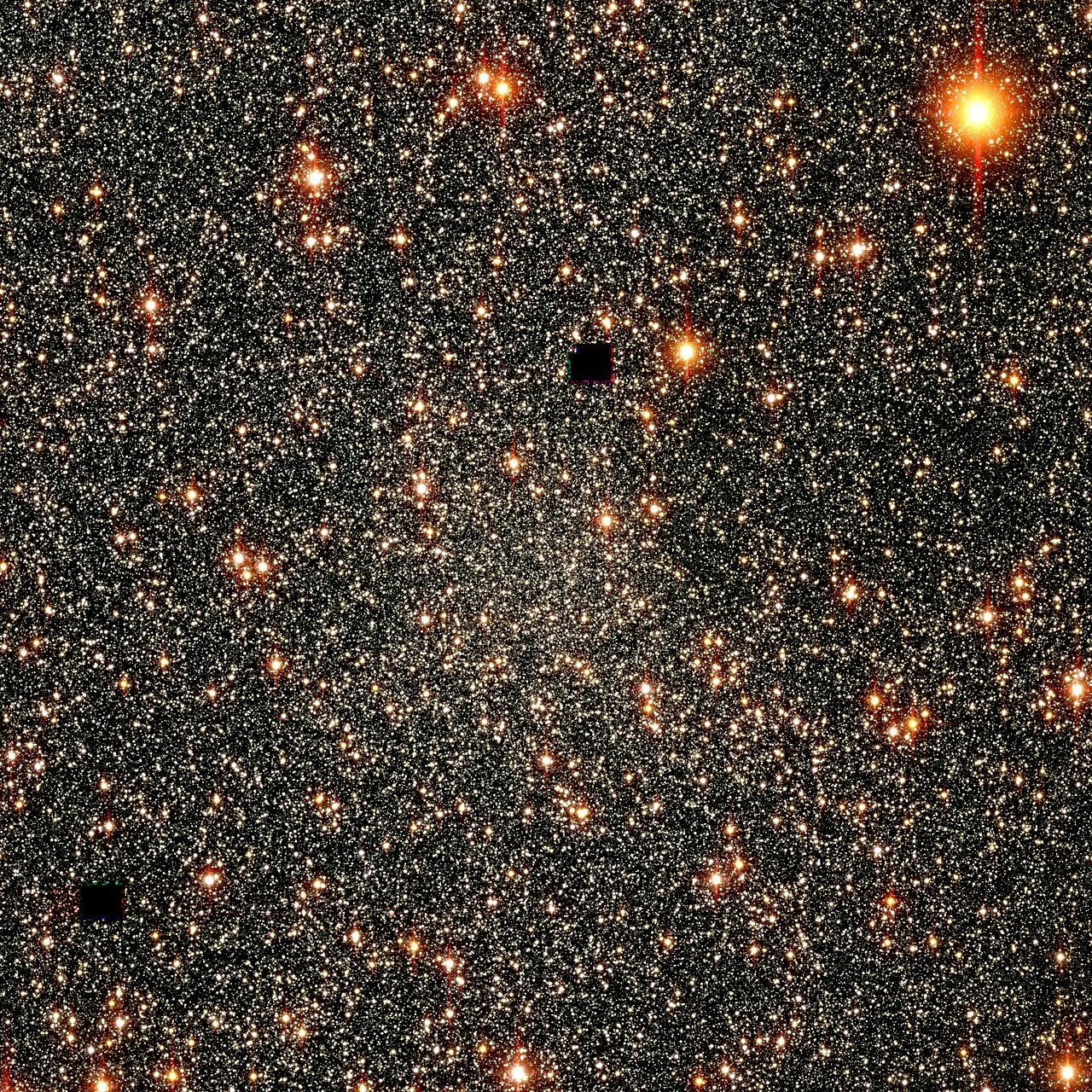
Tracing Thamnos: Chemical Clues to a Very Metal-Poor Galactic Immigrant
Xie et al. investigate two retrograde stellar groups, Rg8 and Rg9, using high-resolution spectroscopy and find them chemically identical across all measured elements. Their shared very metal-poor population and lack of an α-knee indicate origin in a low-mass dwarf galaxy. The groups strongly overlap with the known Thamnos substructure, suggesting all three trace the same ancient accretion event in the Milky Way’s halo.
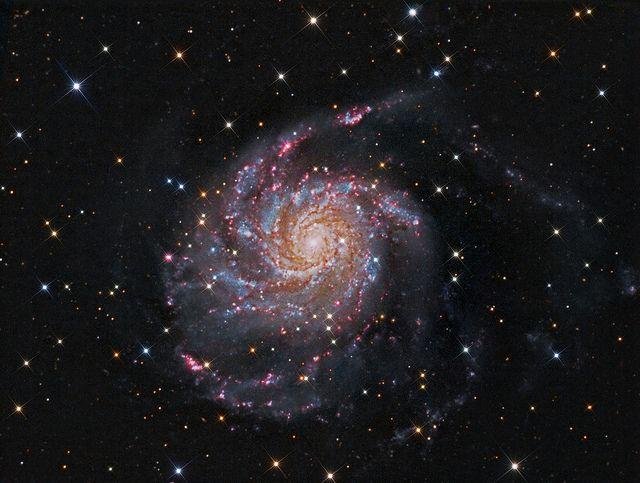
Measuring Turbulence: Key Quantities Behind the Driving Parameter
This paper studies how turbulence in a simulated Milky Way–like galaxy evolves and influences star formation. By tracking the turbulence driving parameter b, the authors find that compressive turbulence (high b) tends to occur about 10 Myr before increases in star formation, while supernova feedback later boosts turbulence and reduces b. Overall, turbulence cycles between compressive and mixed modes, tightly linked to the timing of star formation events.
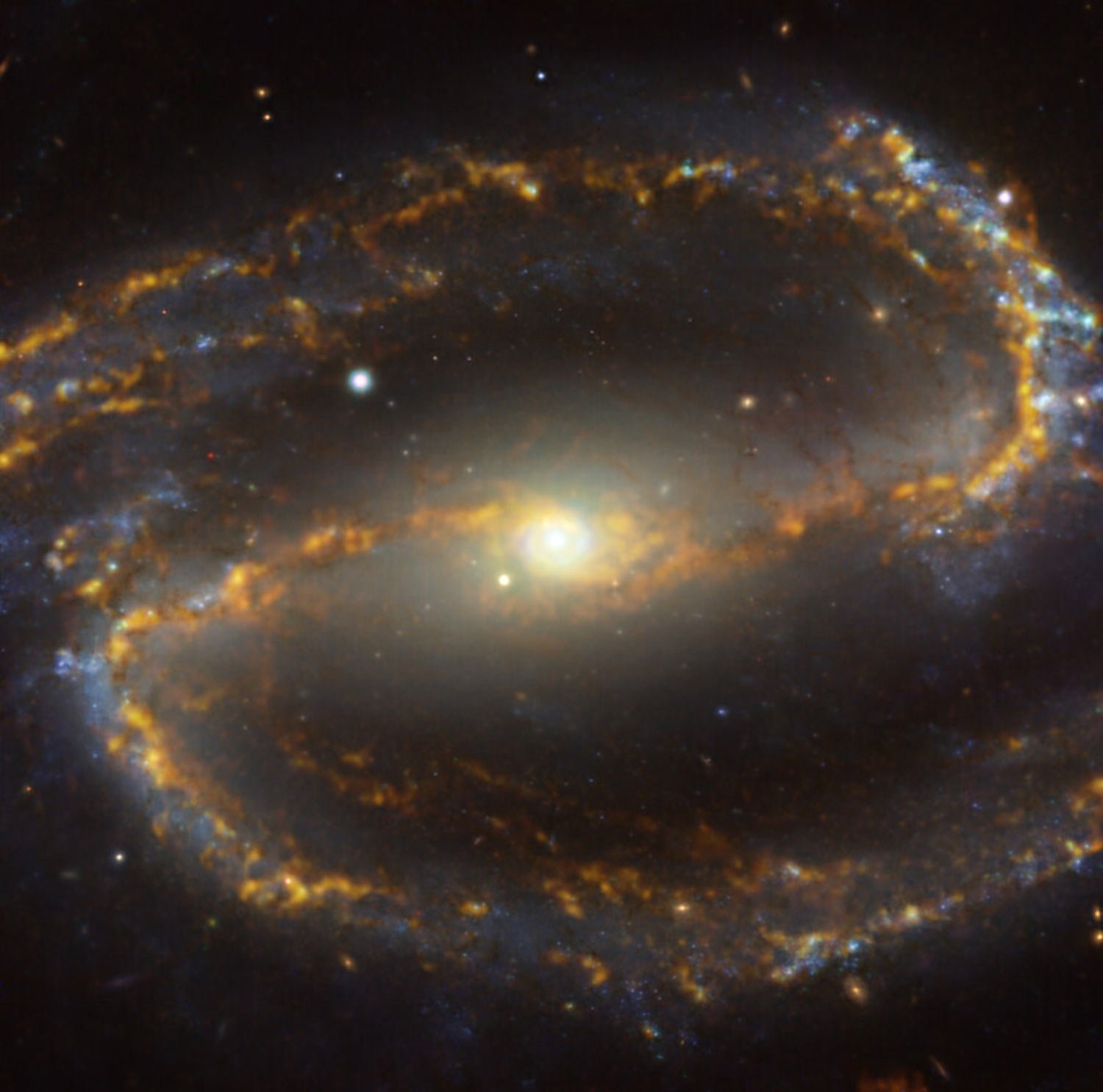
When Hot Disks Meet Spinning Halos: How Bars Can Still Form
Kataria’s study shows that even a kinematically hot and thick galactic disk, normally stable against bar formation, can develop a bar if it sits inside a rapidly spinning dark matter halo. Simulations reveal that halo spin greatly enhances angular momentum transfer, by a factor of eight, triggering bar growth that classical stability criteria fail to predict. This mechanism may explain why JWST observes barred galaxies in the early, turbulent universe.
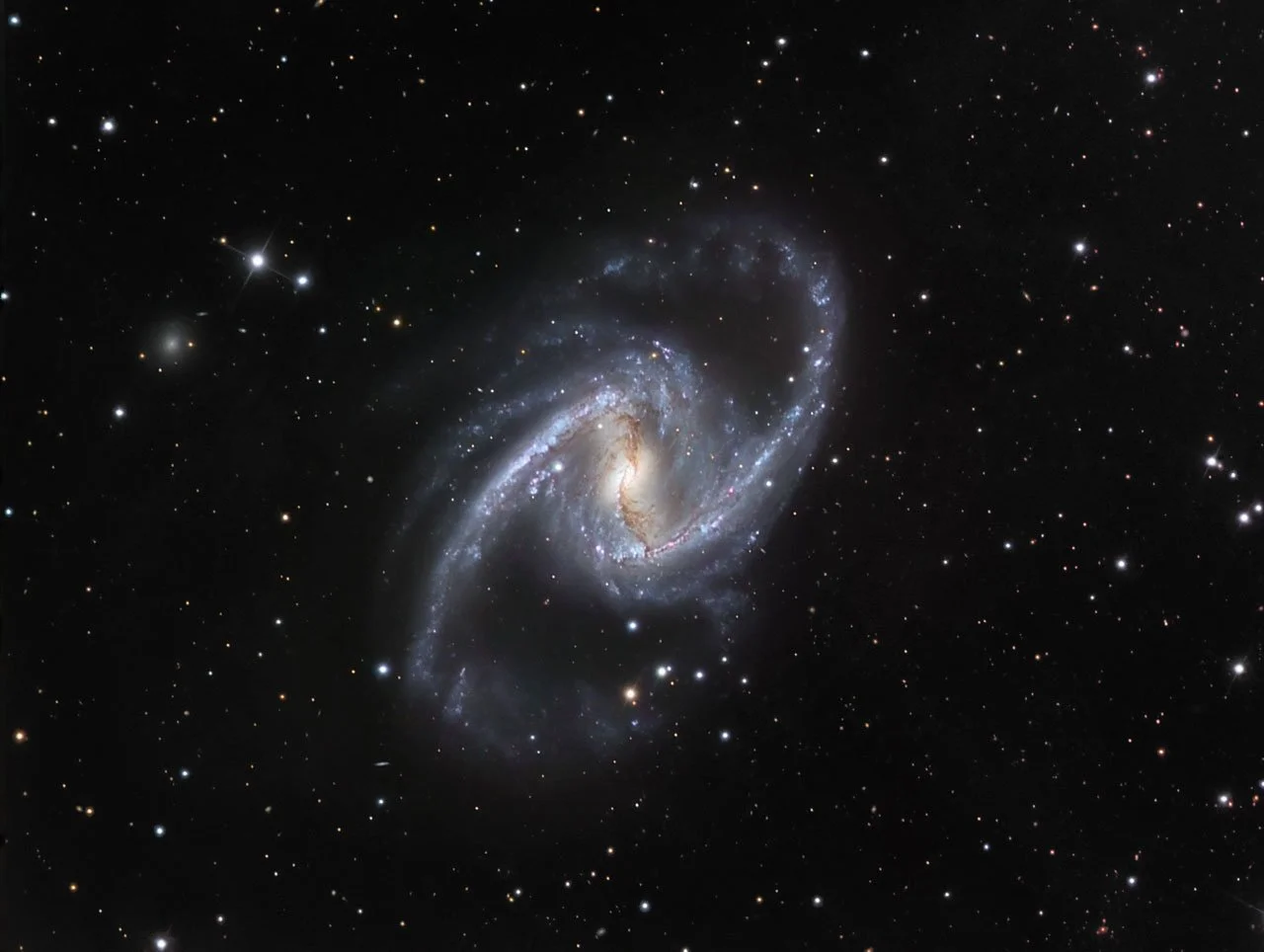
Bars, Spins, and Neighbors: What Shapes the Formation of Galactic Bars?
This study uses MaNGA observations to investigate why some disc galaxies host stellar bars. It shows that bars form mainly due to internal conditions, especially high central stellar mass dominance and low stellar angular momentum. Environmental interactions play a secondary role, sometimes triggering bars in galaxies already close to instability.
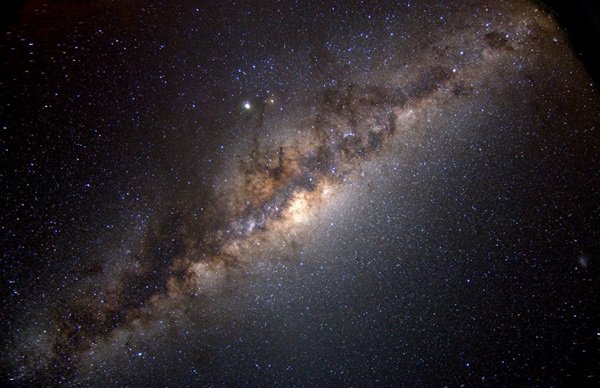
Building the Milky Way: How Gas, Chemistry, and New Telescopes Reveal Our Galaxy’s Hidden Structure
The paper reviews how gas in the Milky Way gathers and changes chemically to form stars, using (sub-)millimeter spectral lines to trace physical conditions from giant molecular clouds down to star-forming cores. It highlights limits of current surveys and argues that new facilities and layered Galactic Plane surveys are essential to fully understand mass assembly, star formation, and chemical complexity in our Galaxy
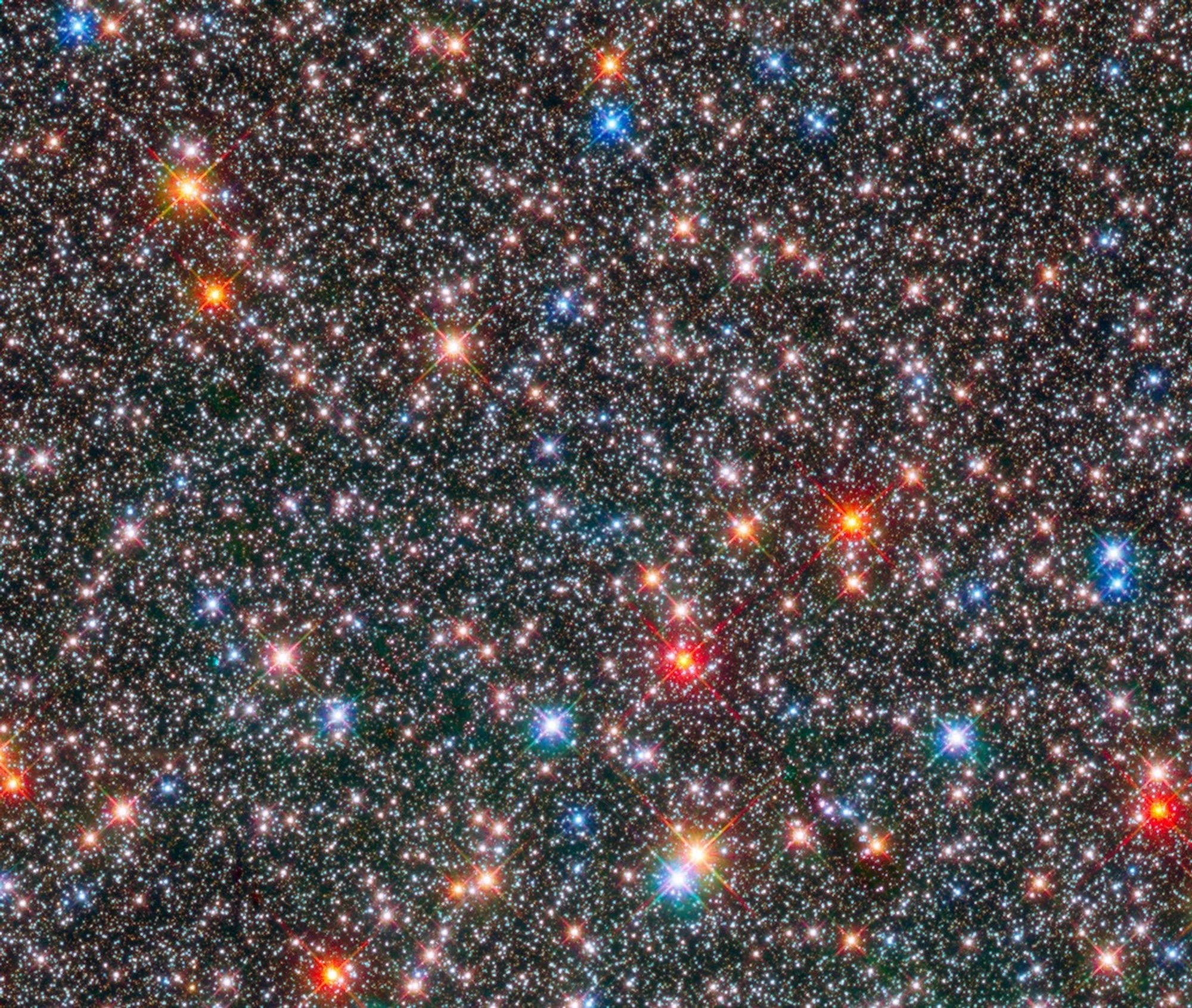
Revisiting the Two-Infall Model: How the Milky Way’s Bulge Formed in Two Acts
Miller et al. (2025) use over 30,000 chemical evolution models and machine learning to show that the Milky Way’s bulge formed in two major stages, a rapid early starburst followed by a slower, smaller second infall about 5 billion years later. This two-infall model explains the bulge’s bimodal metallicity and supports a composite origin involving both classical collapse and later bar-driven evolution.

A Patchy Galaxy: Unraveling the Flocculent Structure of the Milky Way’s Inner Disk
Balser and Burton use modern hydrogen (H I) data from the HI4PI survey to reexamine the Milky Way’s inner structure. They find no evidence for the clear spiral arms expected in a Grand-design galaxy. Instead, the inner disk shows a disordered, patchy distribution of gas, suggesting that the Milky Way is a flocculent spiral with irregular, loosely connected features rather than majestic, continuous arms.
When Metals Shape the Stars: How Chemical Yields Define Galactic Identities
Jason L. Sanders presents analytic models showing how metallicity-dependent stellar yields explain differences between galactic populations. By treating metal-dependent production as a built-in “delay time,” the models reveal why elements like aluminum trace star formation efficiency and outflows. Comparing predictions with APOGEE data, Sanders demonstrates that such yields naturally separate in-situ and accreted stars, offering a clear, mathematical framework for galactic chemical evolution.

Relics of the First Galactic Core: How the Milky Way’s Oldest Stars Reveal Its Fiery Beginnings
Sun et al. map over five million metal-poor stars to uncover the Milky Way’s earliest structure. Using both observations and simulations, they find that the Galaxy’s oldest stars likely formed during high-redshift gas “compaction” bursts over 12 billion years ago. These events created a dense, non-rotating core, the proto-Galaxy, that later evolved into the Milky Way’s central bulge and thick disk.
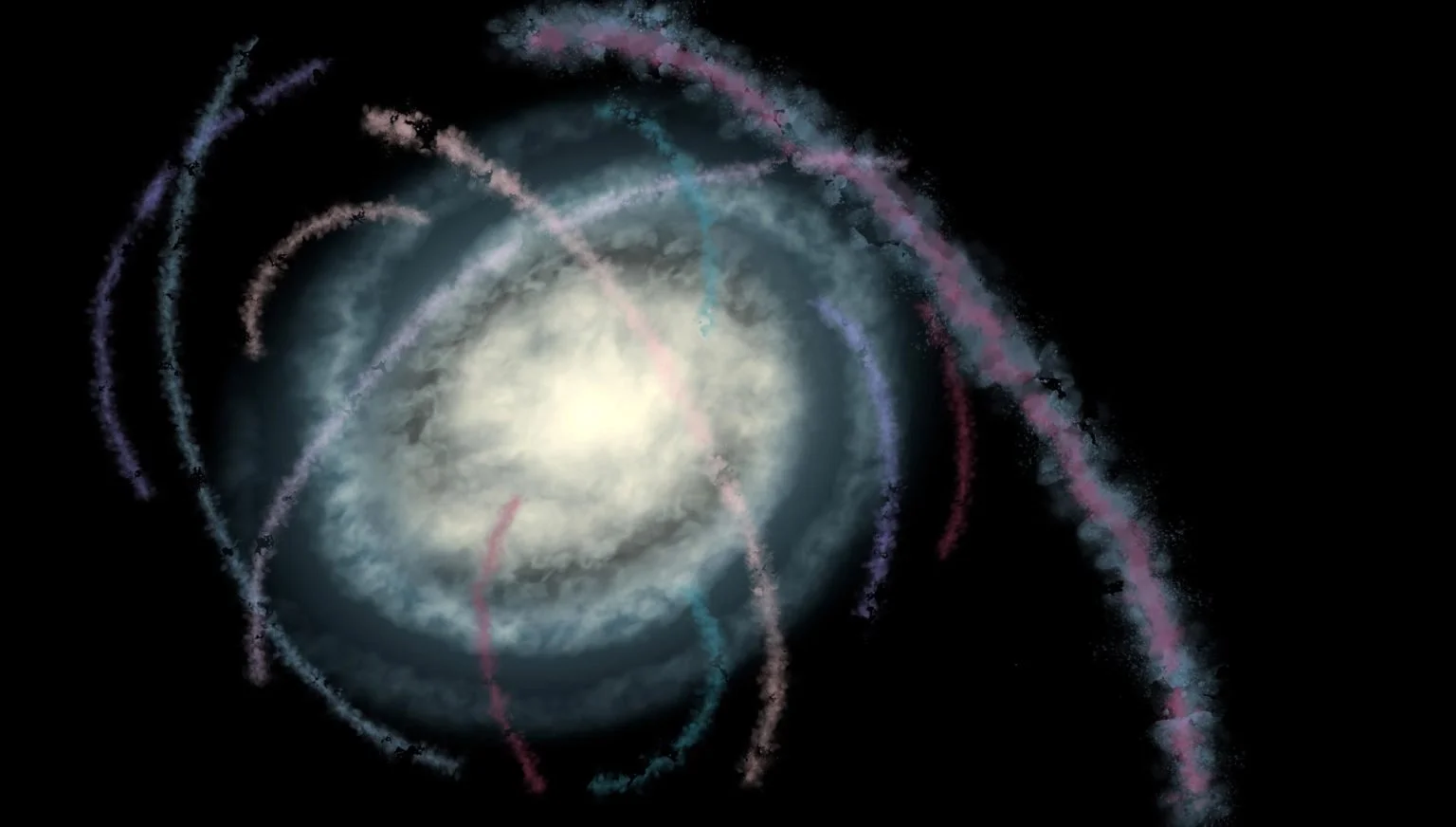
Uncovering Hidden Galactic Streams with Metallicity Fingerprints
The study by Kim et al. introduces a new way to identify Milky Way halo substructures by combining metallicity distribution functions with orbital data. They find four main retrograde groups (LRS 1–4) and uncover a new one, LRS 2B, highlighting the galaxy’s complex merger history. Their method shows how chemistry and dynamics together can reveal hidden stellar streams and their origins.
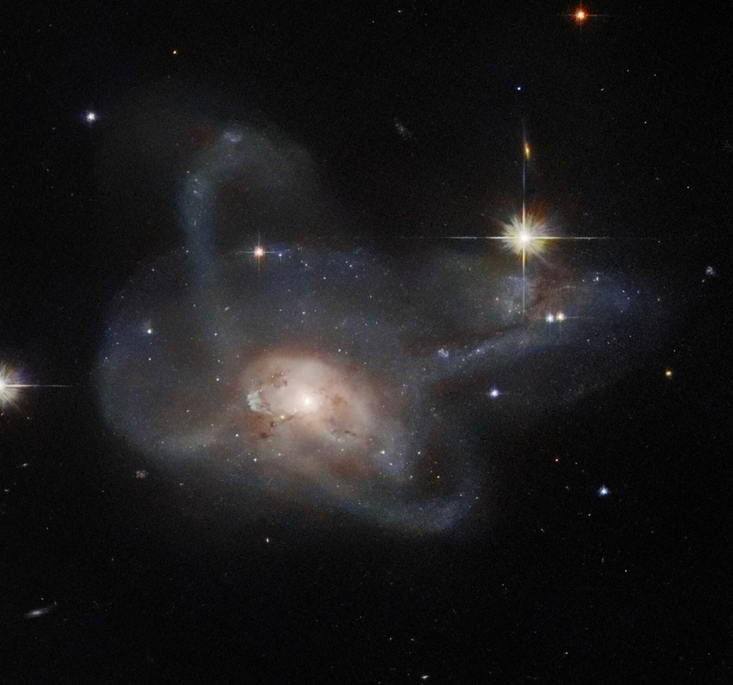
Survivors and Zombies: How the Milky Way Built Its Satellite Family
Pathak and collaborators use high-resolution simulations to study why some dwarf galaxies around the Milky Way survive while others are destroyed. They find that survival depends on mass, time of infall, and orbit: massive satellites usually disrupt before quenching, while tiny ultra-faint dwarfs quench early but endure. Disrupted galaxies often kept forming stars until the moment of destruction, helping to explain the mix of surviving satellites and stellar debris in the Milky Way halo.
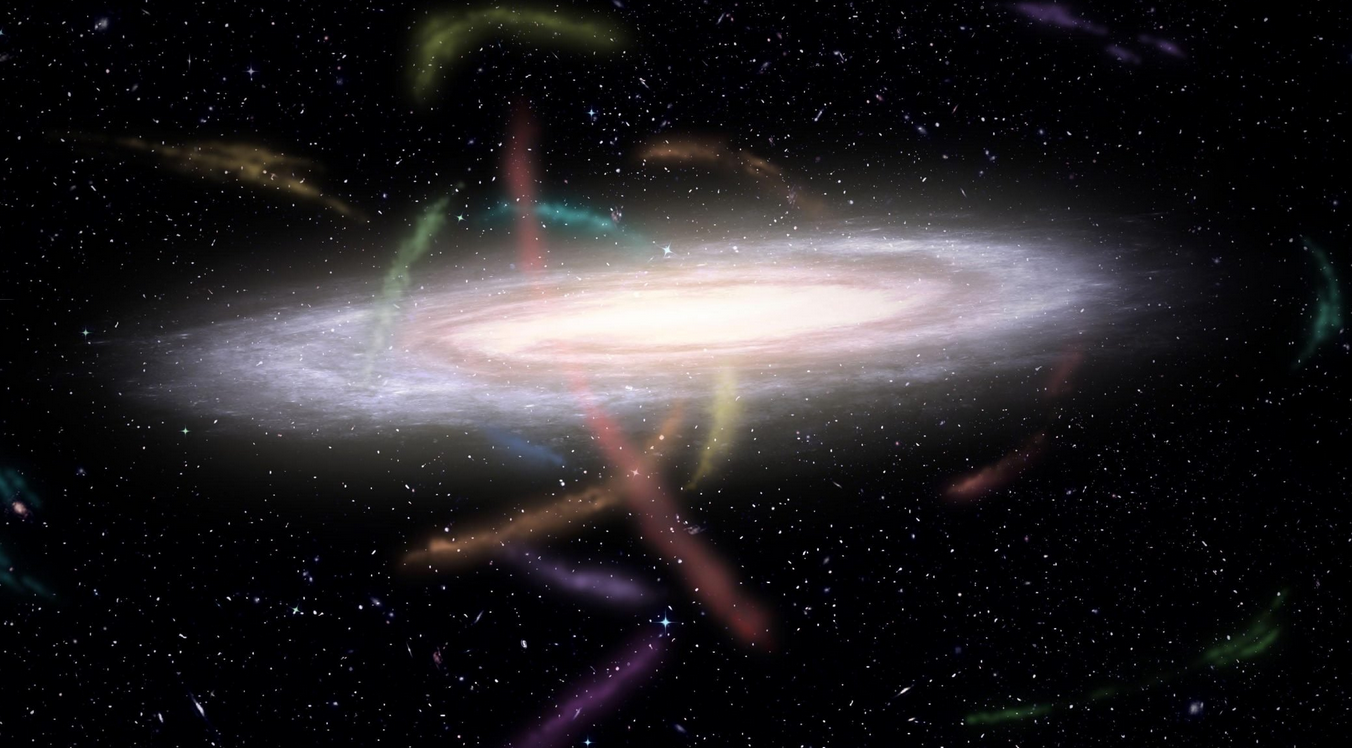
Tracing the Galactic Past: How Precession Shapes the Milky Way’s Stellar Streams
Elena Asencio and collaborators studied 91 Milky Way stellar streams to see if their orbits align with the Vast Polar Structure (VPOS). They found no strong alignment overall, but more distant streams showed greater clustering, likely because precession disrupts inner orbits over time. Simulations of a past MW–Andromeda fly-by predict such patterns, suggesting a common origin could be confirmed by finding more distant streams beyond ~150 kpc.
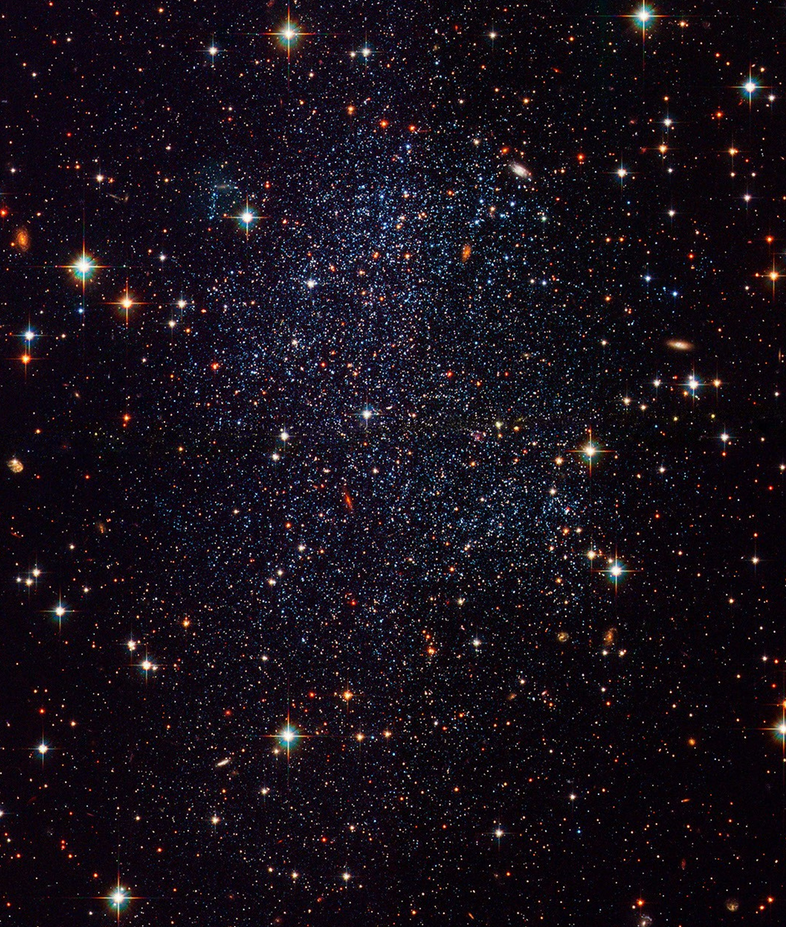
Galactic Encounters: What TNG50 Reveals About the Milky Way’s Dance with Sagittarius
Using the TNG50 simulation, researchers studied galaxy interactions similar to that between the Milky Way and Sagittarius. They found that such encounters rarely disturb the host galaxy’s vertical stellar motions or trigger star formation, unless the galaxy was already unusually cold or inactive. Most Milky Way-like discs were already perturbed, raising questions about how common this disequilibrium is in the universe.
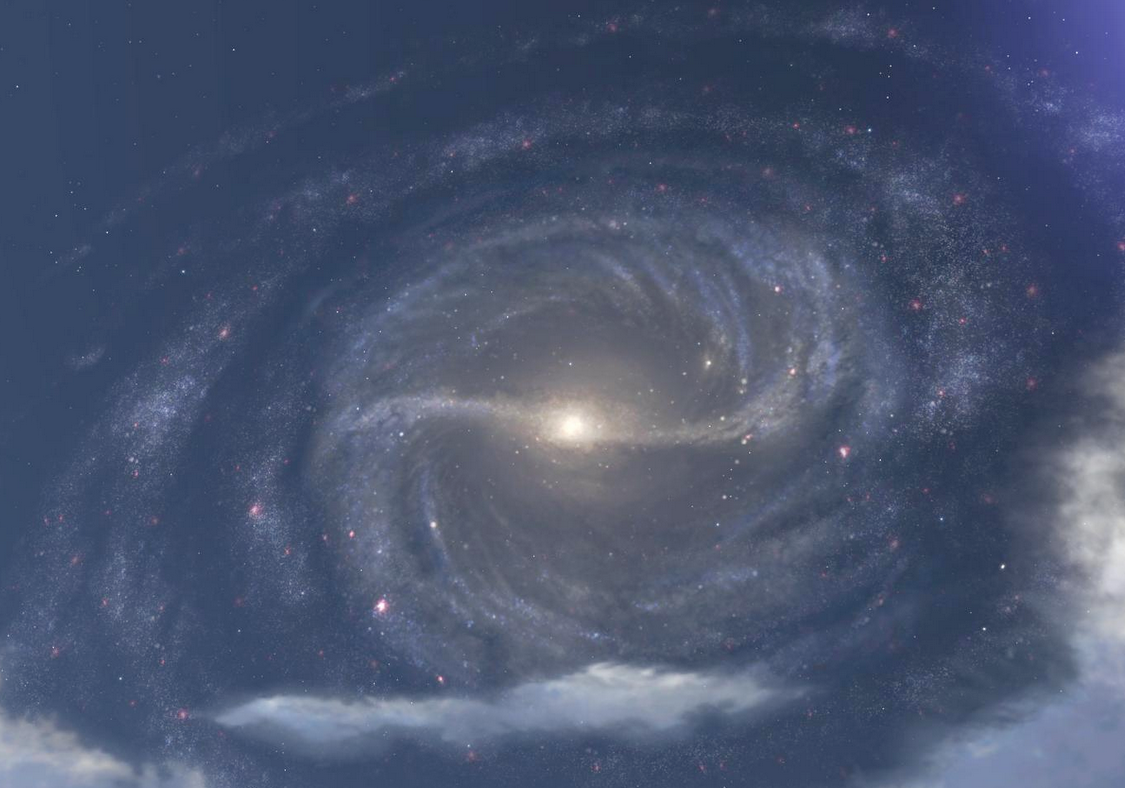
How Did the Milky Way’s Halo Form? Designing the HALO7D-X Survey
The paper presents the HALO7D-X survey, designed to study the Milky Way’s stellar halo by combining Hubble, Gaia, and Keck data. Using simulations, the authors show the survey can distinguish whether the halo formed through many small early mergers or a few large later ones. HALO7D-X will reveal how the Galaxy’s halo assembled over time.
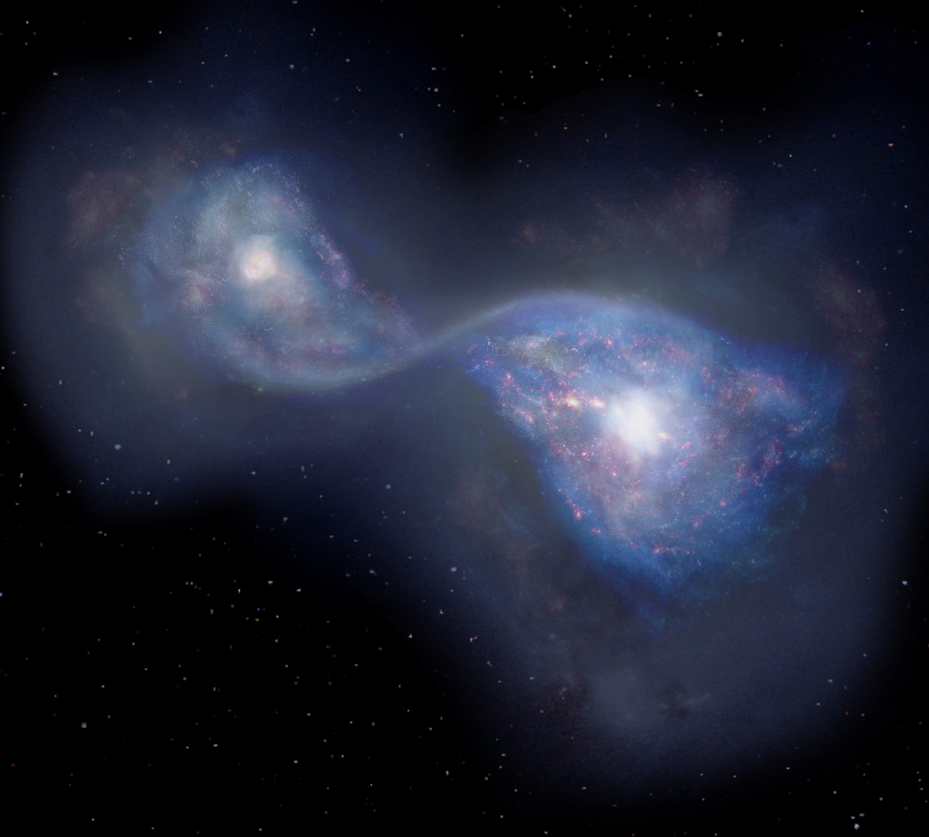
How Galactic Collisions Sculpt the Cosmos: The Impact of Merger Orbits on Galaxy Structure
Wu et al. study how the paths of galaxy mergers affect the resulting structure using simulations. They find that spiral-in orbits tend to preserve disks, while head-on collisions destroy them and build bulges and halos. The hot inner stellar halo grows in nearly all mergers, making it a strong indicator of merger history.
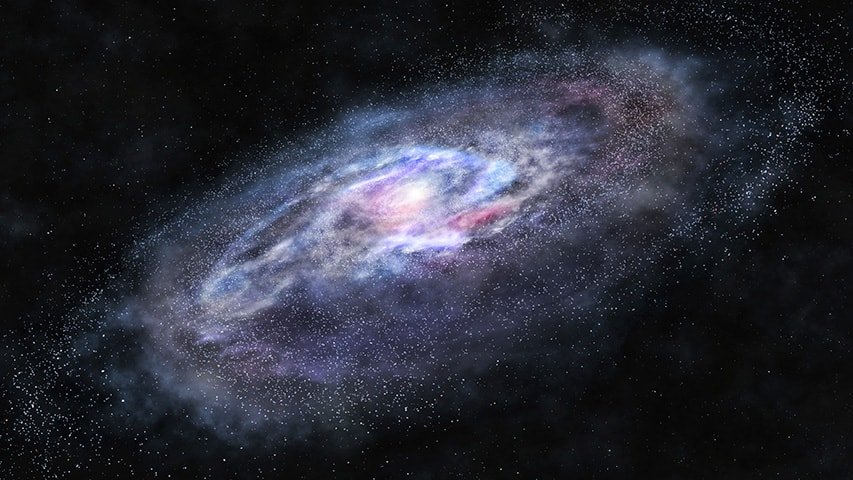
Inside-Out Chemistry: Unveiling the Metal Distribution in Simulated Milky Way-Mass Galaxies
Iza et al. use simulations from the Auriga Project to study how metals are distributed in galaxies like the Milky Way. They find that older, metal-poor stars dominate the halo, while younger, iron-rich stars are found in the disc. The bulge shows intermediate properties, supporting an inside-out galaxy formation scenario.

Stellar Archaeology Disrupted: How the Milky Way’s Bar Smears Out Substructure
This study shows that the Milky Way’s rotating bar disrupts the orbits of stars, dispersing ancient substructures like globular clusters and stellar streams in integral of motion space. Traditional search methods may miss these smeared-out features. Instead, the authors suggest using the Jacobi integral and chemical properties, which better preserve the signatures of disrupted structures.
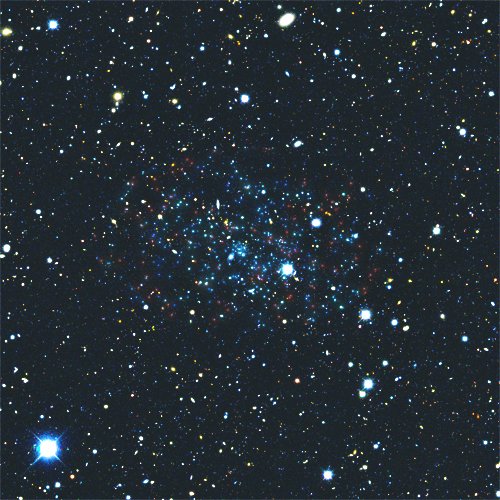
Born to Be Starless: Why Many Mini-Galaxies Never Shine
Jeon et al. use high-resolution simulations to show that many dark matter subhalos never form stars because they are born in low-density regions and can't resist early-universe UV heating during reionization. Common explanations like supernova feedback or environmental effects don’t apply. These subhalos aren’t failed galaxies—they were "born to be starless."

Decoding the Milky Way: How Galactic Discs and Chemical Fingerprints Form in the Cosmos
This study uses simulations of Milky Way-like galaxies to explore the origins of chemical patterns in stars. It finds that variations in star formation rate, not just major mergers like the Gaia-Sausage Enceladus, are key to forming distinct α-sequences. Long-term gas accretion and internal processes also play major roles in shaping galactic chemical structure.

Unveiling Ghostly Traces: Amateur Telescopes Illuminate Hidden Galactic Debris
Martínez-Delgado and collaborators used amateur telescopes to capture deep images of 15 nearby spiral galaxies, revealing faint stellar tidal streams and other signs of past galactic mergers. Their results show that small, accessible telescopes can contribute valuable data to galaxy evolution studies, achieving detection limits comparable to professional observatories.