

Following the Tides: Stellar Streams in Open Clusters with Gaia DR3
Ira Sharma and collaborators used Gaia DR3 data and machine learning to detect tidal tails in five open clusters. These stellar streams, spanning 40–100 parsecs and containing up to 200 stars, lacked massive stars but showed higher binary fractions. The team also detected rotation in M67 and NGC 2281, estimating cluster masses with Plummer models. Their methods expand tidal tail studies to more distant clusters, improving our understanding of cluster evolution.
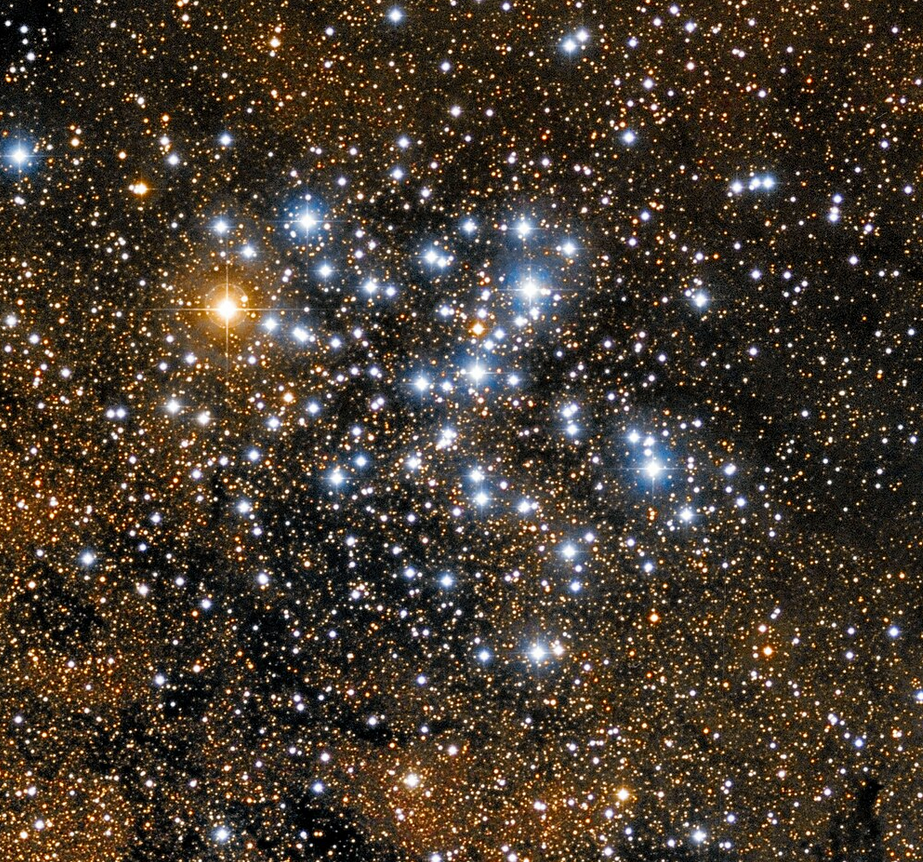
Unraveling the Lives of Young Star Clusters with Gaia
This study uses Gaia DR3 data to analyze 14 young open clusters, revealing their ages, distances, and internal motions. It finds signs of dynamical relaxation in low-mass stars and identifies potential "walkaway" massive stars. The work also explores star type ratios and spatial structures, offering insights into early cluster evolution.
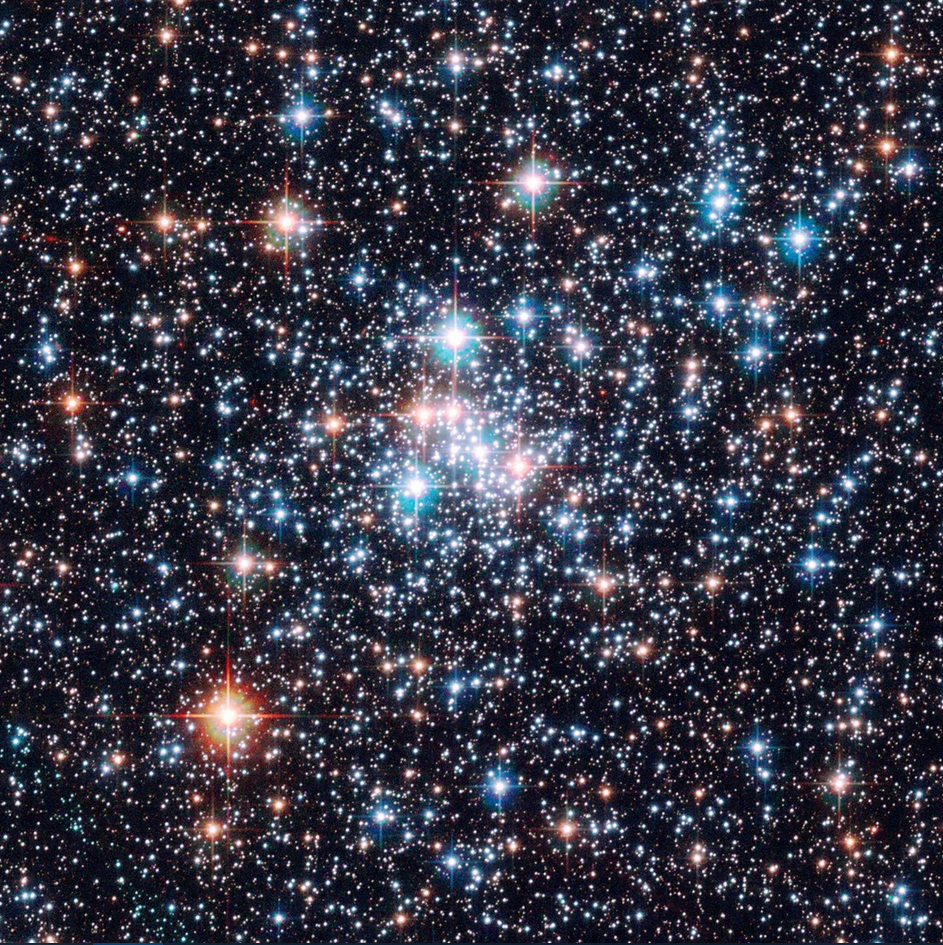
Mapping the Milky Way’s Metal: Chemical Clues from Open Star Clusters
Jonah Otto and colleagues use data from 164 open star clusters to map how elements are distributed across the Milky Way. They find that metallicity generally decreases with distance from the center and detect, for the first time with OCCAM data, variations depending on direction (azimuth). Their high-quality sample confirms known trends and reveals new clues about Galactic evolution.
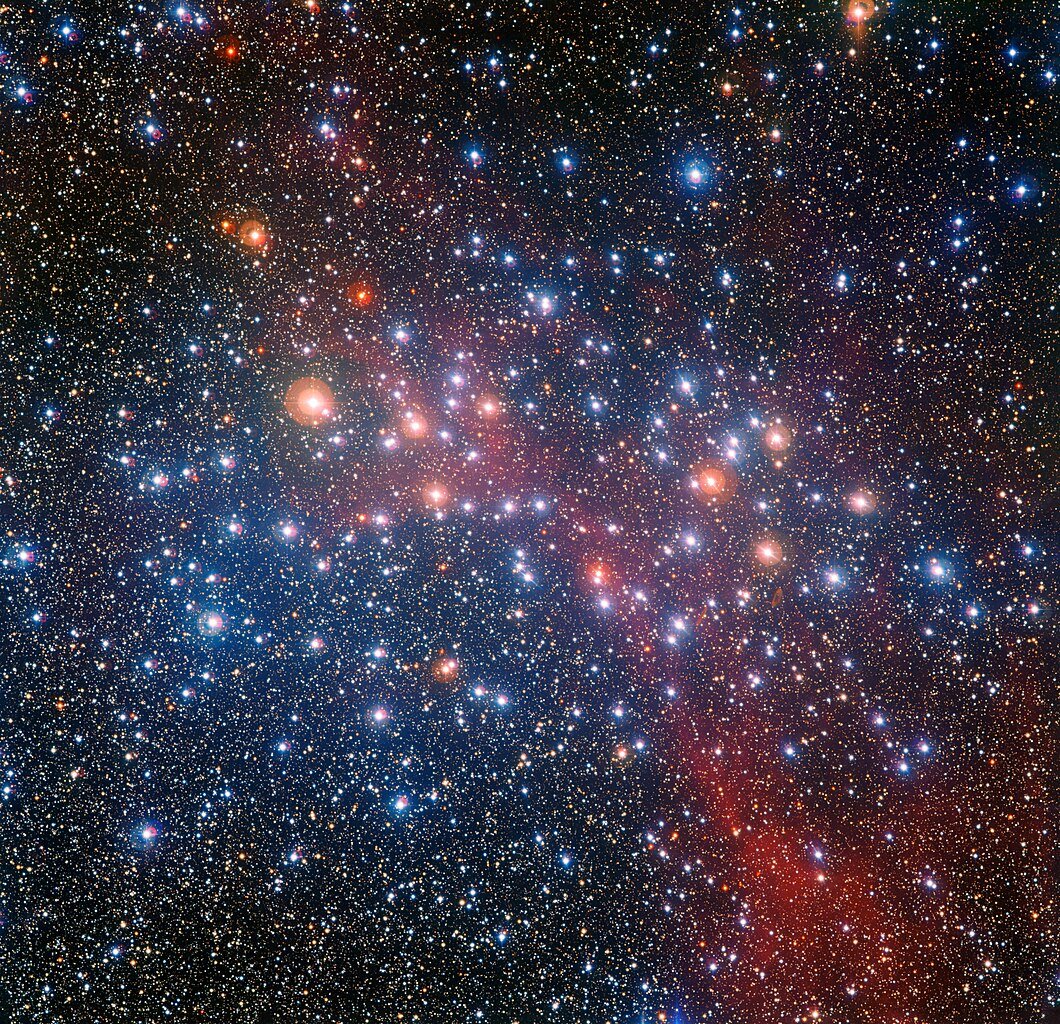
What Gaia Might Be Missing: Searching for Hidden Stars in the NGC 3532 Star Cluster
This study reveals that nearly half of the stars in the open cluster NGC 3532 may be missed in traditional Gaia-based analyses due to poor astrometric data. Using color-magnitude diagrams and statistical methods, the authors identify around 2,150 additional likely members, many of which may be unresolved binaries. Their work highlights the importance of accounting for stars with unreliable Gaia measurements.

Primordial Open Cluster Groups: The Role of Supernovae in Star Formation
Liu et al. (2025) identified four new open cluster (OC) groups using Gaia data and found evidence that supernova explosions triggered the formation of two groups (G1 and G2). Their simulations show OC groups gradually disperse over time. A clear age gradient and pulsar trajectories support the supernova-triggered star formation hypothesis. These findings reinforce the hierarchical star formation model, highlighting the role of stellar feedback in shaping star clusters in the Milky Way.
Unlocking the Secrets of Star Cluster UPK 220 with Gaia and TESS
The study analyzes open star cluster UPK 220 using Gaia DR3 and TESS data, identifying eight variable stars, including eclipsing binaries and pulsating stars. By combining these findings with stellar models, the team determined the cluster’s distance (832 parsecs), age (200 million years), and metal-poor composition, refining previous estimates.

Unveiling the Power of Young Star Clusters with Gaia's Help
Young star clusters release energy through stellar winds, potentially driving cosmic ray production and gamma-ray emission. Using Gaia DR2 data, researchers estimated the mass and wind luminosity of 387 clusters, finding values up to significant particle acceleration and gamma-ray production. This study highlights the role of stellar winds in high-energy astrophysics and provides a foundation for further exploration of particle acceleration in the galaxy.

Unraveling the Milky Way's Warp: Insights from Open Clusters
Peng and He analyzed the Milky Way's warp using open star clusters, revealing a flattening trend influenced by a local tilt in the Galactic disk near the Sun. They found systematic differences between dynamical and geometric warp measurements, with older clusters showing more pronounced warping. The study refined the Sun's vertical velocity and highlighted dynamic changes in the warp’s structure, challenging earlier models and paving the way for future research.