
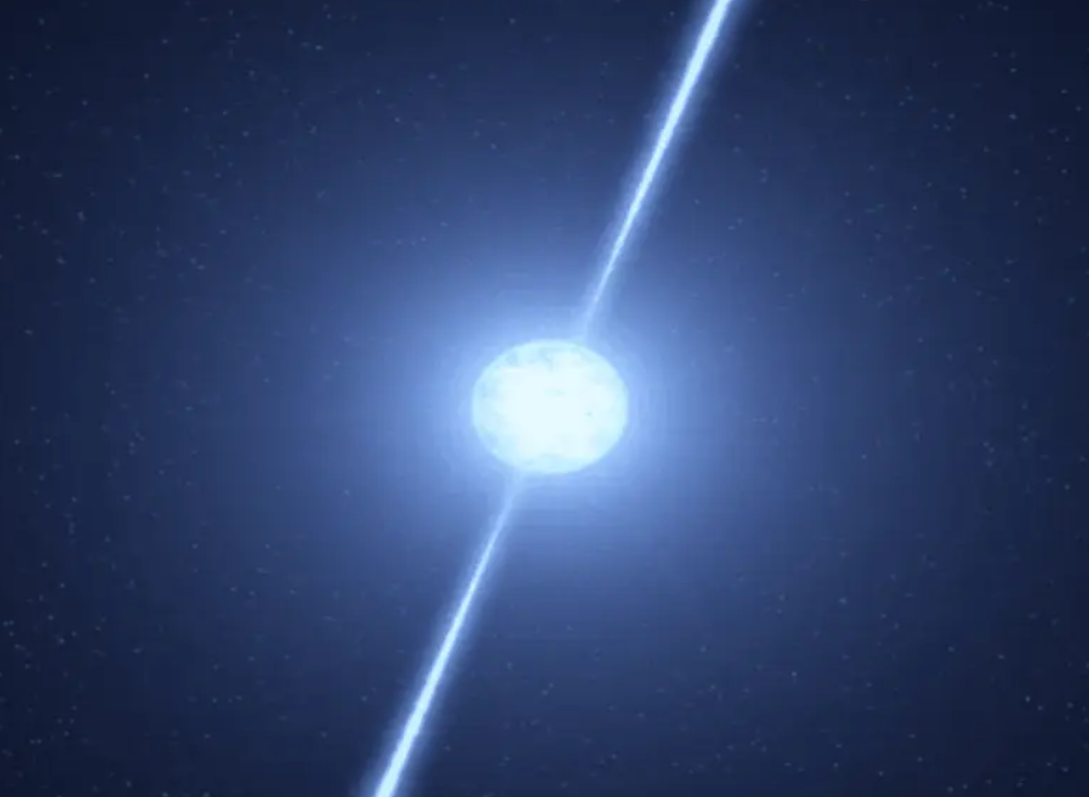
A Pulsar Clue: Finding a Hidden Clump of Dark Matter Near the Sun
Chakrabarti et al. report the first detection of a dark matter sub-halo near the Sun using pulsar timing data. By analyzing excess acceleration in binary pulsars, they infer a compact dark object with a mass around 10 million solar masses. This finding supports ΛCDM predictions and opens a new method for probing dark matter in our Galaxy.

Primordial Open Cluster Groups: The Role of Supernovae in Star Formation
Liu et al. (2025) identified four new open cluster (OC) groups using Gaia data and found evidence that supernova explosions triggered the formation of two groups (G1 and G2). Their simulations show OC groups gradually disperse over time. A clear age gradient and pulsar trajectories support the supernova-triggered star formation hypothesis. These findings reinforce the hierarchical star formation model, highlighting the role of stellar feedback in shaping star clusters in the Milky Way.