
Astronomical Cardiology: Charting the Rhythms of Heartbeat Stars with Gaia and TESS
This study identifies 112 new heartbeat star systems by combining Gaia motion data with TESS brightness measurements. Using both manual and automated methods, the team modeled light curves to determine orbital properties. Most new systems are hotter, evolved stars, and the findings help explain how stellar evolution and tidal forces shape binary star behavior.

Unveiling a Pulsating Pair: A Close Binary with a Pre-White Dwarf in WASP 1021-28
Lee et al. (2025) analyze the binary system WASP 1021-28, made up of an A-type star and a pre-He white dwarf. Using TESS and VLT data, they model the system’s physical properties and detect pulsations from both stars. Their results reveal insights into stellar evolution, binary interaction, and the role of a distant third star in shaping the system’s history.

Unraveling the Secrets of δ Scuti Stars: A Journey with TESS Data
The study analyzed four δ Scuti stars using TESS and Gaia DR3 data, identifying their pulsation modes and physical properties. Two stars pulsate in the fundamental mode, while the others in the first overtone. All were classified as Low Amplitude δ Scuti Stars. The findings enhance our understanding of these variable stars and their position on the Hertzsprung-Russell diagram.

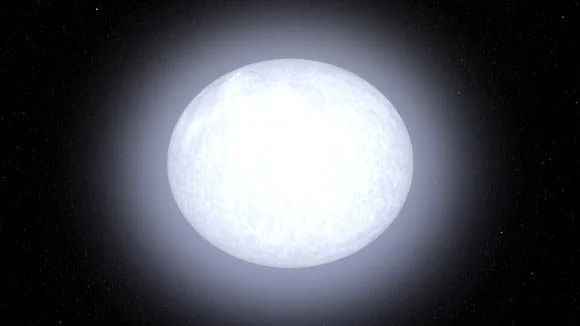
Unveiling the Hidden Beats: The Richest Pulsating Ultra-Massive White Dwarf
Researchers discovered WD J0135+5722, the richest pulsating ultra-massive white dwarf, with 19 distinct pulsation modes. Its mass (1.12–1.15 solar masses) and crystallized core fraction (56–86%) suggest a complex interior, possibly composed of carbon-oxygen or oxygen-neon. This discovery advances asteroseismology and sheds light on stellar evolution and remnants.