
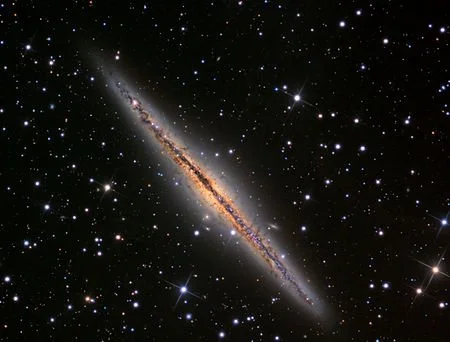
The Ancient Roots of the Milky Way’s Disks: Evidence for Early Co-Formation Before a Galactic Collision
Borbolato et al. find that the Milky Way’s thin and thick disks began forming over 11 billion years ago, earlier than previously thought. Using stellar ages and chemistry from APOGEE, LAMOST, and Gaia data, they show both disks co-formed, challenging models that rely on a major merger to start thin disk formation. Instead, the Gaia-Sausage Enceladus event likely halted thick disk growth and boosted thin disk star formation.
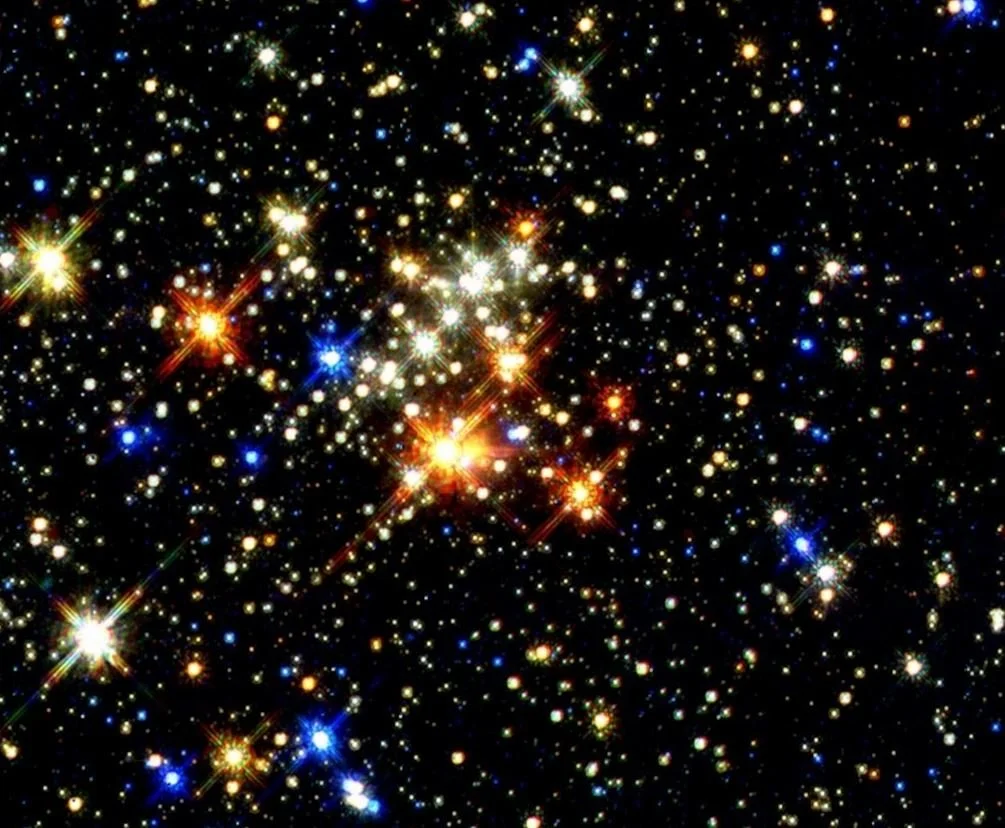
Unearthing Ancient Stars: The Discovery of Two Metal-Poor R-Process Enriched Stars
Astronomers discovered two ancient metal-poor stars enriched in r-process elements, shedding light on the origins of heavy elements. BPS CS 29529-0089, an r-II star, likely formed in the Milky Way’s proto-disk, while TYC 9219-2422-1, an r-I star, originated in the Gaia-Sausage-Enceladus merger. Their chemical signatures suggest enrichment by neutron star mergers and possibly a single Population III supernova, challenging existing theories on galactic evolution.