
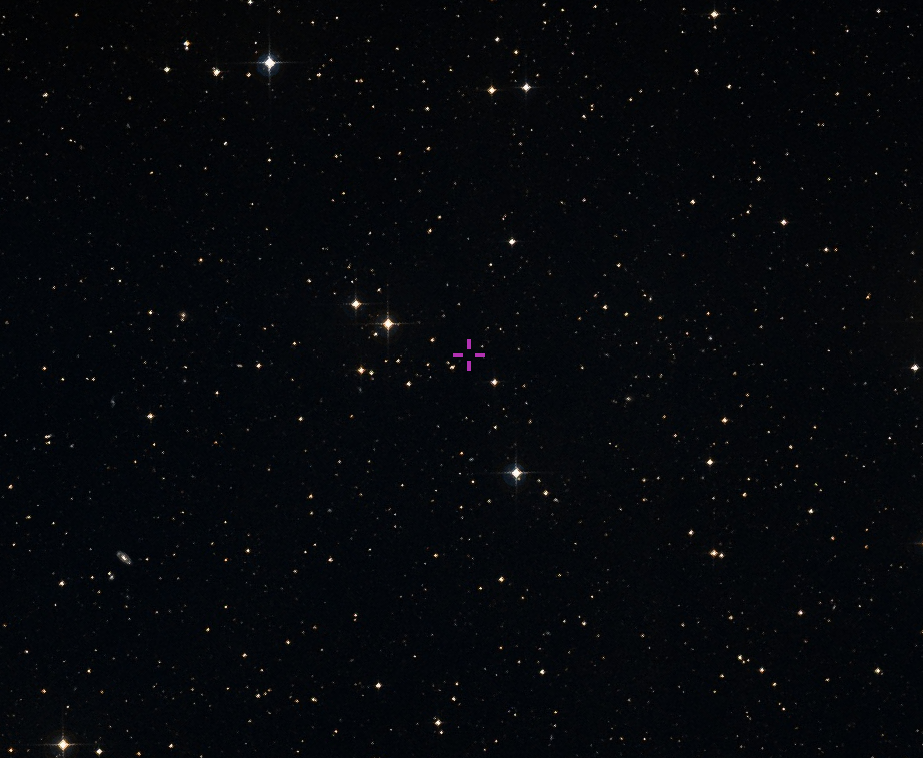
Crater II: A Ghostly Galaxy Losing Its Grip
Crater II is a faint Milky Way satellite that is clearly being torn apart by tidal forces. Using deep DECam imaging, Vivas et al. mapped 46 variable stars and uncovered long stellar tails stretching nearly 10° across the sky. These stars show a strong distance gradient, confirming that Cra II is losing mass as its stars are stripped away. The study strengthens the view that Cra II is in an advanced stage of tidal disruption.

How Binary Stars Complicate the Dark Matter Mystery in Tiny Galaxies
Gration and collaborators show that binary stars can skew measurements of ultrafaint dwarf galaxies by inflating their stellar velocity dispersions. Using simulations, they find unresolved binaries add significant “noise,” sometimes making globular clusters appear like galaxies. The effect is even stronger if the galaxies form fewer low-mass stars. Their work highlights the need to account for binaries when estimating galactic masses and testing dark matter theories.
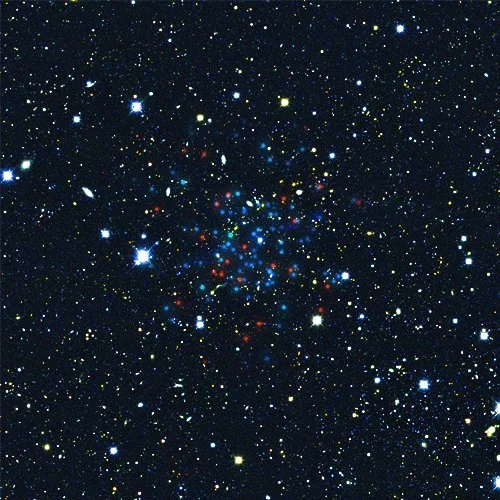
How Do Ultra-Faint Dwarf Galaxies Get Their Metals?
Wheeler et al. investigate what determines the metallicity of ultra-faint dwarf galaxies. They find that the metallicity of the intergalactic gas these galaxies accrete is too low to explain observations. Instead, the metallicity is set mainly by internal processes: how much metal the galaxy produces and how much it loses through outflows. Their models match observed metallicities when outflow strength varies appropriately.
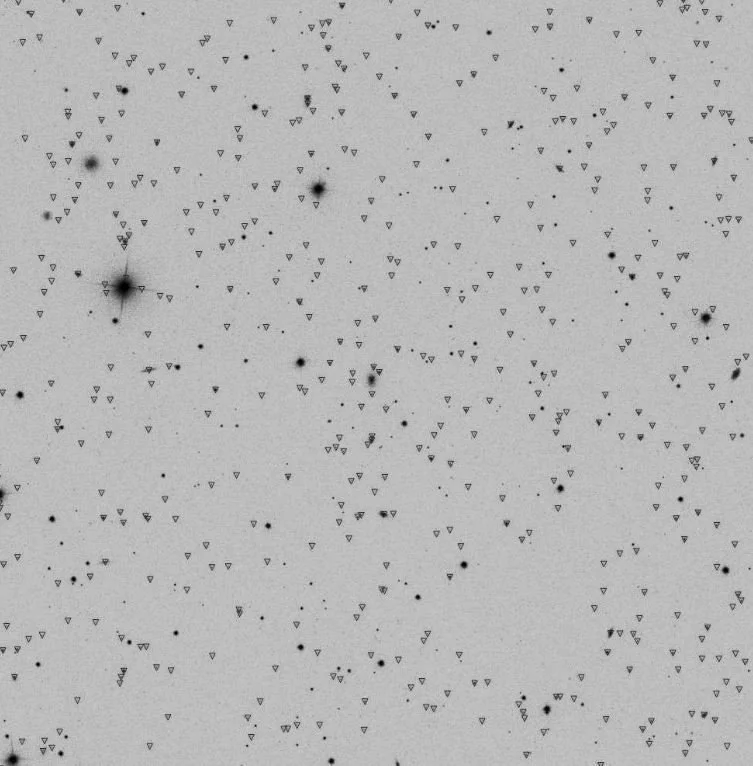
Probing the Tiny: A New Look at the Boötes II Dwarf Galaxy
This study uses new VLT/FLAMES spectroscopy to analyze the ultra-faint dwarf galaxy Boötes II. Nine new member stars were confirmed, including two extremely metal-poor ones. The team refined Boo II's motion and metallicity properties, confirming it’s a dark matter-dominated system with no strong signs of tidal disruption, helping to test galaxy formation models.
A New Discovery in the Andromeda Halo: The Faint Dwarf Galaxy Pegasus VII
Astronomers have discovered Pegasus VII (Peg VII), a faint ultra-faint dwarf galaxy near Andromeda (M31), using data from the UNIONS survey and follow-up imaging. Peg VII is dim (MV = -5.7), extended (177 pc), and located 331 kpc from M31, possibly beyond its dark matter halo. Its elongated shape suggests a past interaction with M31, but it could also be on its first infall. This discovery hints at more hidden dwarf galaxies in the Local Group, awaiting detection in deep surveys.

Looking Into the Dark: New Insights from Ultra-Faint Satellites of the Milky Way
The study explores two ultra-faint dwarf galaxies, Centaurus I and Eridanus IV, using deep imaging. Centaurus I is stable with no signs of disruption, while Eridanus IV shows an intriguing extended feature, possibly from tidal interactions or other phenomena. These findings enhance our understanding of galaxy formation.

How Many Starbursts Does It Take to Shape a Galaxy Core?
Olivia Mostow and collaborators explore how bursts of star formation reshape galaxy cores, addressing the core-cusp problem in low-mass galaxies. Using innovative simulations, they show that repeated bursts effectively flatten dark matter cusps, while single bursts struggle to do so, especially in ultra-faint dwarf galaxies. The study emphasizes the importance of burst timing and energy, offering insights into galaxy evolution and dark matter behavior.
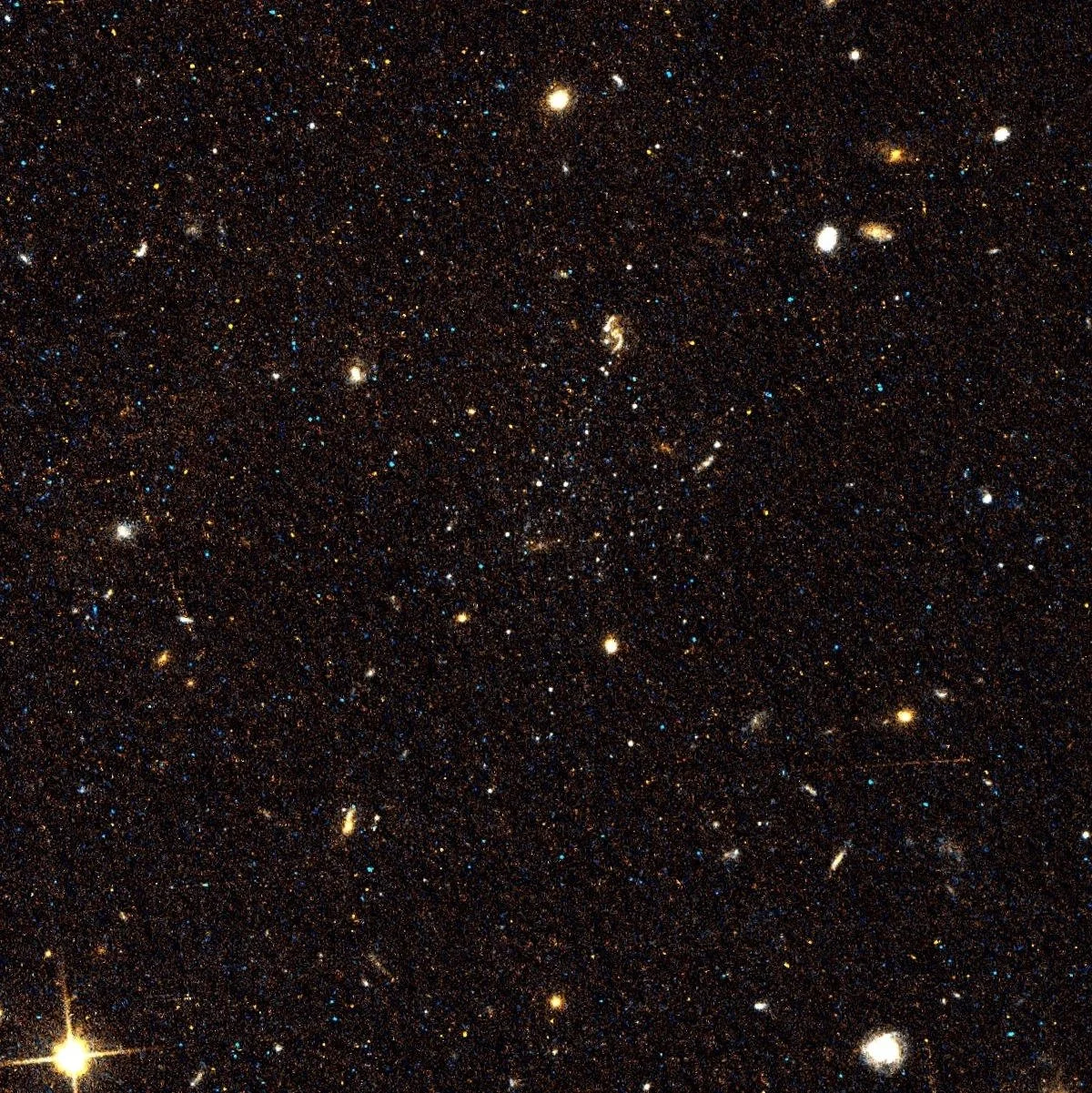
Understanding Star Formation and Metal Enrichment in Ultra-Faint Dwarf Galaxies
The study explores how different Initial Mass Function (IMF) sampling methods affect star formation and metal enrichment in Ultra-Faint Dwarf (UFD) galaxies using simulations. The researchers find that the individual IMF sampling method produces more continuous star formation, higher stellar masses, and greater metallicities compared to the burst and stochastic models. The results emphasize the importance of accurate IMF modeling for understanding UFD galaxies' evolution and alignment with observed properties.
Unveiling the Origins of the Leiptr Stellar Stream: A Disrupted Ultra-Faint Dwarf Galaxy?
The study by Kaia R. Atzberger and team analyzes the chemical composition of stars in the Leiptr stellar stream, suggesting it originated from a low-mass dwarf galaxy, not a globular cluster as previously thought. By examining the abundances of elements like iron, magnesium, and barium, the researchers found variations consistent with ultra-faint dwarf galaxies. This supports the idea that Leiptr is a remnant of one of the smallest and earliest galaxies that merged with the Milky Way.