
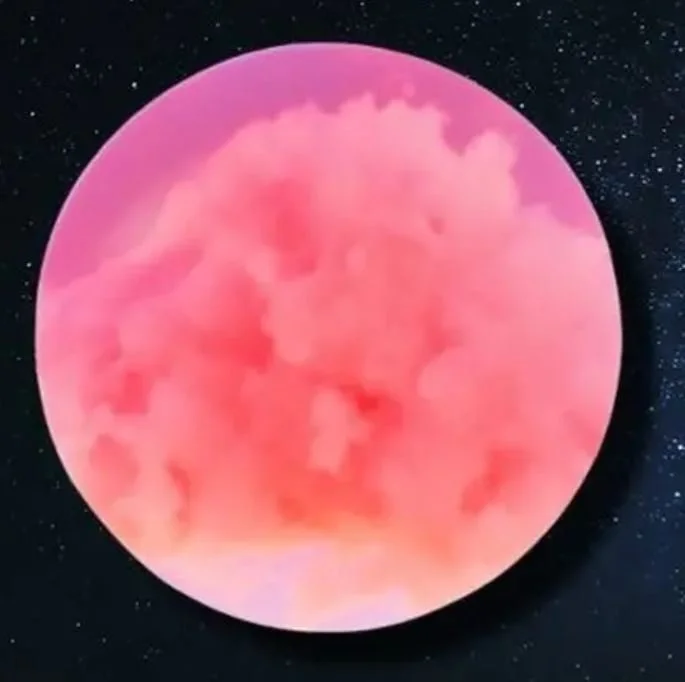
A Super-Puffed Giant: WASP-193b’s Surprisingly Low Density and Well-Aligned Orbit
WASP-193b is an extremely low-density super-puff planet, with a size similar to Jupiter but a mass closer to Neptune. Unlike other super-puffs with tilted orbits, it follows a well-aligned path around its star. Researchers used the Magellan Clay Telescope to refine its properties and confirm its unusual density. Future studies, including those with JWST, may reveal whether WASP-193b is actively losing mass, shedding light on how such planets form and evolve.

Predicting Small Planet Hosts: Machine Learning’s Role in Exoplanet Discovery
Torres-Quijano et al. used machine learning to predict which stars are likely to host small planets based on their chemical composition. Their model identified sodium (Na) and vanadium (V) as key indicators, outperforming iron (Fe). The study validated its predictions and suggested that future exoplanet searches, including NASA missions, could use these findings to improve planet detection efficiency. This research advances our understanding of planetary formation and the star-planet connection.

Unveiling Exoplanet Surfaces: Lessons from Jupiter and Enceladus’ Opposition Effect
The study investigates the opposition effect—a brightening seen when planets and moons are directly opposite the Sun—on Jupiter and Enceladus using Cassini data. The results show that Jupiter's peak is broader due to coherent backscattering (CB), while Enceladus exhibits both CB and shadow hiding (SH). This suggests that opposition peak width could indicate whether an exoplanet has a solid or gaseous surface, but current telescopes lack the precision to detect this effect on distant planets.

TOI-512b: A Super-Earth Around a K-type Star
Rodrigues et al. confirm TOI-512b, a super-Earth orbiting a K-type star, using TESS and ESPRESSO. The planet has a radius of 1.54 Earth radii and a mass of 3.57 Earth masses, suggesting a rocky composition with a small core and minimal atmosphere. A second candidate planet was ruled out. While TOI-512b is not ideal for current atmospheric studies, it remains a valuable target for future exoplanet research.

The Titanium Chemistry of WASP-121 b: A High-Precision Look at an Ultrahot Jupiter
Researchers used high-resolution spectroscopy with ESPRESSO to study the atmosphere of WASP-121 b, detecting Ti I at high significance but no TiO. Titanium appears concentrated in the planet’s equatorial jet, challenging existing models. These findings highlight complex atmospheric chemistry and the need for further observations with JWST and ELT.
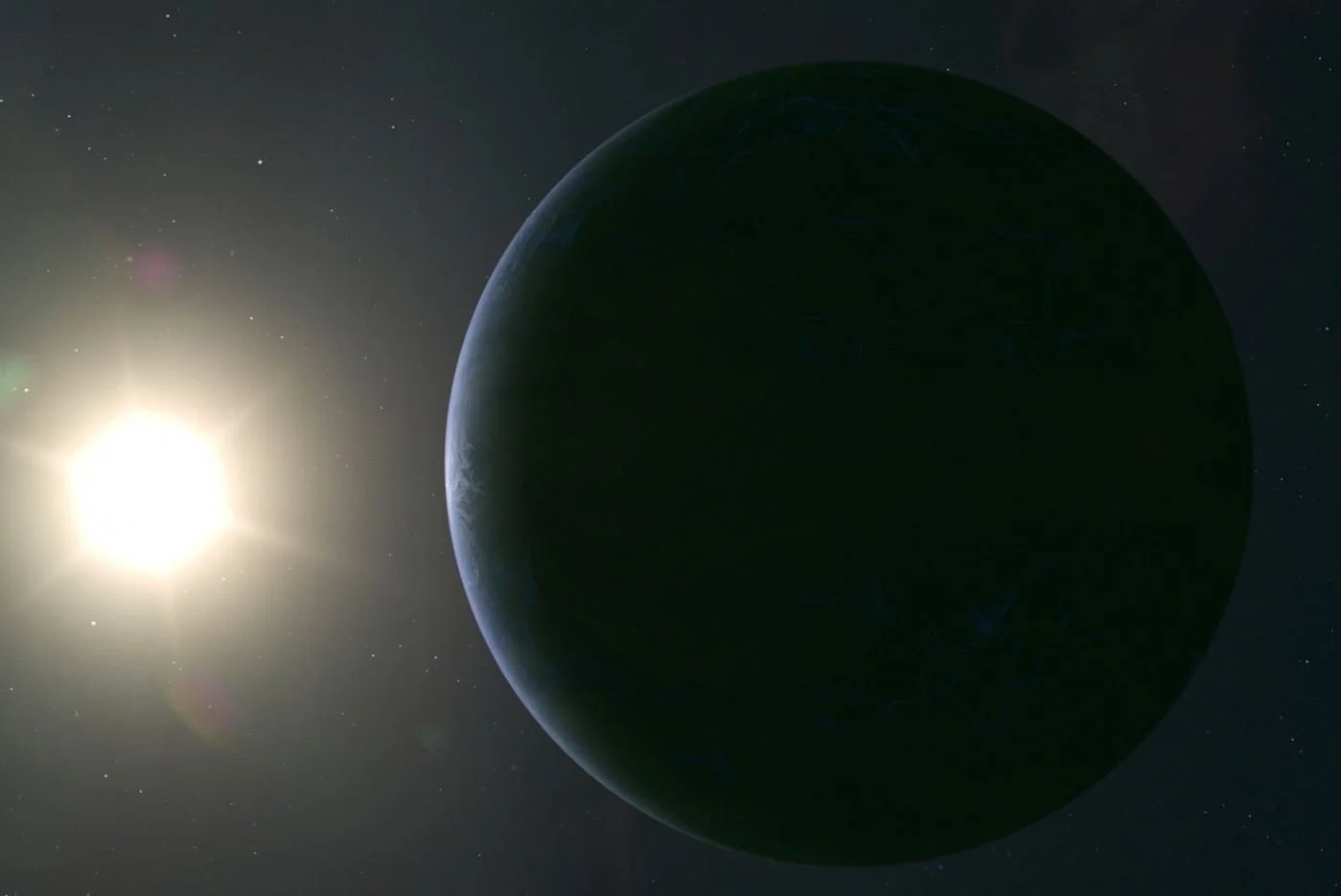
Unraveling the Planet-Metallicity Connection in Intermediate-Mass Stars
The study investigates the planet-metallicity correlation in intermediate-mass stars at different evolutionary stages. It finds that pre-main sequence stars with planets have lower metallicities, while main sequence stars show a weak correlation, and red giants exhibit a strong planet-metallicity trend. The findings suggest that stellar structure and evolution impact how metallicity is observed, supporting the core accretion model of planet formation.

A Volcanic Atmosphere on L 98-59 b: Evidence from JWST Observations
Scientists used JWST to analyze L 98-59 b, a rocky exoplanet orbiting an M-dwarf star, and found evidence of a volcanic sulfur dioxide (SO₂) atmosphere. Tidal heating may fuel extreme volcanism, continuously replenishing the atmosphere. Their data suggests L 98-59 b could have a magma ocean beneath its surface. While not confirmed, additional observations could strengthen the case, offering new insights into how small planets retain atmospheres.

Unlocking the Secrets of WASP-121b with JWST
Using JWST's NIRSpec, researchers precisely measured the mass, age, and atmospheric dynamics of the ultra-hot Jupiter WASP-121b and its host star. They discovered strong winds in the planet's atmosphere and achieved unprecedented precision in mass and age estimates, revealing a 1.11-billion-year-old system. This study showcases JWST's transformative role in advancing exoplanet research.
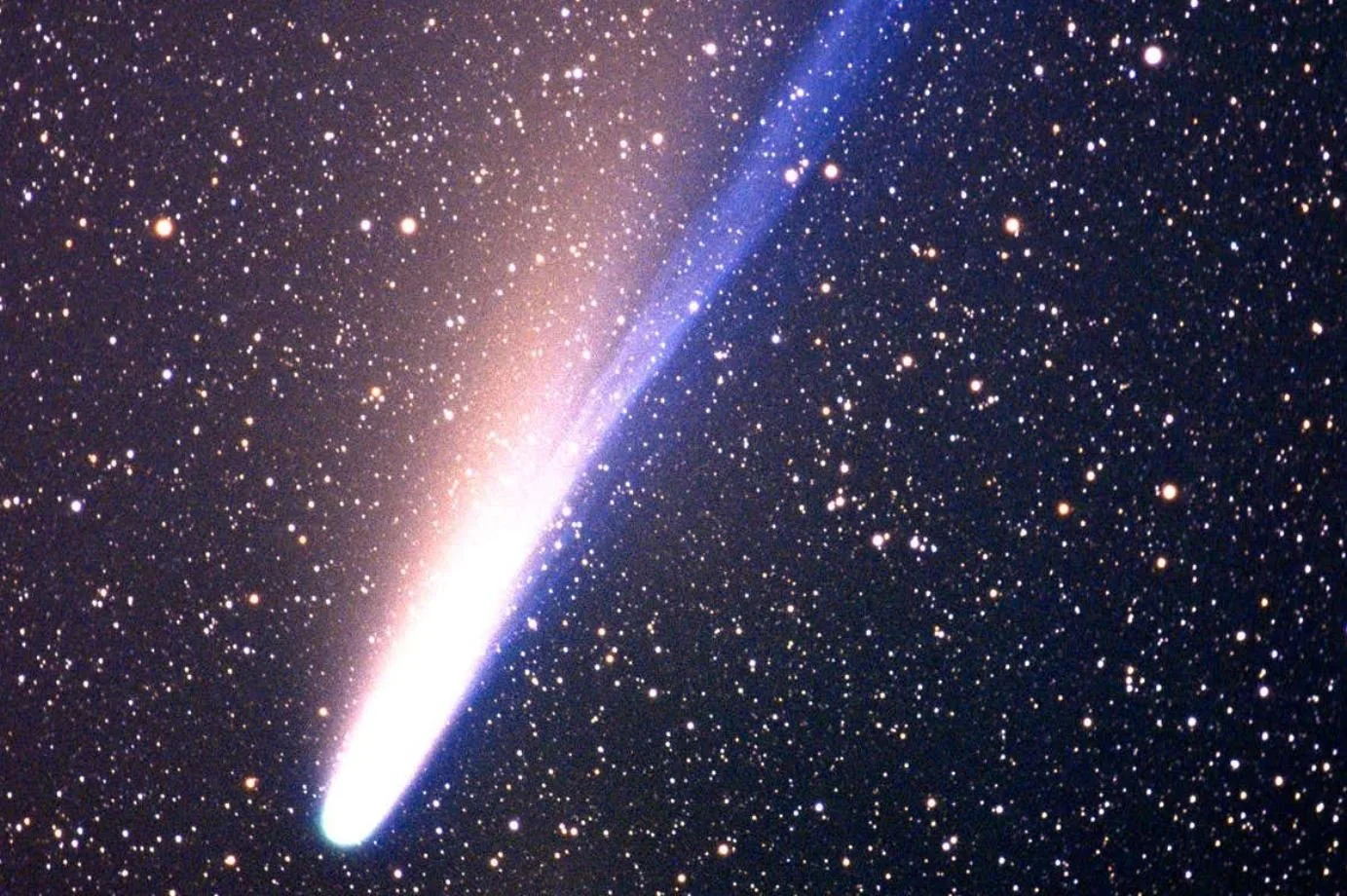
A Fading World Around a Bright Star: Unveiling a Disintegrating Planet
Astronomers discovered BD+05 4868Ab, a disintegrating exoplanet with dramatic comet-like dust tails, using NASA’s TESS. The planet orbits a bright, nearby star and sheds material due to intense heat, forming asymmetric dust tails. This discovery provides a closer, brighter example for studying rocky planet composition and the processes behind planetary destruction.
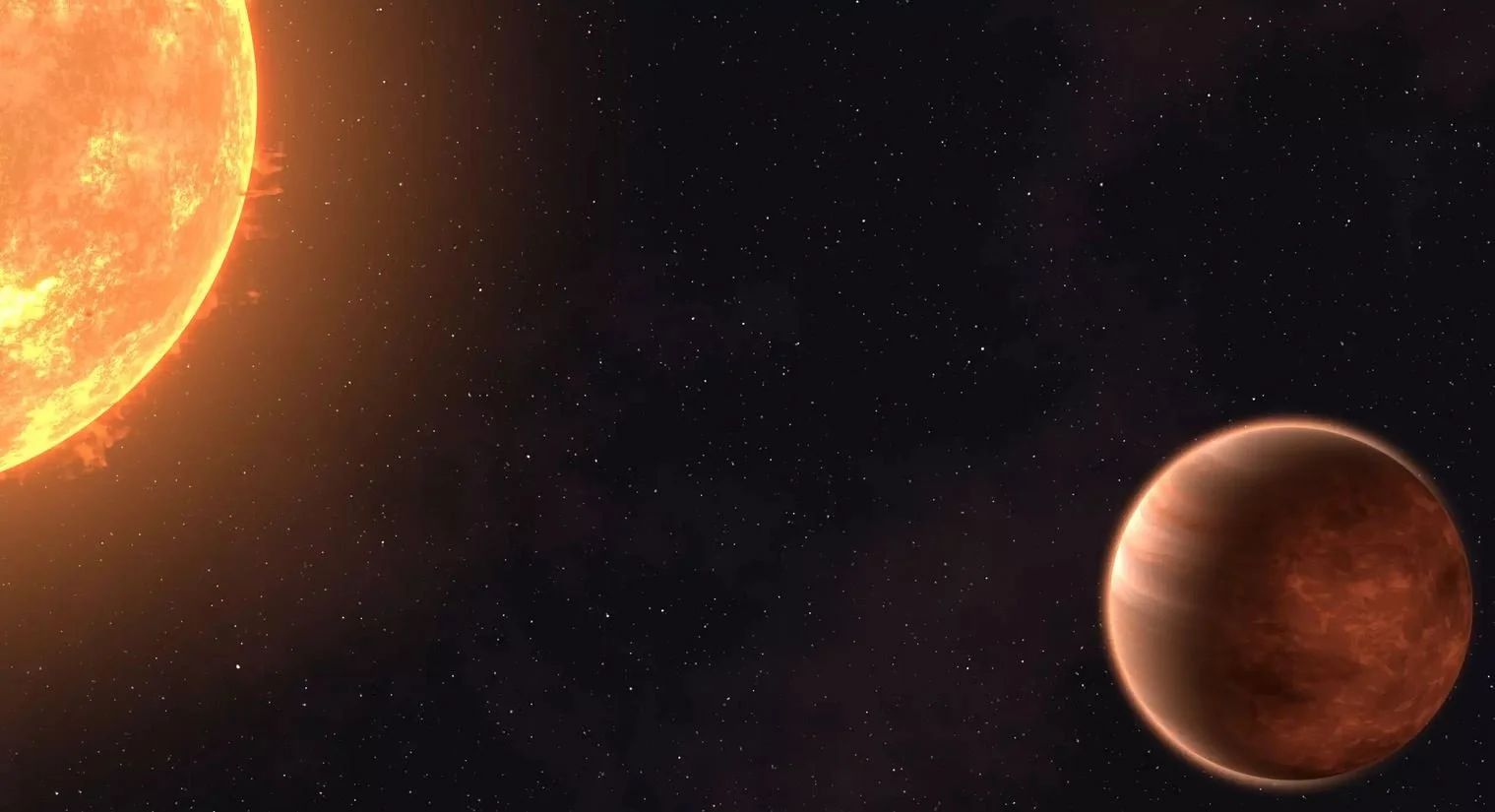
Peering Inside WASP-43b: Exploring Tidal Decay and Orbital Evolution
Researchers studied the ultra-hot Jupiter WASP-43b using data from HARPS, JWST, and other sources, detecting tidal decay and apsidal precession for the first time in an exoplanet system. These phenomena reveal strong gravitational interactions with its host star but raise unanswered questions about the planet's unique dynamics. The findings provide critical insights into the internal structure and evolution of hot Jupiters.
Unveiling Trends in Exoplanet Atmospheres with JWST
Researchers analyzed JWST data to uncover atmospheric trends in eight gas giant exoplanets, focusing on sulfur dioxide (SO₂), carbon dioxide (CO₂), and carbon monoxide (CO). They found that SO₂ correlates with cooler, smaller planets, while CO₂ highlights metallicity and CO dominates in hotter atmospheres. A new SO₂-L vs. CO₂-L diagram offers a framework for classifying exoplanet atmospheres, setting the stage for deeper insights as more data becomes available.
Unveiling a Trio of Earth-Sized Worlds Around a Neighboring Star
Astronomers discovered two Earth-sized planets, HD 101581 b and c, and a potential third around a nearby K-dwarf star, just 12.8 light-years away. These planets exhibit a "peas-in-a-pod" configuration, with similar sizes and evenly spaced orbits, making them excellent for studying planetary formation and atmospheres. The system’s brightness enables detailed follow-up observations to confirm the third planet and analyze the planets’ masses and atmospheric properties.

Unveiling Hidden Worlds: Hunting for Exoplanets with SHARK-NIR at the LBT
Astronomers used the SHARK-NIR instrument at the Large Binocular Telescope to investigate potential planetary companions causing proper motion anomalies in three nearby stars. While no planets were directly detected, constraints suggest companions with masses between 2–16 Jupiter masses at separations of 2.5–30 AU for HIP 11696 and HIP 47110. For HIP 36277, two candidate companions were identified, one requiring confirmation. The study highlights SHARK-NIR's capabilities and the value of combining imaging with astrometric data.

Decoding WASP-43b: Exploring Water in a Distant Gas Giant's Atmosphere
Scientists studied the atmosphere of the hot Jupiter WASP-43b using high-resolution spectroscopy, detecting water with a precise abundance measurement. Other molecules like methane and carbon dioxide were not found, and the carbon-to-oxygen ratio was constrained to less than 0.95. The findings align with prior observations from JWST, supporting a clearer day side and cloudy night side. Future telescopes may uncover more details about the planet's atmospheric composition.
Exploring Exoplanet Atmospheres: Low-Resolution Spectroscopy of Three Hot Jupiters with the Himalayan Chandra Telescope
This study used the Himalayan Chandra Telescope to perform transmission spectroscopy on three hot Jupiters, HAT-P-1b, WASP-127b, and KELT-18b, marking the first time this telescope was used for such analysis. The team observed Rayleigh scattering in the atmospheres of HAT-P-1b and WASP-127b, suggesting hazy atmospheres, while KELT-18b showed a relatively featureless spectrum. By combining ground-based data from HCT with space-based infrared observations, the researchers improved their atmospheric models, demonstrating the potential of smaller telescopes in exoplanet studies.

Searching for Planets Around Vega: A Summary of JWST Observations
Astronomers used the James Webb Space Telescope to search for planets around Vega, a star known for its prominent debris disk. While they detected two distant objects, these were likely extragalactic sources, not planets. The study set strict limits on the possible sizes of any planets in Vega’s system, ruling out planets larger than Jupiter within 10 AU. The smoothness of the debris disk suggests that any planets present are likely smaller than 0.3 times the mass of Jupiter.
Revisiting HD 28185: The Surprising Discovery of an Outer Planet in a Saturn-like Orbit
Astronomers recently revisited the exoplanet system around the star HD 28185, leading to a surprising discovery. While it was already known to host a giant planet with an Earth-like orbit, new research by Alexander Venner and his team revealed a second planet, HD 28185 c, previously thought to be a brown dwarf. This outer planet, about six times the mass of Jupiter, follows a Saturn-like orbit, making it one of the most distant exoplanets detected through radial velocity and astrometry methods. The findings offer exciting insights into how distant giant planets may be more common than previously thought.