

Metallicity in Motion: How a Cepheid’s Phase Reveals New Clues About the Leavitt Law
Bhuyan et al. investigate how metallicity affects the Leavitt Law by measuring period–luminosity relations at multiple pulsation phases for Cepheids in the Milky Way, LMC, and SMC. They find that both the PL slope and the metallicity term vary significantly with phase, especially between short- and long-period Cepheids. Although these variations average out to familiar mean-light results, the phase-dependent approach reveals where metallicity influences Cepheid brightness most strongly, offering a clearer path to improving cosmic distance measurements.
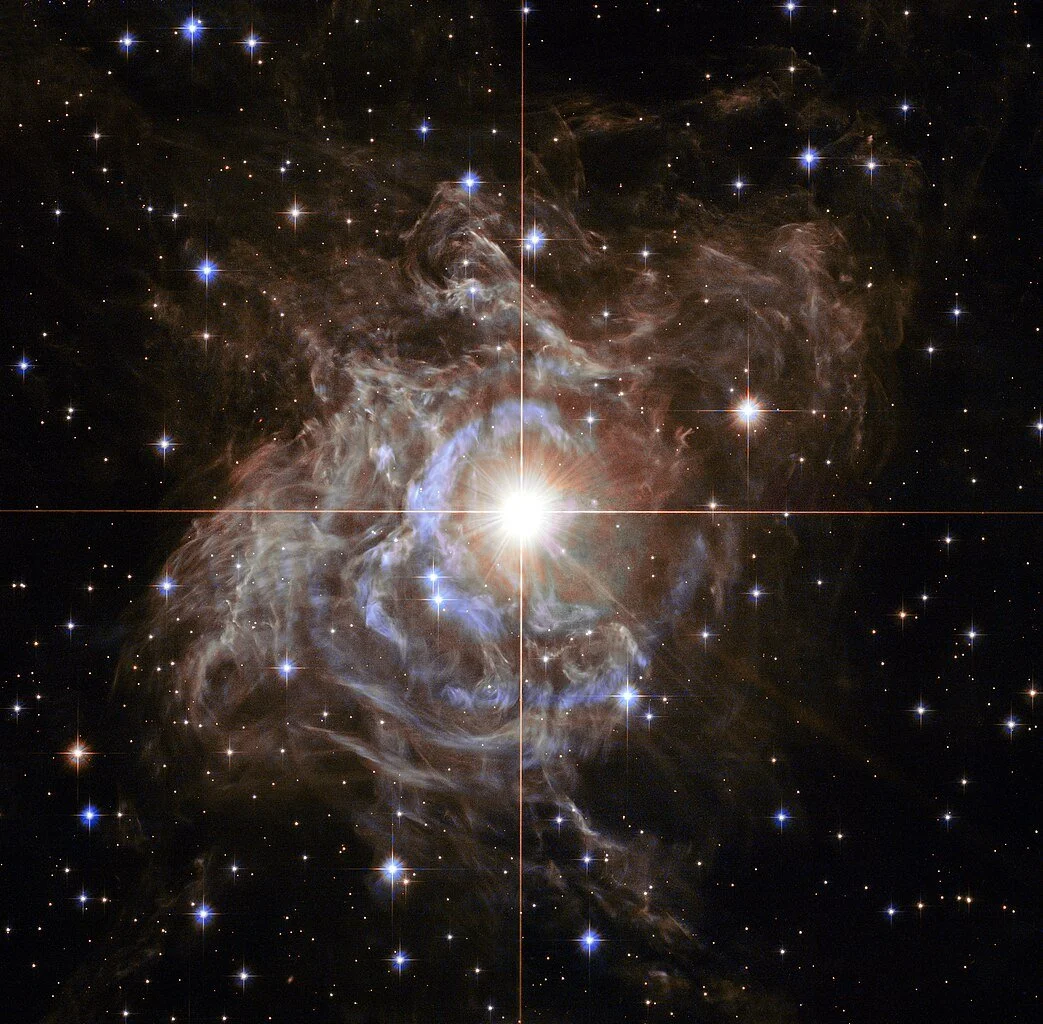
Riding the Galaxy’s Carousel: Measuring the Milky Way’s Rotation with Gaia Cepheids
Feng and collaborators use nearly a thousand Gaia DR3 Classical Cepheids to measure the Milky Way’s rotation curve with high precision. They find a gently declining trend with a distinct dip and bump, features seen mostly in young tracers. By constructing an averaged rotation curve, they estimate a solar circular speed of about 237 kilometers per second and derive dark matter densities and masses consistent with previous studies.

Rare Earth Elements in the Stars: Detecting Dy, Er, Lu, and Th in Cepheids
Trentin et al. (2025) analyzed 60 Classical Cepheids in the C-MetaLL survey, detecting rare elements, Dysprosium, Erbium, Lutetium, and Thorium, for the first time in such stars. Using high-resolution spectroscopy, they confirmed a negative metallicity gradient across the Milky Way and showed that Cepheids trace its spiral arms. These results reveal Cepheids as powerful probes of Galactic chemical evolution and heavy-element enrichment.
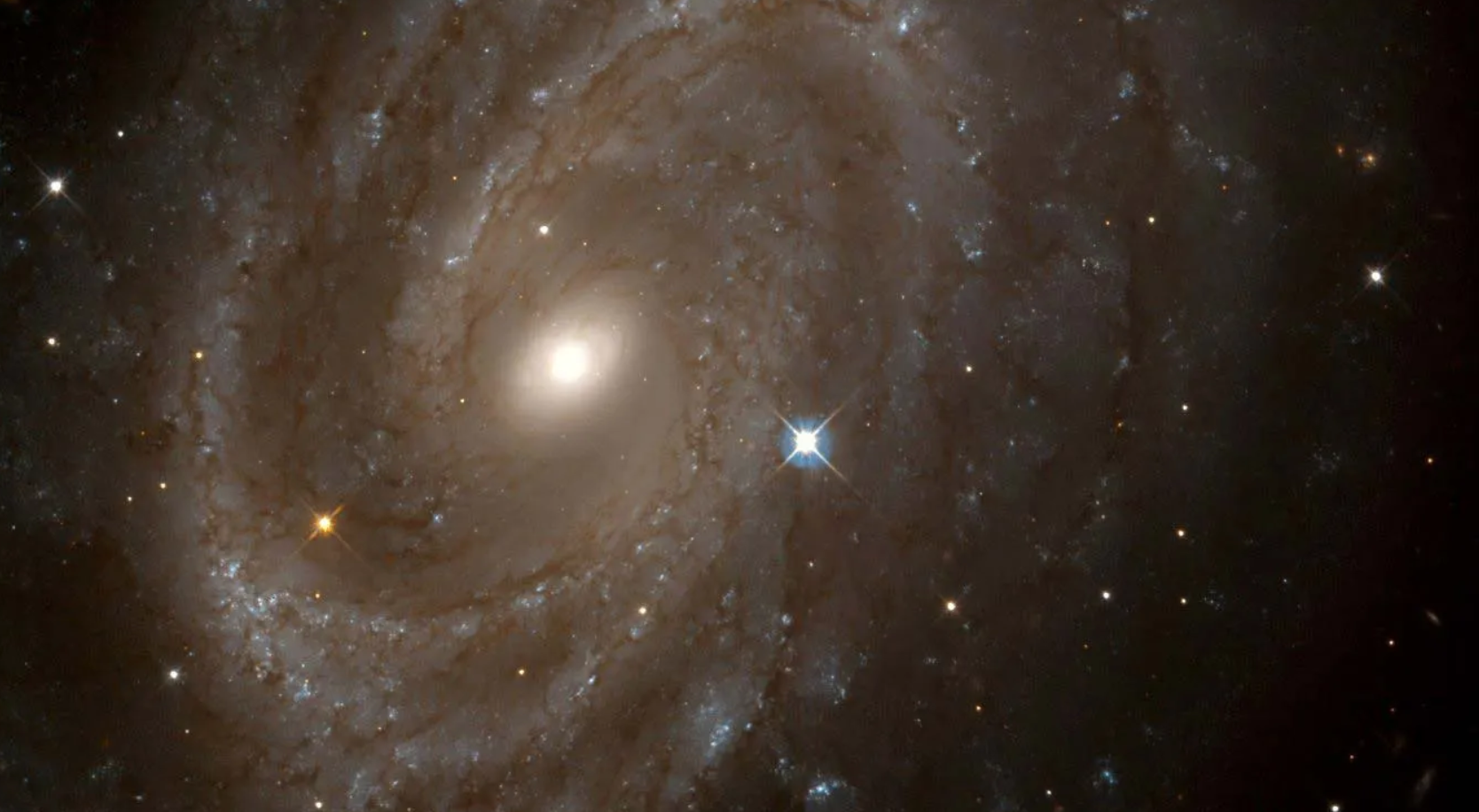
Shining Light on Cepheids: How Metal Content Affects Their Role in Measuring the Universe
Ripepi and collaborators, using the C–MetaLL survey, studied 290 Cepheids with precise metallicity and Gaia distance data. They found that metal content significantly affects Cepheid brightness—about 0.4–0.5 magnitudes per tenfold metallicity change—stronger than some past estimates. Their results refine distance measurements, impact Hubble constant calculations, and suggest metallicity plays a key role in the cosmic distance ladder.

How Metal Shapes the Light of Cepheids: A Stellar Evolution View of the Leavitt Law
This study uses stellar evolution models to show how metallicity affects the brightness-period relation (Leavitt Law) of Cepheid stars. The authors find that lower-metallicity Cepheids have steeper and slightly brighter period-luminosity relations. Their predictions match key observational data and support current methods for measuring the Hubble constant, especially those using reddening-free magnitudes.