
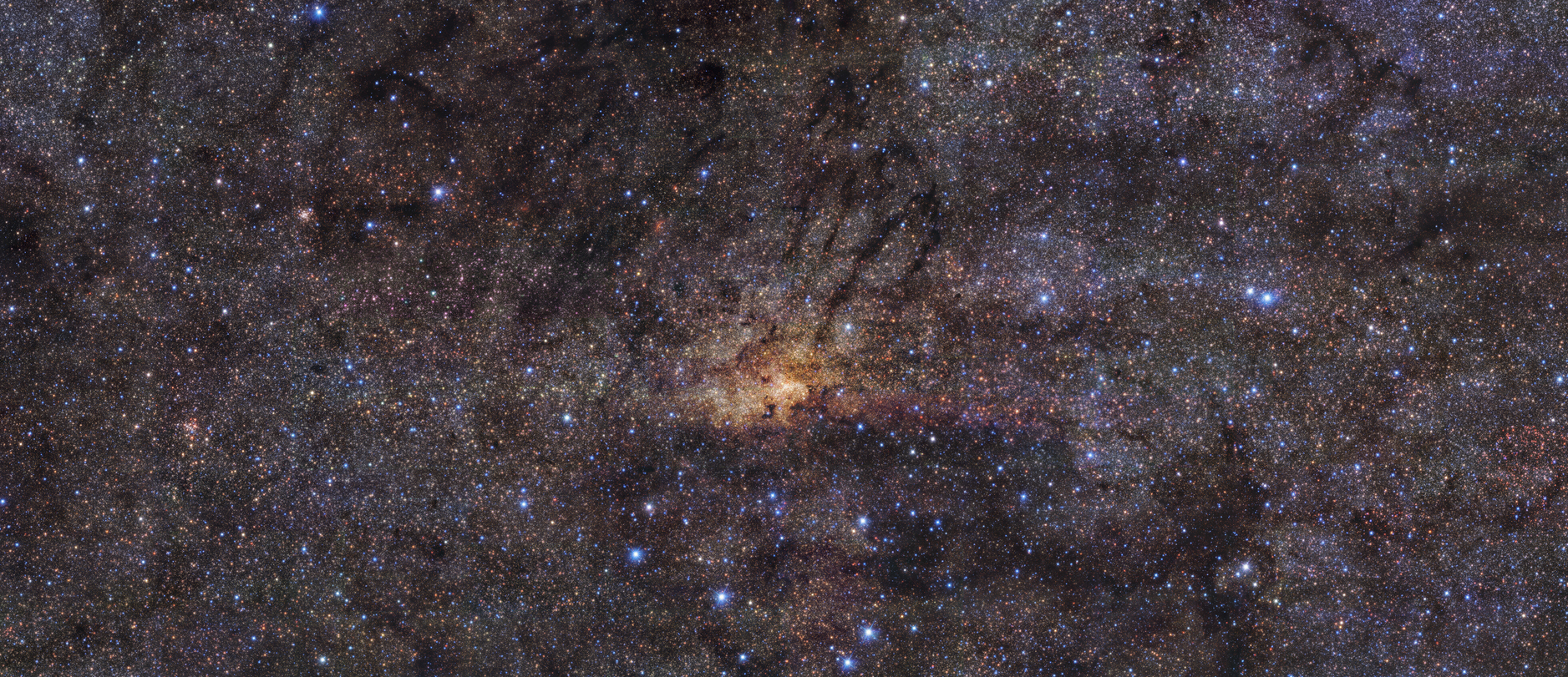
Diluting the Galactic Center: How the Milky Way’s Nuclear Stellar Disc Got Its Chemical Mix
This paper presents the first Bayesian chemical evolution model of the Milky Way’s Nuclear Stellar Disc. The authors show that gas flowing inward from the inner Galactic disc alone cannot explain the observed metal-poor stars. Instead, the best-fitting models require dilution by lower-metallicity gas, likely from the thick disc or later accretion events, highlighting a complex formation history for the Galaxy’s center.

A Chemical Portrait of the Milky Way’s Heart: Mapping the Elements of the Nuclear Stellar Disc
Ryde et al. analyze nine stars in the Milky Way’s Nuclear Stellar Disc, measuring 18 chemical elements using infrared spectroscopy. Their results show strong chemical similarities between the NSD, Nuclear Star Cluster, and inner bulge, suggesting shared evolutionary histories. Sodium stands out with uniquely high levels, possibly linking the NSD to metal-rich clusters like Liller 1.