

Mapping the Many Lives of Omega Centauri: Untangling 14 Stellar Families in the Milky Way’s Most Complex Cluster
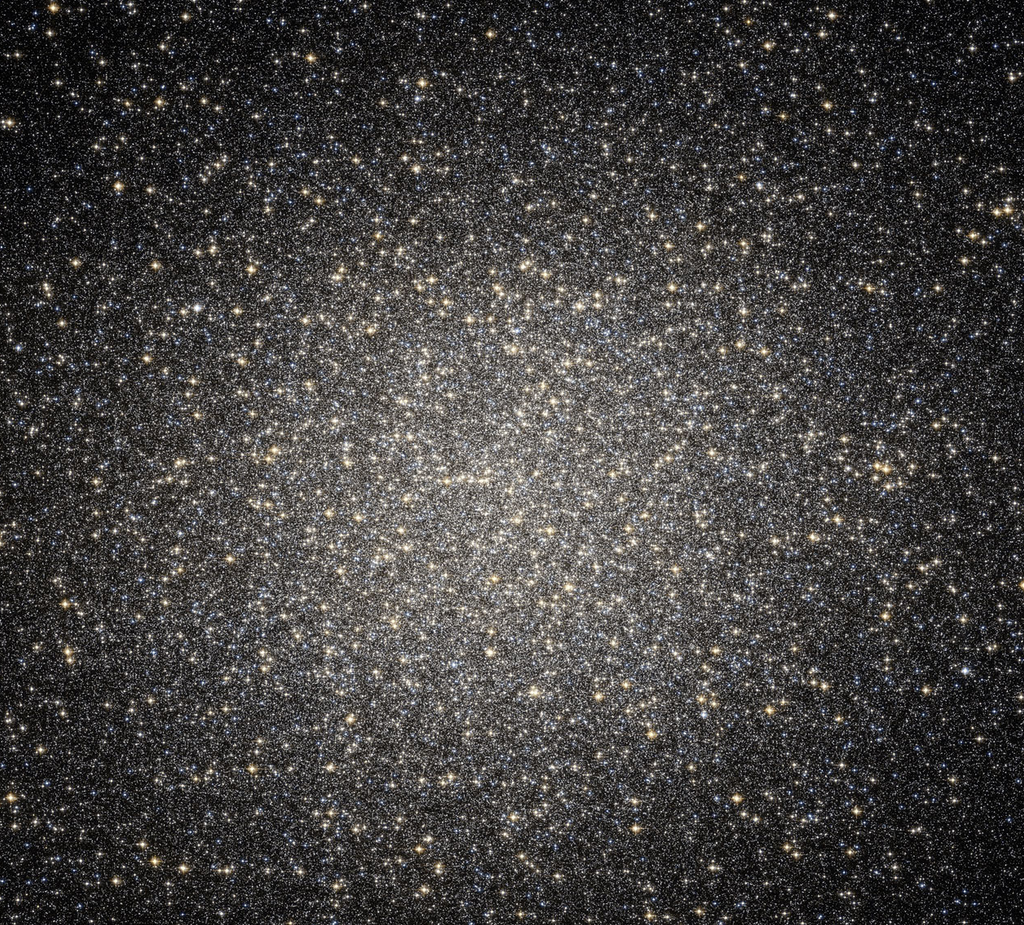
Callie Clontz and collaborators used data from the Hubble Space Telescope and MUSE to identify 14 distinct stellar subpopulations in Omega Centauri. They found that chemically enriched stars (P2) are about 1 billion years younger than primordial ones (P1), with intermediate groups in between. The results suggest multiple star-formation episodes and support the idea that Omega Centauri is the remnant core of a captured dwarf galaxy.
A New Light on an Ancient Giant: JWST Unveils the Hidden Stars of Omega Centauri
Using JWST and HST data, Scalco et al. studied the faint stars in Omega Centauri, revealing three main stellar populations with distinct chemical compositions. They found differences in brightness and mass distributions tied to helium, oxygen, and carbon. The study confirms a complex formation history and shows that simple models can’t fully explain the cluster’s stellar makeup.
Exploring the Kinematics of Omega Centauri’s Metallicity Populations
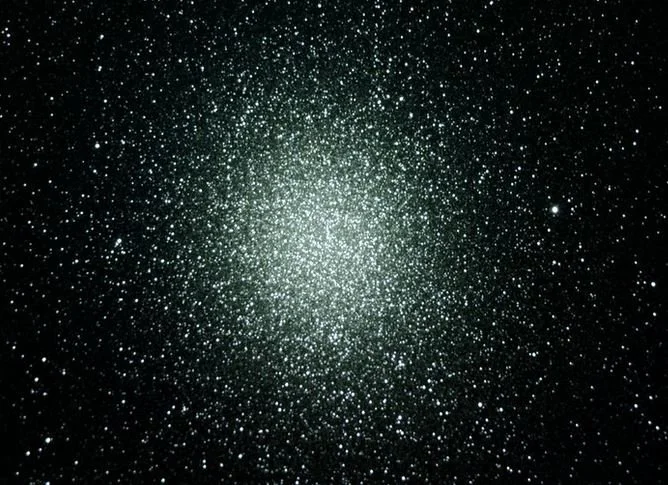
Vernekar et al. (2025) investigate the motions of different metallicity populations in Omega Centauri using Gaia and Hubble data. They find no significant differences in movement between metal-rich and metal-poor stars, suggesting that all populations are well-mixed. The study also confirms that Omega Cen rotates uniformly. These findings challenge the idea that metal-rich stars were accreted and instead support a self-enrichment scenario for the cluster’s formation.

Tracing the Origins of ω Centauri: A Chemical and Orbital Investigation of Globular Clusters
This study explores ω Centauri’s origins by analyzing the chemical compositions and orbits of similar globular clusters, suggesting they may all stem from a common progenitor—an ancient dwarf galaxy disrupted by the Milky Way’s gravitational forces. Using data from the APOGEE catalog and advanced modeling techniques, six clusters were identified with chemical abundances and metallicity distributions closely matching ω Centauri. Their orbital characteristics further support an accretion origin, contributing to the understanding of how interactions with smaller galaxies have shaped the Milky Way.