

Trading Oxygen for Iron: Rethinking How the Universe Built Its Stars
The paper argues that oxygen and iron trace galaxy evolution very differently because they form on different timescales. Using a new [O/Fe]–sSFR relation, the authors show that most stars formed with non-solar O/Fe, especially in the early universe. Their iron-based cosmic star formation history aligns with RR Lyrae, globular cluster, and GRB-host data, highlighting that models assuming solar abundance patterns often misrepresent real cosmic conditions.
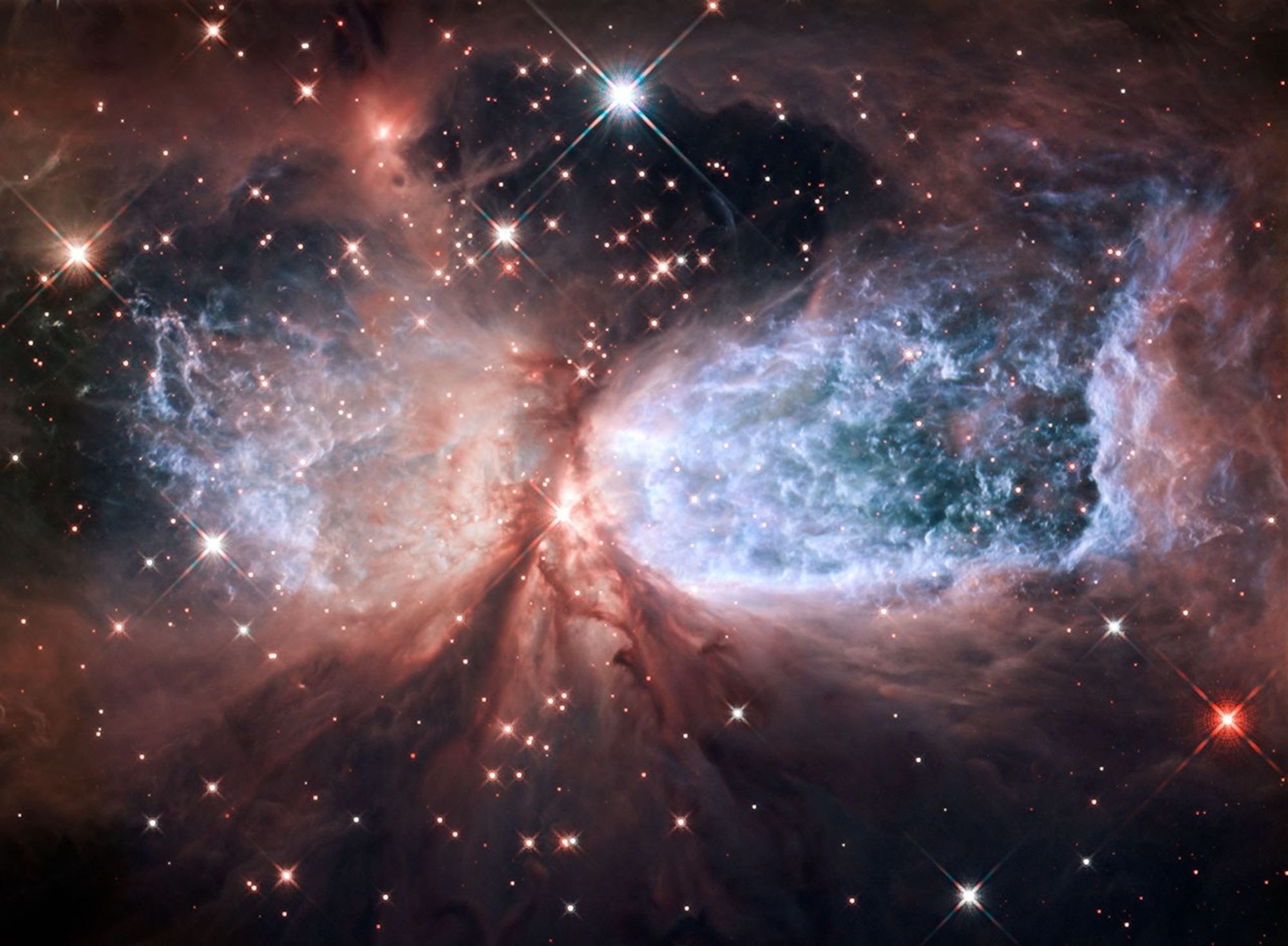
Uncovering the Chemical Story of Star-Birth Rings in Nearby Galaxies
Eva Sextl and Rolf-Peter Kudritzki use MUSE data to study four spiral galaxies with bright nuclear star-forming rings. By separating young and old stellar populations, they find that these rings are metal-rich, not metal-poor as once thought. Their new “physical metallicity” method reveals that inflows of fresh gas and repeated star formation cycles drive long-term chemical enrichment in galactic centers.
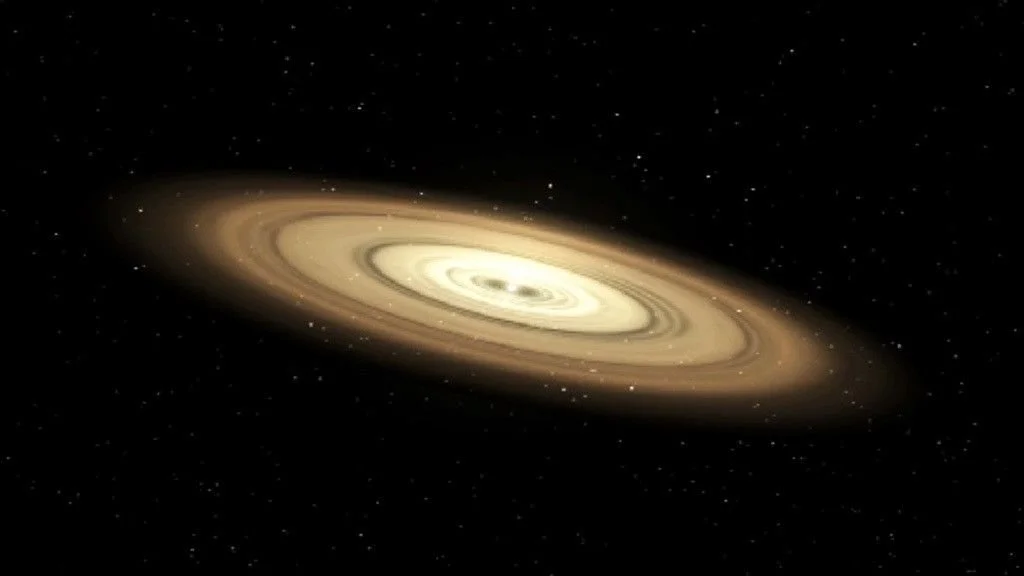
From Clouds to Planets: Tracking Organic Molecules Through Star Formation
Pierre Marchand and collaborators used simulations to study how complex organic molecules (COMs) evolve during star formation. They found that only simple COMs like methanol and ethanol are mostly inherited from the parent cloud, while heavier molecules form later during collapse or in the disk. Abundances change with time and depend on environmental conditions, meaning the chemical makeup of forming planets is shaped by both inheritance and new formation.

Tracing Stellar Origins with Alpha Elements: What Globular Clusters and Dwarf Galaxies Tell Us About Star Formation
This study uses APOGEE data to compare α-element abundances in stars from globular clusters, halo substructures, and satellite galaxies. The authors focus on the “hex ratio” to trace massive star contributions. They find that Milky Way clusters and halo stars have higher hex ratios than satellite galaxies, suggesting different star formation histories and initial mass functions.
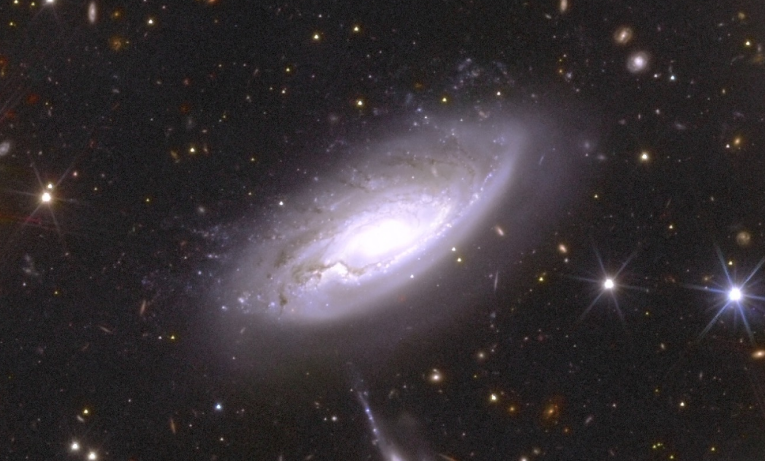
Fireballs in the Perseus Cluster: Euclid Spots Star Formation in Stripped Galaxy Tails
Astronomers used Euclid data to study two galaxies in the Perseus Cluster undergoing ram-pressure stripping, where hot cluster gas removes galaxy gas. Surprisingly, new stars form in the stripped tails, confirmed by UV, optical, and radio data. The study shows how galaxies evolve in extreme environments and highlights Euclid’s ability to detect faint, small-scale star formation beyond galaxy discs.

Do Spiral Arms Spark Star Birth? A Deep Dive into the Star Formation Life Cycle
Romanelli et al. find that spiral arms do not trigger star formation but instead act as gas collectors. Molecular cloud lifetimes, feedback timescales, and star formation processes are similar in spiral arms and inter-arm regions. Surprisingly, star formation efficiency is slightly higher in inter-arm regions, suggesting local conditions drive star formation more than large-scale galactic structures.

Massive Star Formation at the Edge of the Galaxy: The LZ-STAR Survey of Sh2-284
The LZ-STAR survey explores low-metallicity star formation in Sh2-284, focusing on the massive protostar S284p1. ALMA and JWST observations reveal a symmetric, parsec-scale bipolar outflow, suggesting an ordered formation process. S284p1, about 11 solar masses, has grown from a dense gas clump over 300,000 years. The findings show that massive stars can form in a structured way, even in environments with lower metal content, offering insights into early universe star formation.