

The Star That Reveals a Hidden Cosmic Process: SMSS J0224−5737 and the Weak r-Process
SMSS J0224−5737 is an extremely metal-poor star showing the strongest known weak r-process signature, with very high Sr, Y, and Zr but extremely low Ba and Eu. Its chemical pattern, including an unusually high zinc abundance, points to enrichment by a magneto-rotational supernova rather than a neutron star merger or electron-capture supernova. This makes the star a key probe of how the earliest heavy elements formed in the universe.

Uncovering Hidden Galactic Streams with Metallicity Fingerprints
The study by Kim et al. introduces a new way to identify Milky Way halo substructures by combining metallicity distribution functions with orbital data. They find four main retrograde groups (LRS 1–4) and uncover a new one, LRS 2B, highlighting the galaxy’s complex merger history. Their method shows how chemistry and dynamics together can reveal hidden stellar streams and their origins.

Forging the Light Elements: How Low-Metallicity Novae Could Shape the Early Universe
This study explores how low-metallicity novae—stellar explosions in early, metal-poor environments—can trigger a weak rp-process, producing elements heavier than calcium. Using simulations and Monte Carlo analysis, the authors identify key nuclear reactions and highlight their astrophysical impact. These novae may leave detectable chemical signatures, offering clues to the early Universe’s element formation.

Mining for the Ancient: A New Catalog of Metal-Poor Stars from LAMOST DR10
This study presents a catalog of 8,440 very metal-poor stars identified using red spectra from LAMOST DR10. By measuring calcium triplet lines with two methods, the authors accurately estimated metallicities down to [Fe/H] = −4.0. The catalog offers high-quality targets for studying the early Milky Way and validates its results against multiple major surveys.

How Giant Stars at Low Metallicity Shape the Chemistry of the Early Universe
Higgins et al. explore how very massive stars at low metallicity contribute to the unusual chemical patterns seen in globular clusters. Using stellar evolution models, they show that stellar winds from these stars can eject sodium-rich, oxygen-poor material. This supports the idea that VMS winds, not just supernovae, played a key role in early Universe chemical enrichment.

Massive Star Formation at the Edge of the Galaxy: The LZ-STAR Survey of Sh2-284
The LZ-STAR survey explores low-metallicity star formation in Sh2-284, focusing on the massive protostar S284p1. ALMA and JWST observations reveal a symmetric, parsec-scale bipolar outflow, suggesting an ordered formation process. S284p1, about 11 solar masses, has grown from a dense gas clump over 300,000 years. The findings show that massive stars can form in a structured way, even in environments with lower metal content, offering insights into early universe star formation.

Unraveling the Binarity of B-type Supergiants in the Small Magellanic Cloud
A new study by Britavskiy et al. examines the binary nature of early B-type supergiants (BSGs) in the Small Magellanic Cloud using data from the Binarity at LOw Metallicity (BLOeM) survey. Analyzing 262 stars, the team found that about 40% are likely binaries, with a sharp drop in binarity for stars cooler than 18,000 K. The findings suggest that mergers play a key role in BSG evolution, and that binary fractions remain consistent across different metallicity environments. Future observations will further clarify how these massive stars evolve.
Exploring the Metal-Poor Stream C-19: A Glimpse into Galactic Formation
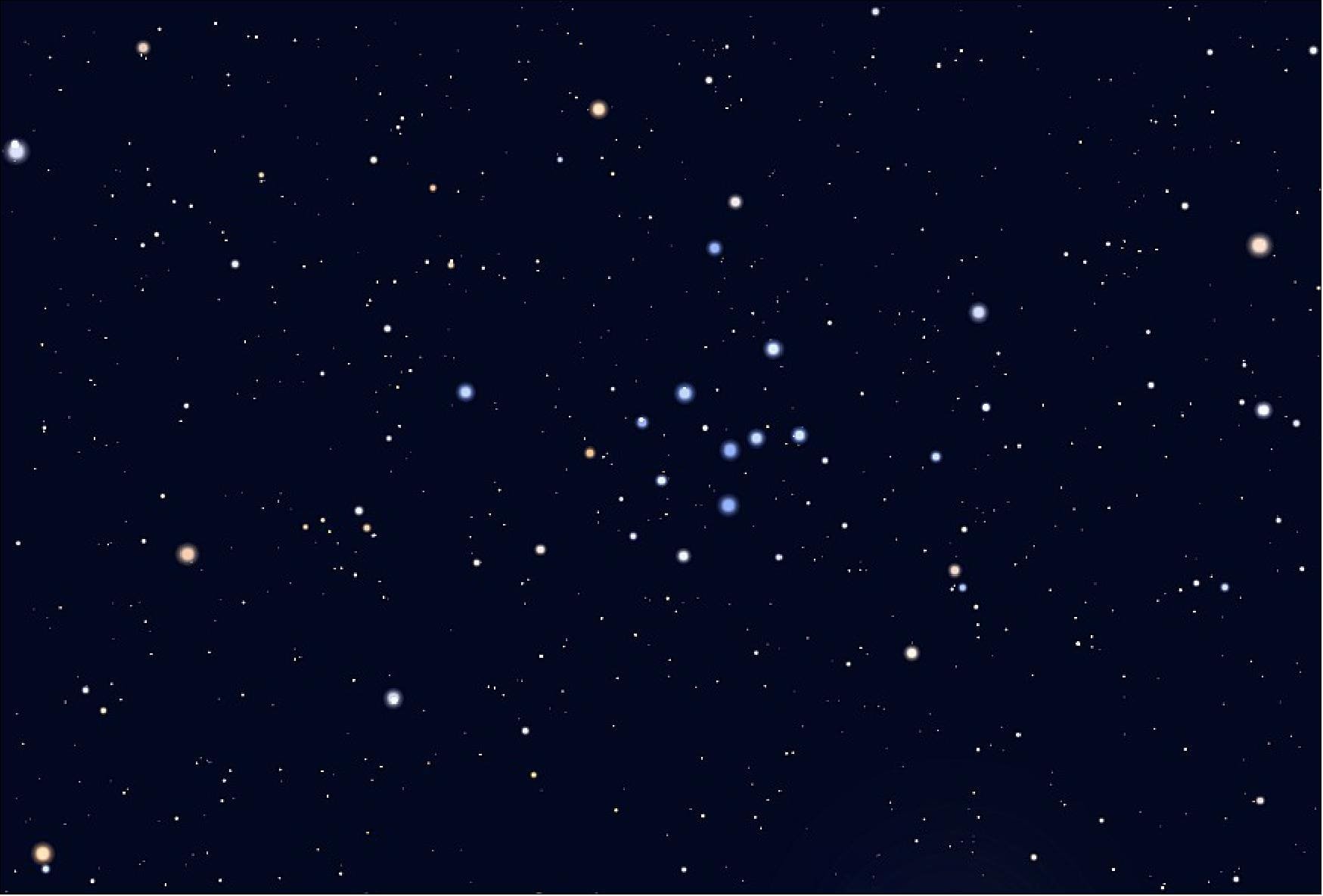
The C-19 stellar stream, the most metal-poor known, may originate from a disrupted globular cluster or dwarf galaxy. Researchers confirmed its uniform metallicity and velocity dispersion, challenging existing formation theories. The findings highlight C-19's potential as a key to understanding early galactic evolution.

Unveiling the Secrets of Metal-Poor Stars: Tracing Single Supernova Enrichment
Yutaka Hirai and colleagues used simulations to study mono-enriched stars, which form from a single supernova's ejecta. They found these stars are rare, with higher fractions at lower metallicities, and mostly form early in a galaxy's history near its center. This work provides new insights into early star formation and nucleosynthesis, with future observations expected to confirm these predictions.

Exploring the Origins of the Milky Way: Insights from Metal-Poor Stars
Metal-poor stars are ancient remnants of the early universe, formed from gas enriched by the first stars. Their low metallicity reveals insights into early chemical processes, star formation, and galaxy evolution. Found across the Milky Way and its satellites, they are studied using spectroscopy to uncover their diverse chemical histories, including carbon enhancement and neutron-capture processes. These stars serve as vital tools for exploring the universe's origins and the Milky Way's formation.

A Low Metallicity Binary Star Discovery in WLM Galaxy: A Glimpse into Stellar Mergers
Maude Gull and her team discovered a low-metallicity contact binary star system, WLM-CB1, in the WLM galaxy using data from the Hubble and James Webb Space Telescopes. This system, composed of two massive stars, is significant for its extremely low metal content, making it a unique case to study stellar evolution. The stars are likely in a contact phase, possibly leading to a merger in the future, which could result in a supernova or black hole. Further observations will help confirm the system’s nature and refine models of binary star interactions in metal-poor environments.