

Metallicity in Motion: How a Cepheid’s Phase Reveals New Clues About the Leavitt Law
Bhuyan et al. investigate how metallicity affects the Leavitt Law by measuring period–luminosity relations at multiple pulsation phases for Cepheids in the Milky Way, LMC, and SMC. They find that both the PL slope and the metallicity term vary significantly with phase, especially between short- and long-period Cepheids. Although these variations average out to familiar mean-light results, the phase-dependent approach reveals where metallicity influences Cepheid brightness most strongly, offering a clearer path to improving cosmic distance measurements.

Revisiting a Classic Stellar Tool: How Calcium Light Reveals the Metal Content of Stars
This paper revisits the Calcium II Triplet method for measuring stellar metallicity, using updated data and modern Python-based analysis tools. By recalibrating CaT line strengths across a large sample of red giant stars and adding the Gaia G-band, the authors produce a more robust metallicity calibration. The new results improve accuracy, especially for metal-rich stars, and better suit large surveys in the Gaia era.
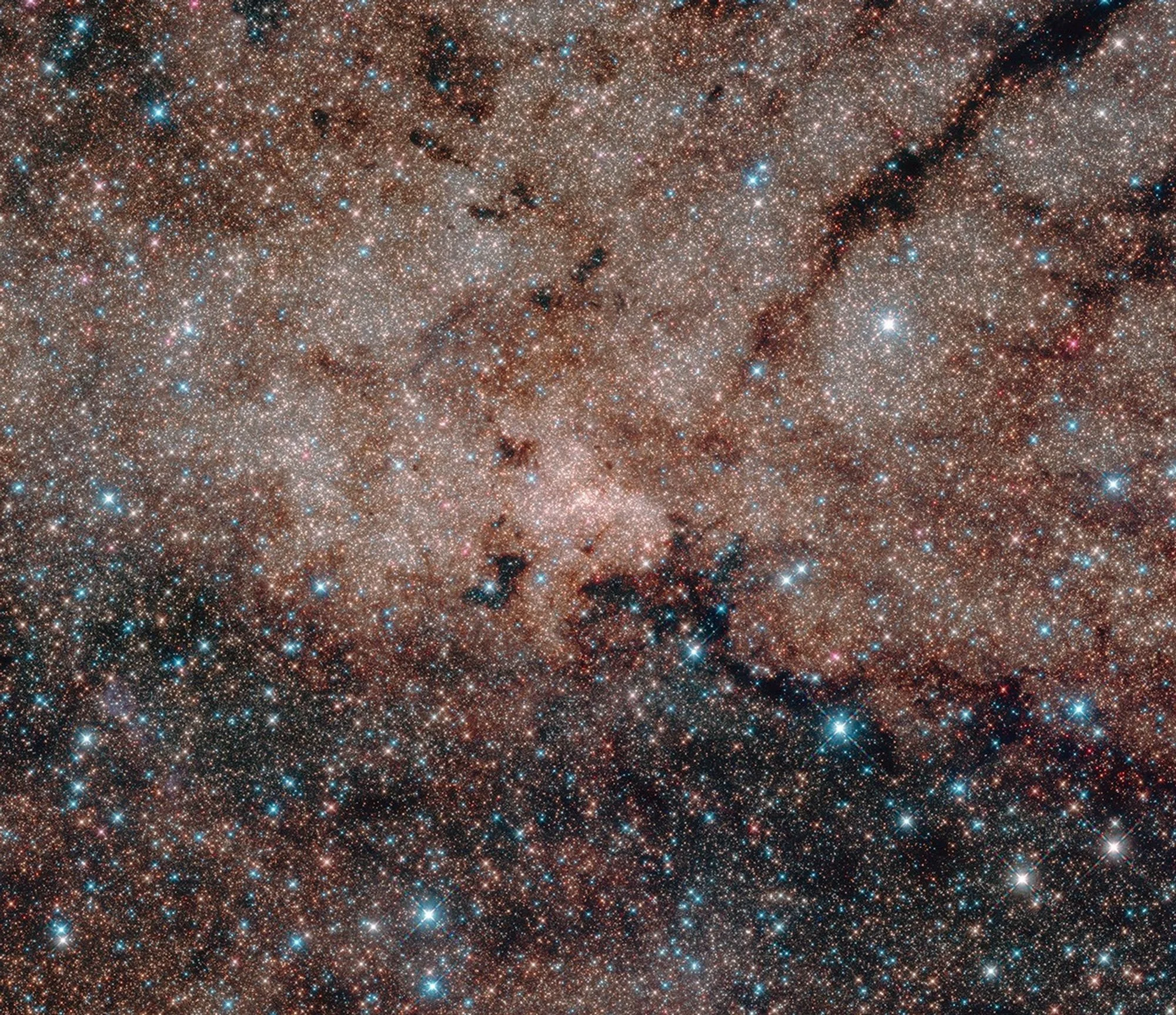
Mapping the Metals at the Milky Way’s Heart: A New Look at the Nuclear Star Cluster
This paper reanalyzes infrared spectra of M giant stars in the Milky Way’s nuclear star cluster using improved models. The authors find two stellar populations, a dominant metal-rich one and a significant metal-poor one, and detect a clear negative metallicity gradient. This gradient provides strong evidence that the cluster formed through an inside-out process driven by gas inflow and ongoing star formation.
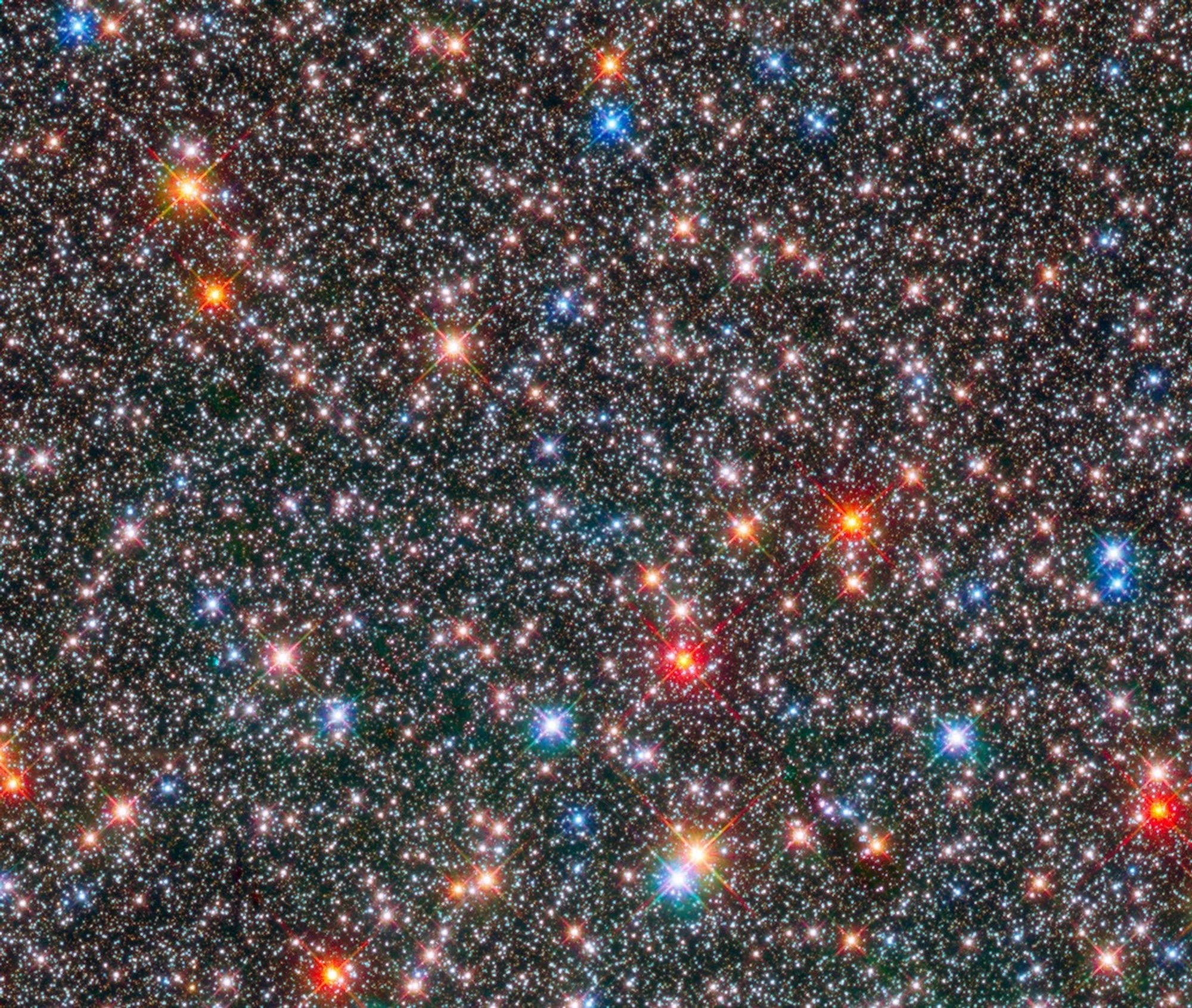
Revisiting the Two-Infall Model: How the Milky Way’s Bulge Formed in Two Acts
Miller et al. (2025) use over 30,000 chemical evolution models and machine learning to show that the Milky Way’s bulge formed in two major stages, a rapid early starburst followed by a slower, smaller second infall about 5 billion years later. This two-infall model explains the bulge’s bimodal metallicity and supports a composite origin involving both classical collapse and later bar-driven evolution.
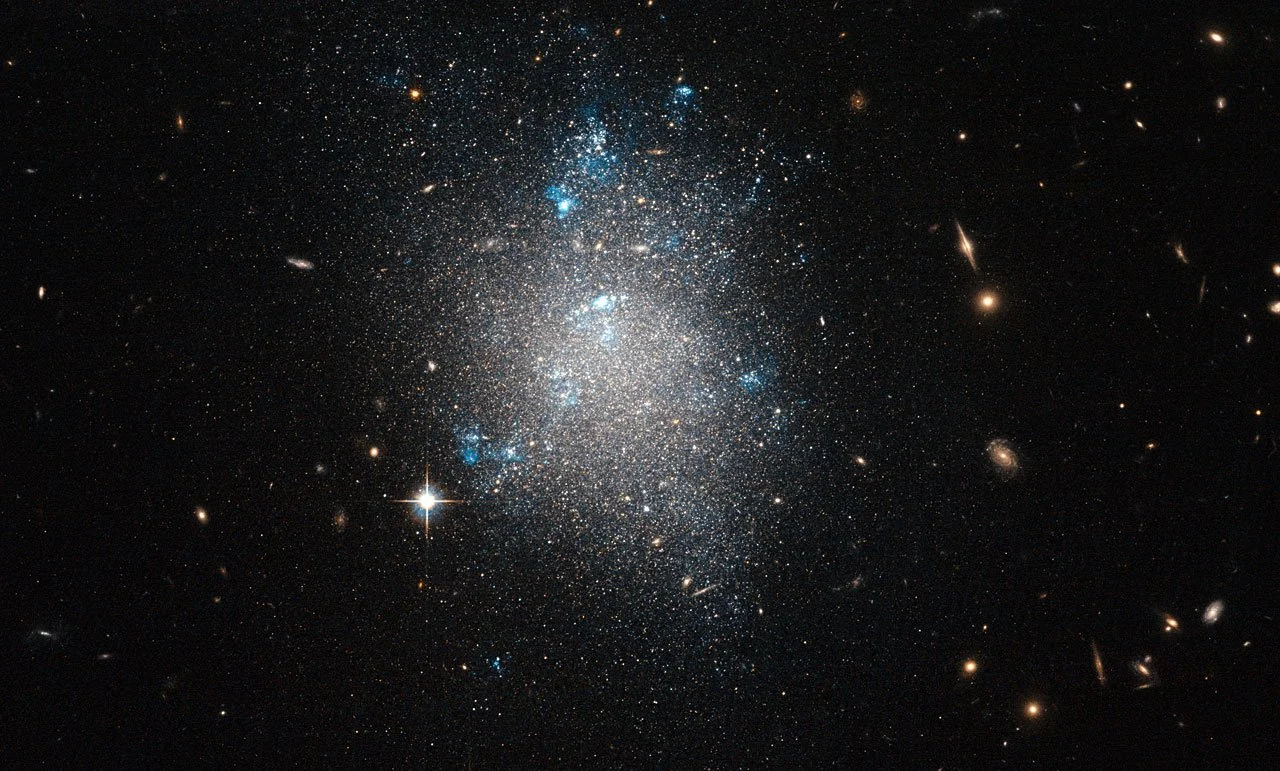
Mapping the Metallic Hearts and Ancient Halos of Dwarf Galaxies
Tau et al. study 17 simulated dwarf galaxies to track how their stars’ ages and metallicities change from the center to the stellar halo. They find universal negative metallicity gradients, frequent U-shaped age profiles driven by in-situ stars, and strong links between halo properties and the timing of satellite accretion. Overall, dwarf stellar halos preserve clear signatures of each galaxy’s unique merger and star-formation history.

Where Planets Become Brown Dwarfs: Tracing a Hidden Boundary in the Metal Content of Stars
Giacalone et al. analyze companions between 1–50 au and find that host-star metallicities split into two groups at a transition mass of about 27 MJup. Lower-mass companions orbit metal-rich stars, consistent with bottom-up planet formation, while higher-mass companions orbit stars with near-solar metallicity, indicating star-like formation. Orbital eccentricities also differ, supporting two distinct formation pathways.

Mapping the Stars with CSST: New Photometric Methods for Measuring Metallicity and Gravity
Lu et al. develop two methods to estimate stellar metallicity and surface gravity using CSST-like photometry. Testing both synthetic and real data, they achieve precisions of about 0.1 dex for metallicity and 0.4 dex for surface gravity. Their “giant–dwarf loci” method performs best, accurately classifying stars and improving metallicity precision. These techniques will enable large-scale stellar characterization with future CSST surveys.

When Metals Shape the Stars: How Chemical Yields Define Galactic Identities
Jason L. Sanders presents analytic models showing how metallicity-dependent stellar yields explain differences between galactic populations. By treating metal-dependent production as a built-in “delay time,” the models reveal why elements like aluminum trace star formation efficiency and outflows. Comparing predictions with APOGEE data, Sanders demonstrates that such yields naturally separate in-situ and accreted stars, offering a clear, mathematical framework for galactic chemical evolution.

How Giant Planets Collect Their Metals: A New Look at the Mass-Metallicity Relation
Chachan et al. analyze 147 giant exoplanets to refine the mass–metallicity relation. They find that smaller planets are metal-rich, while metallicity decreases with mass but flattens at about seven times solar. This suggests that giant planets continue to accrete heavy elements even during gas accretion, delaying runaway growth until 30–60 Earth masses and challenging classical formation models.

Exploring the Coldest Brown Dwarfs with Near-Infrared Colors
Leggett and collaborators use JWST data to study extremely cold Y dwarfs, comparing their near-infrared colors across JWST, Euclid, and Roman filters. They show that mid-infrared brightness at 4.6 microns reliably tracks temperature, while near-infrared colors vary with metallicity and gravity. The work highlights both the promise of upcoming surveys and the challenges of incomplete atmospheric models.

Faint Streams Hidden in Plain Sight: What the Mass–Metallicity Relation Tells Us About Tidal Disruption
Alexander Riley and collaborators use the Auriga simulations to test whether the mass–metallicity relation of galaxies rules out tidal disruption. They find that even heavily stripped satellites still follow the relation with little scatter, matching what’s seen in the Milky Way and Andromeda. This suggests many Local Group satellites have lost large fractions of their stars, and faint tidal streams may be revealed by future surveys.

Shining Light on Cepheids: How Metal Content Affects Their Role in Measuring the Universe
Ripepi and collaborators, using the C–MetaLL survey, studied 290 Cepheids with precise metallicity and Gaia distance data. They found that metal content significantly affects Cepheid brightness—about 0.4–0.5 magnitudes per tenfold metallicity change—stronger than some past estimates. Their results refine distance measurements, impact Hubble constant calculations, and suggest metallicity plays a key role in the cosmic distance ladder.

Elemental Secrets of a Stellar Stream: Chemical Abundances in GD-1’s Disrupted Cluster
Zhao et al. analyzed seven stars in the GD-1 stellar stream using high-resolution spectroscopy, finding remarkably consistent metallicities and element abundances. The results support a single low-mass globular cluster origin, with no evidence for multiple stellar populations. Elevated europium levels point to early r-process enrichment, while low strontium and yttrium suggest limited s-process contribution.

How Metal Shapes the Light of Cepheids: A Stellar Evolution View of the Leavitt Law
This study uses stellar evolution models to show how metallicity affects the brightness-period relation (Leavitt Law) of Cepheid stars. The authors find that lower-metallicity Cepheids have steeper and slightly brighter period-luminosity relations. Their predictions match key observational data and support current methods for measuring the Hubble constant, especially those using reddening-free magnitudes.

Building Planets Close to Home — Can Pebble Accretion Form Hot Worlds?
This study explores whether close-in exoplanets can form via pebble accretion. It finds that low disc turbulence and moderate pebble fragmentation speeds are key for successful growth. While higher metallicity helps, it's less influential than stellar mass or disc conditions. Timing of planetesimal formation is also critical.
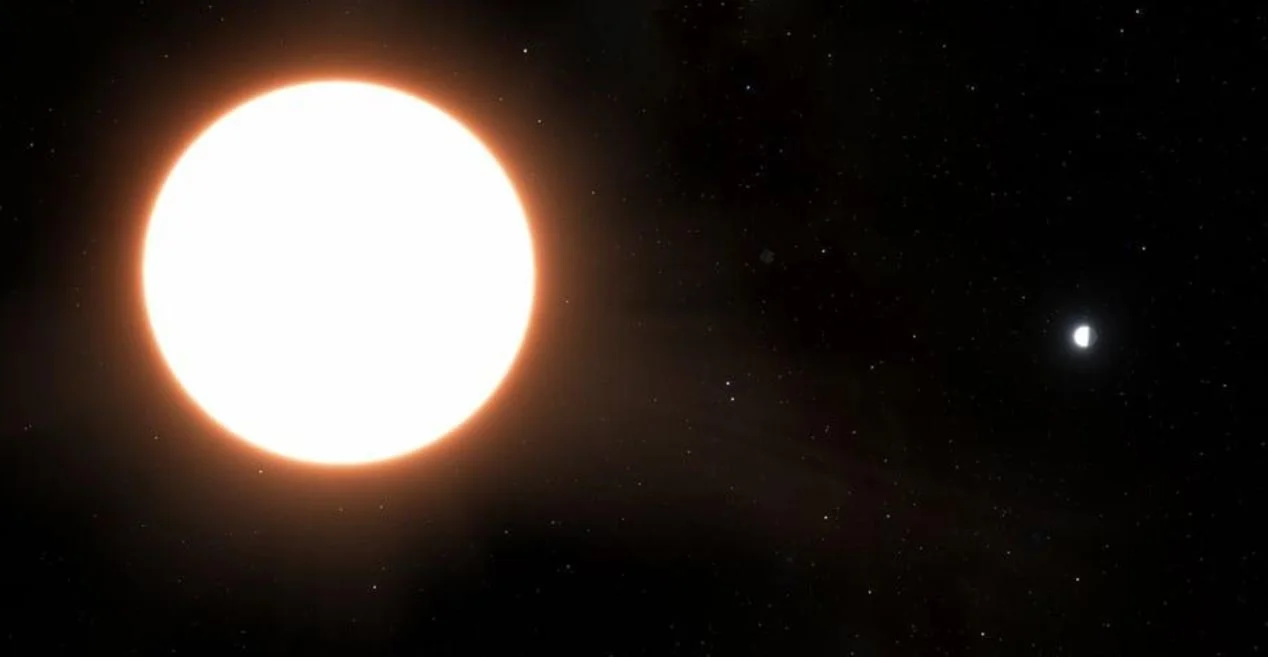
Building Worlds from Pebbles: How Stellar Mass and Metallicity Shape Planetary Systems
Pan et al. use pebble accretion simulations to study how stellar mass and metallicity affect planet formation. They find super-Earths peak around mid-mass stars, while giant planets form more around massive, metal-rich stars. Long-term dynamics reveal that single-planet systems around metal-rich stars are often more eccentric and inclined due to gravitational interactions.

Exploring the Galactic Halo with RR Lyrae Stars
Cabrera Garcia et al. analyze over 135,000 RR Lyrae stars to study the Milky Way’s halo structure. They confirm the existence of inner and outer halo components and identify 97 dynamically tagged groups (DTGs) using motion-based clustering. Many DTGs align with known galactic substructures, such as Gaia-Sausage-Enceladus and the Helmi Stream, highlighting past galaxy mergers. Their findings reinforce the idea that the Milky Way’s halo formed through multiple accretion events.

The Mass-Loss Mystery of Red Supergiants: Investigating Metallicity's Role
The study investigates whether the mass-loss rates of red supergiants (RSGs) depend on metallicity by analyzing thousands of RSGs across multiple galaxies. Results show no strong correlation between metallicity and mass loss, though a "kink" in the mass-loss relation shifts with metallicity. The findings suggest that other factors, like internal turbulence, may drive mass loss rather than metallicity. Future observations, especially with JWST, could clarify remaining uncertainties.

Unveiling the First Stars: How Population III Stars Impact the 21cm Signal
Ventura et al. investigate how Population III stars influence the 21cm signal by using the meraxes semi-analytical model. They find that while Pop. III stars do not significantly alter reionization, their strong X-ray emissions heat the intergalactic medium at z ≥ 15, affecting the 21cm signal. Their simulations suggest that SKA1-low could detect these effects, potentially providing indirect evidence of the first stars in the universe.

Stellar Secrets: Mapping M Dwarfs with SAPP
The adapted Stellar Abundances and atmospheric Parameters Pipeline (SAPP) successfully analyzes M dwarf stars, focusing on temperature, surface gravity, and metallicity using near-infrared spectra. Validated with APOGEE data, it shows good accuracy and prepares for missions like ESA’s Plato. Future updates aim to enhance precision and include full chemical abundance analysis.