

Looking Into the Dark: New Insights from Ultra-Faint Satellites of the Milky Way
The study explores two ultra-faint dwarf galaxies, Centaurus I and Eridanus IV, using deep imaging. Centaurus I is stable with no signs of disruption, while Eridanus IV shows an intriguing extended feature, possibly from tidal interactions or other phenomena. These findings enhance our understanding of galaxy formation.
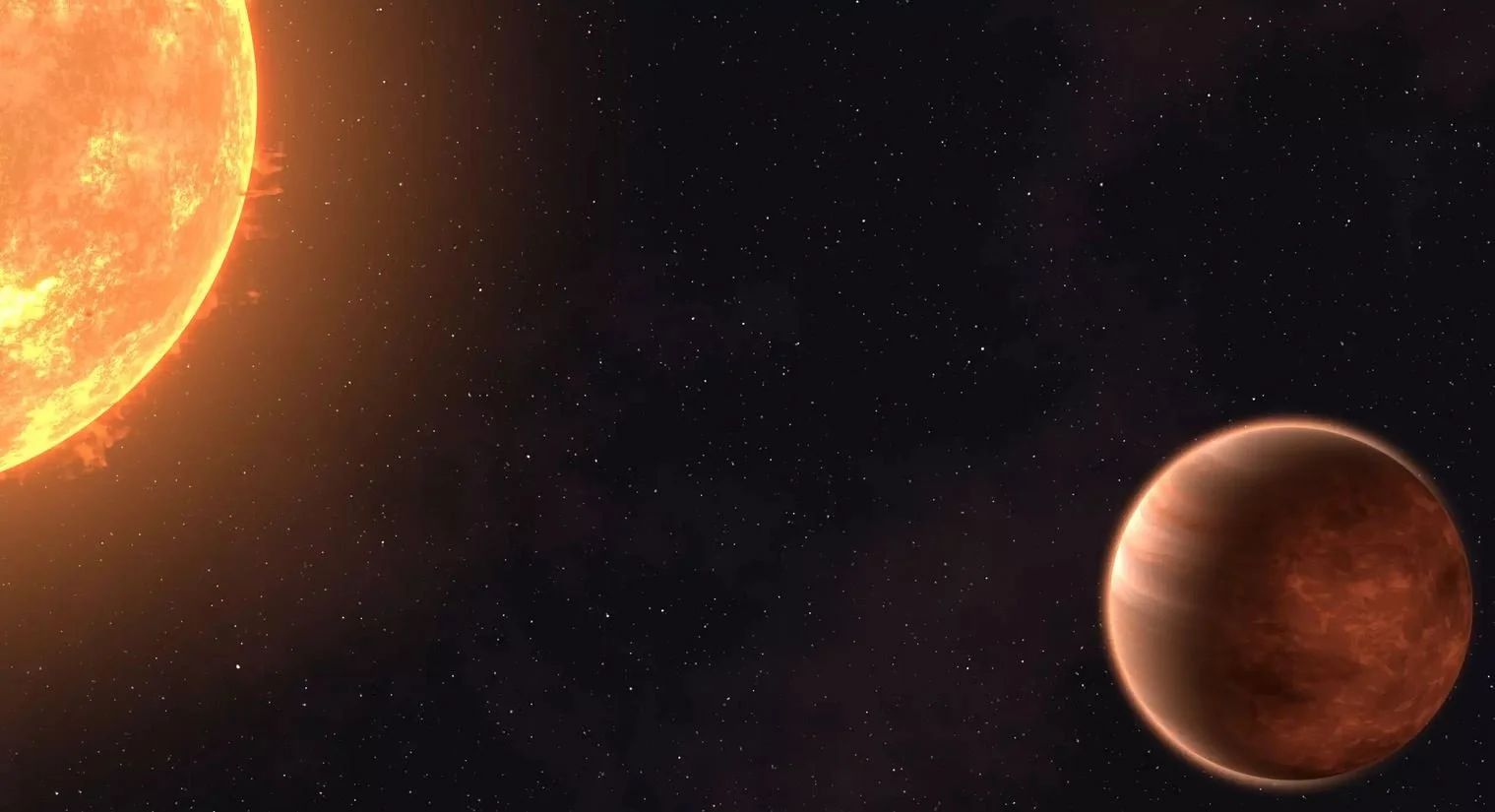
Peering Inside WASP-43b: Exploring Tidal Decay and Orbital Evolution
Researchers studied the ultra-hot Jupiter WASP-43b using data from HARPS, JWST, and other sources, detecting tidal decay and apsidal precession for the first time in an exoplanet system. These phenomena reveal strong gravitational interactions with its host star but raise unanswered questions about the planet's unique dynamics. The findings provide critical insights into the internal structure and evolution of hot Jupiters.

Exploring the Orbital Properties of Decameter-Sized Earth Impactors
The paper examines decameter-sized asteroids that impact Earth, comparing their observed frequency with predictions from telescopic data, which differ significantly. Using new data from U.S. satellite sensors, the study analyzes 14 impact events, finding no strong evidence for recent tidal disruptions as a cause for the discrepancy. Both impactor and asteroid populations likely originate from similar main asteroid belt regions, with most objects delivered through key orbital resonances.

Unveiling Star Formation: How Our Galaxy's Past Shapes Its Future
This study examines how recent bursts of star formation shaped the Milky Way's chemical evolution and element distribution. Using models and data from Gaia, the authors show that these episodes create "wiggles" in the abundance gradient and alter element ratios like oxygen-to-iron. Star formation bursts also impact star migration and highlight the galaxy's dynamic past, offering insights into its future evolution.

Decoding Galactic Deuterium: Insights from Protostellar Outflows Using JWST
Francis et al. used JWST to measure deuterium-to-hydrogen ratios in protostellar outflows, revealing significant spatial variations and lower-than-expected values. The study suggests deuterium depletion onto dust grains and its release in shocks may explain these discrepancies. By linking HD emissions with shock tracers like sulfur, the research highlights the role of deuterium in understanding Galactic chemical evolution and showcases JWST’s capabilities for isotope studies.

Unveiling Trends in Exoplanet Atmospheres with JWST
Researchers analyzed JWST data to uncover atmospheric trends in eight gas giant exoplanets, focusing on sulfur dioxide (SO₂), carbon dioxide (CO₂), and carbon monoxide (CO). They found that SO₂ correlates with cooler, smaller planets, while CO₂ highlights metallicity and CO dominates in hotter atmospheres. A new SO₂-L vs. CO₂-L diagram offers a framework for classifying exoplanet atmospheres, setting the stage for deeper insights as more data becomes available.

Exploring the Invisible: Searching for Primordial Black Holes in the Milky Way
A study led by Przemek Mróz used the OGLE survey to search for primordial black holes (PBHs) as dark matter candidates in the Milky Way. Analyzing 20 years of data from 80 million stars, the team found no long-timescale microlensing events, placing strict limits on the contribution of PBHs to dark matter. These findings challenge theories linking PBHs to dark matter or black hole merger rates observed by gravitational wave detectors.

Understanding the Colors and Movements of Trans-Neptunian Objects: A Dive into Their Origins and Dynamics
The study analyzes 696 trans-Neptunian objects (TNOs) to explore their sizes, colors, and shapes, linking them to their formation regions and migration. Two main color groups, NIRF and NIRB, reveal distinct origins, with Cold Classicals being mostly NIRF and dynamically excited classes showing mixed populations. The findings support models of Solar System evolution and provide insights into planetesimal formation and Neptune's migration.

The Small Magellanic Cloud: Mapping the Dance of Stars and Gas
The study explores the Small Magellanic Cloud's structure and evolution using Gaia data. Younger stars show rotation in a stretched disk, while older stars form a compact ellipsoid. Interactions with the Large Magellanic Cloud influence its shape, creating anomalies and stretching its stars and gas. This research highlights the dynamic history of the SMC and its ongoing transformation.

Exploring the Oort Cloud: How Long Do Comets Stay Near Planets?
The study explores how comets from the Oort Cloud interact with planets, using models to simulate their evolution under galactic tides, stellar encounters, and planetary forces. It finds that comets typically stay in the planetary region for about 100 million years before being ejected or transitioning into other populations like Centaurs. These findings reveal how dynamic forces shape the solar system's structure and history.

Unraveling the Milky Way's Warp: Insights from Open Clusters
Peng and He analyzed the Milky Way's warp using open star clusters, revealing a flattening trend influenced by a local tilt in the Galactic disk near the Sun. They found systematic differences between dynamical and geometric warp measurements, with older clusters showing more pronounced warping. The study refined the Sun's vertical velocity and highlighted dynamic changes in the warp’s structure, challenging earlier models and paving the way for future research.
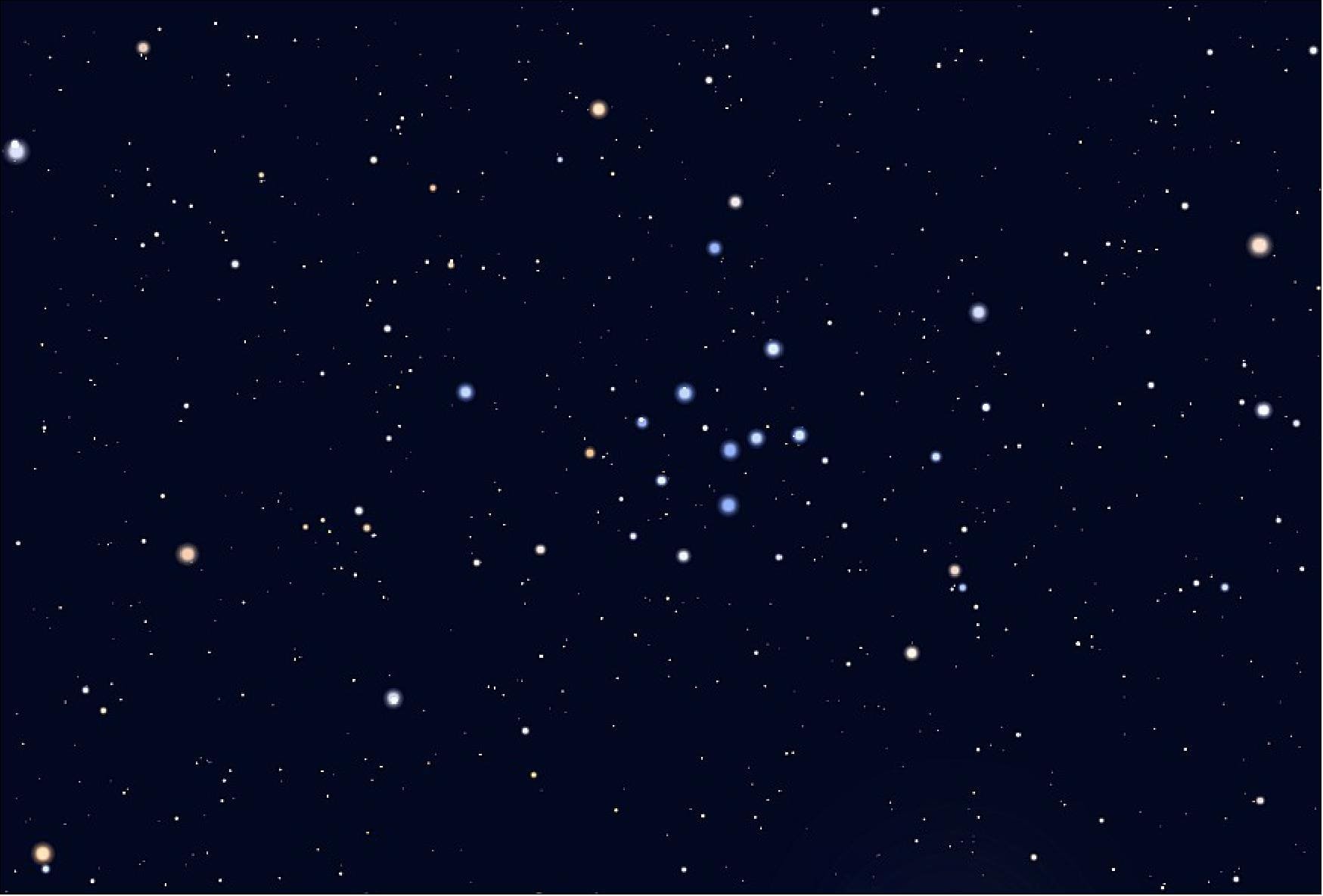
Exploring the Metal-Poor Stream C-19: A Glimpse into Galactic Formation
The C-19 stellar stream, the most metal-poor known, may originate from a disrupted globular cluster or dwarf galaxy. Researchers confirmed its uniform metallicity and velocity dispersion, challenging existing formation theories. The findings highlight C-19's potential as a key to understanding early galactic evolution.

Crafting Accurate Orbits: Simplifying the Path to Keplerian Elements
Flores and Fantino propose a branchless algorithm (AL3) to improve the accuracy and efficiency of converting spacecraft trajectories into Keplerian orbital elements. By eliminating branching and using the ATAN2 function, their method enhances precision by up to 100 times and reduces computational time by 43%. For systems with limited capabilities, a hybrid approach (AL5) balances performance and simplicity, making these advancements crucial for modern satellite navigation and orbit optimization.

Unveiling the Chemical Diversity of Interstellar Gas in the Solar Neighborhood
Ramburuth-Hurt et al. studied interstellar gas near the Sun, revealing significant chemical diversity. Using UV spectroscopy, they found large variations in dust depletion and estimated metallicities for individual gas clouds, uncovering some with super-Solar metallicities. Their work highlights the complexity of the interstellar medium and the importance of analyzing individual components to understand the Milky Way's evolution.

Spinning Stars: Exploring Rotation Across Stellar Spectral Types
This study examines how stellar rotational velocity varies with spectral type and evolutionary stage. Using data from nearly 50,000 stars, it finds that hot stars (O0 to F2) rotate faster than cool stars (F2 to M9), with rotation slowing significantly as stars evolve. Magnetic braking and stellar winds are key factors in this decline, highlighting how rotation influences a star's lifecycle.

How Many Starbursts Does It Take to Shape a Galaxy Core?
Olivia Mostow and collaborators explore how bursts of star formation reshape galaxy cores, addressing the core-cusp problem in low-mass galaxies. Using innovative simulations, they show that repeated bursts effectively flatten dark matter cusps, while single bursts struggle to do so, especially in ultra-faint dwarf galaxies. The study emphasizes the importance of burst timing and energy, offering insights into galaxy evolution and dark matter behavior.

Mapping the Stars: A Deep Dive into the Kepler Input Catalog
The study refined atmospheric parameters for nearly all 195,478 stars in the Kepler Input Catalog using photometric data and machine-learning techniques. A new 3D dust map improved accuracy in measuring properties like metallicity, temperature, and gravity. The results, validated against independent datasets, enhance our understanding of stellar populations and support exoplanet and astrophysical research, offering a more precise catalog for future studies.

Tracking Galactic Motions: Shapes and Tilts of Stellar Velocity Patterns
Dmytrenko et al. analyze velocity ellipsoids of red giants and subgiants from Gaia DR3, uncovering kinematic distortions like the Galactic warp and non-axisymmetric features. They find that ellipsoid shapes and orientations vary with Galactocentric distance, reflecting gravitational influences and anisotropic stellar motions. This study provides detailed insights into the Milky Way's complex dynamics beyond the solar neighborhood.
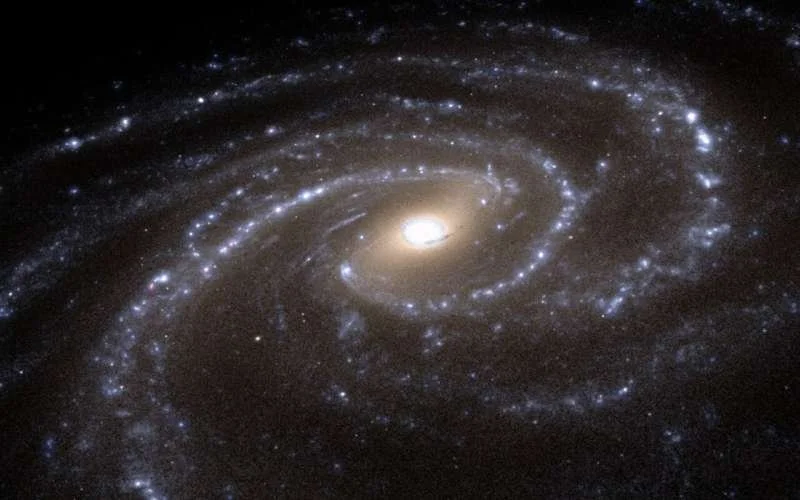
Decoding Galactic History: How the Milky Way’s Disk Thickness Tells the Tale of Cosmic Collisions
The study reveals the Milky Way’s merger history through its disk thickness, using stellar age data and simulations. Key events include the Gaia-Sausage-Enceladus merger 11 billion years ago and interactions with the Sagittarius dwarf galaxy. Simulations confirm these patterns, showing a transition from a thick to thin disk over billions of years. Despite uncertainties, the findings provide a robust method to trace galactic evolution.

Unveiling Three New Stars: Rare Hot Pre-White Dwarfs Discovered
Astronomers discovered three rare hydrogen-deficient pre-white dwarfs with helium-dominated atmospheres. These include an O(He) star likely formed from helium white dwarf mergers, a PG1159 star with the lowest known surface gravity in its class, and a CO-sdO star formed from disrupted white dwarf mergers. Their unique characteristics shed light on unconventional stellar evolution pathways.