

A Super-Puffed Giant: WASP-193b’s Surprisingly Low Density and Well-Aligned Orbit
WASP-193b is an extremely low-density super-puff planet, with a size similar to Jupiter but a mass closer to Neptune. Unlike other super-puffs with tilted orbits, it follows a well-aligned path around its star. Researchers used the Magellan Clay Telescope to refine its properties and confirm its unusual density. Future studies, including those with JWST, may reveal whether WASP-193b is actively losing mass, shedding light on how such planets form and evolve.
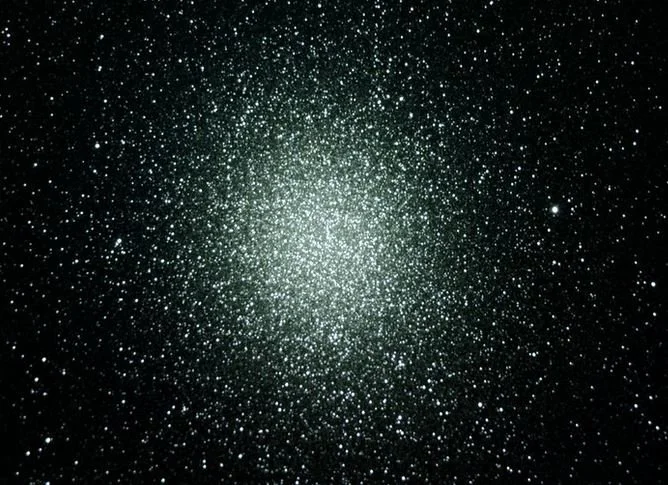
Exploring the Kinematics of Omega Centauri’s Metallicity Populations
Vernekar et al. (2025) investigate the motions of different metallicity populations in Omega Centauri using Gaia and Hubble data. They find no significant differences in movement between metal-rich and metal-poor stars, suggesting that all populations are well-mixed. The study also confirms that Omega Cen rotates uniformly. These findings challenge the idea that metal-rich stars were accreted and instead support a self-enrichment scenario for the cluster’s formation.
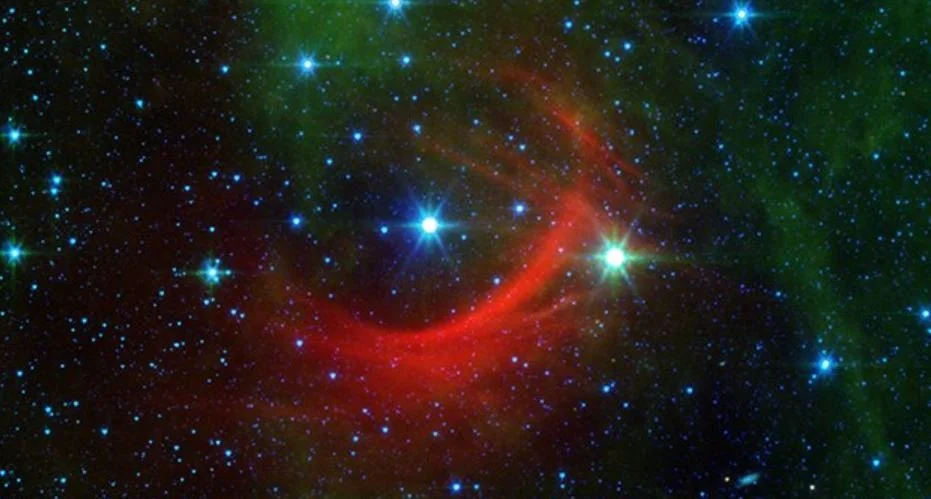
Unraveling the Mystery of CKR02A: A Runaway Star or a Colliding Wind Region?
CKR02A, a compact radio source in NGC 6334A, may be a colliding wind region (CWR) of two massive stars or the bow shock of a runaway star. VLA observations show its arc-shaped structure and non-thermal emission. While a CWR requires unseen massive stars, the runaway scenario aligns with CKR02A's motion. Both explanations have challenges, and further studies are needed to determine its true nature.

Predicting Small Planet Hosts: Machine Learning’s Role in Exoplanet Discovery
Torres-Quijano et al. used machine learning to predict which stars are likely to host small planets based on their chemical composition. Their model identified sodium (Na) and vanadium (V) as key indicators, outperforming iron (Fe). The study validated its predictions and suggested that future exoplanet searches, including NASA missions, could use these findings to improve planet detection efficiency. This research advances our understanding of planetary formation and the star-planet connection.
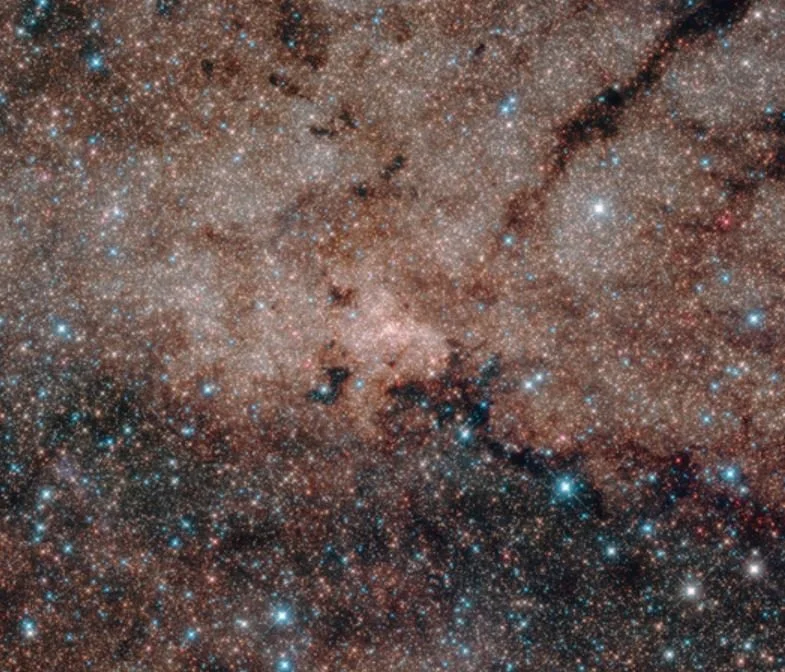
A Chemical Census of the Milky Way’s Nuclear Star Cluster
The study analyzes the chemical composition of nine stars in the Milky Way’s Nuclear Star Cluster (NSC) using infrared spectroscopy. Most elements match the inner bulge, suggesting a shared history, but sodium levels are unexpectedly high, hinting at a unique enrichment process. This research provides crucial insights into the NSC’s evolution and its connection to the Milky Way’s central regions.

Unveiling Exoplanet Surfaces: Lessons from Jupiter and Enceladus’ Opposition Effect
The study investigates the opposition effect—a brightening seen when planets and moons are directly opposite the Sun—on Jupiter and Enceladus using Cassini data. The results show that Jupiter's peak is broader due to coherent backscattering (CB), while Enceladus exhibits both CB and shadow hiding (SH). This suggests that opposition peak width could indicate whether an exoplanet has a solid or gaseous surface, but current telescopes lack the precision to detect this effect on distant planets.

TOI-512b: A Super-Earth Around a K-type Star
Rodrigues et al. confirm TOI-512b, a super-Earth orbiting a K-type star, using TESS and ESPRESSO. The planet has a radius of 1.54 Earth radii and a mass of 3.57 Earth masses, suggesting a rocky composition with a small core and minimal atmosphere. A second candidate planet was ruled out. While TOI-512b is not ideal for current atmospheric studies, it remains a valuable target for future exoplanet research.

How Do Bars Affect the Evolution of Disc Galaxies?
Bars in disc galaxies help stabilize their evolution by reducing their dependence on environmental factors. Unbarred galaxies show strong environmental effects on star formation, color, and metallicity, while barred galaxies exhibit weaker variations. Bars likely regulate internal processes, such as gas movement and star formation, making them crucial in galaxy evolution. This study underscores the importance of bars in shaping galactic properties, using data from the MaNGA survey.
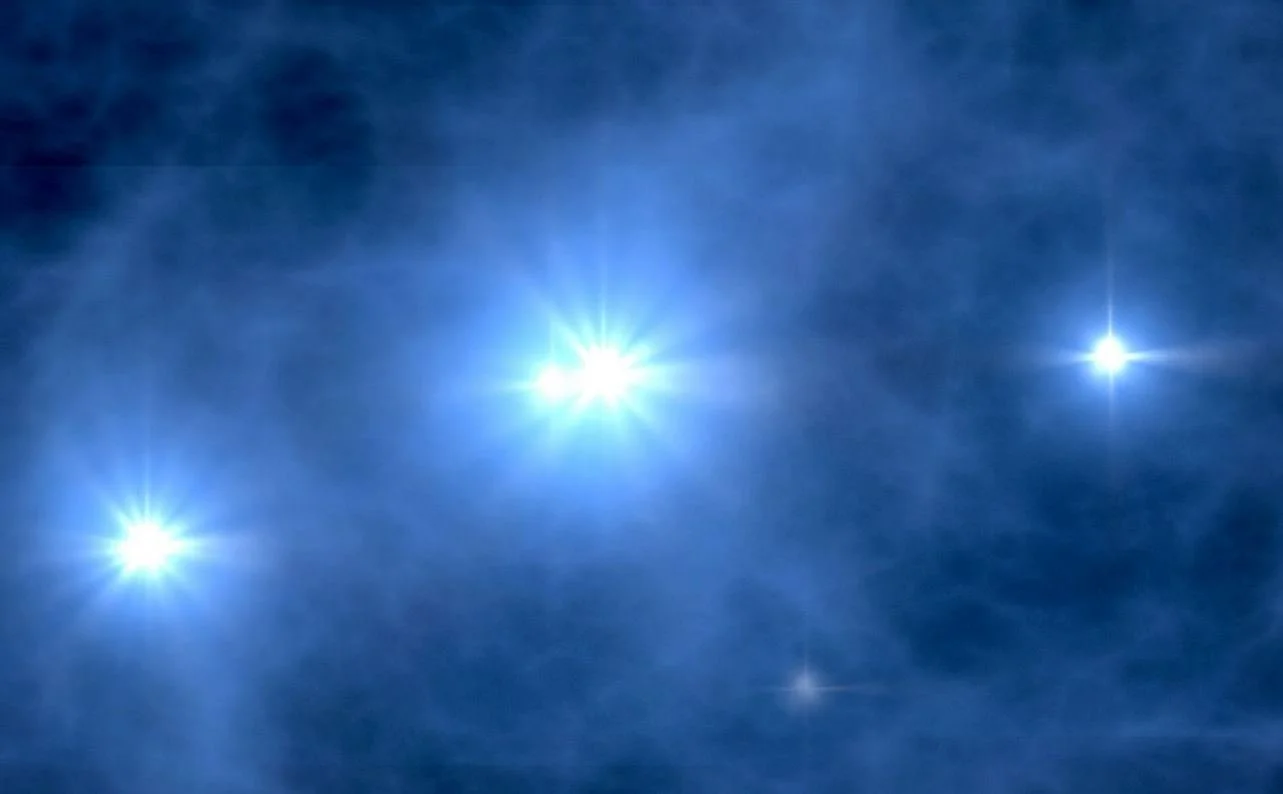
A New Look at the Earliest Stars: Understanding Population III Spectra
This study refines models of Population III (Pop III) stars, the first stars in the universe, using the GALSEVN framework. It confirms that strong helium emission can help identify Pop III stars but only within their first million years. The study also explores their role in cosmic reionization and predicts their impact on gravitational waves from binary black hole mergers. Future telescopes and detectors may soon provide evidence of these ancient stars.

The Titanium Chemistry of WASP-121 b: A High-Precision Look at an Ultrahot Jupiter
Researchers used high-resolution spectroscopy with ESPRESSO to study the atmosphere of WASP-121 b, detecting Ti I at high significance but no TiO. Titanium appears concentrated in the planet’s equatorial jet, challenging existing models. These findings highlight complex atmospheric chemistry and the need for further observations with JWST and ELT.
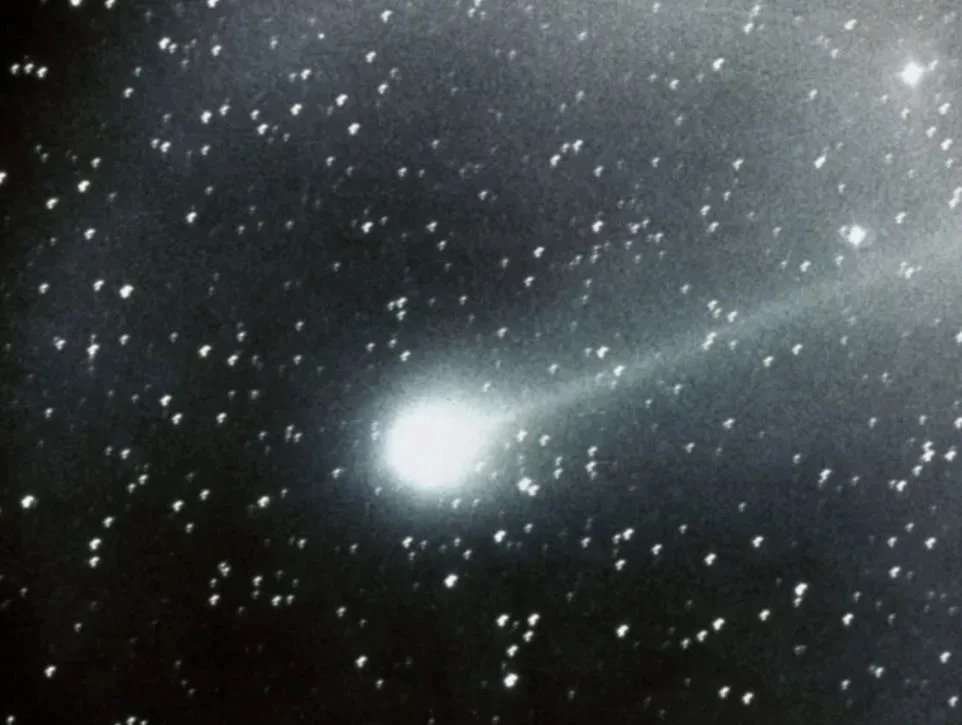
A Mission to Meet Halley’s Comet in 2061
The HCREM (Halley Comet Rendezvous Mission) aims to reach Halley’s Comet by 2056, using Jupiter’s gravity assist and electric propulsion to study its activity long before it nears the Sun. Unlike past flybys, this mission would travel alongside Halley for years, capturing detailed data with an innovative wide-angle camera. Scientists hope to uncover key insights into the comet’s structure, evolution, and volatile release. A launch before 2040 is crucial to meet the timeline and maximize scientific returns.

Unraveling the Binarity of B-type Supergiants in the Small Magellanic Cloud
A new study by Britavskiy et al. examines the binary nature of early B-type supergiants (BSGs) in the Small Magellanic Cloud using data from the Binarity at LOw Metallicity (BLOeM) survey. Analyzing 262 stars, the team found that about 40% are likely binaries, with a sharp drop in binarity for stars cooler than 18,000 K. The findings suggest that mergers play a key role in BSG evolution, and that binary fractions remain consistent across different metallicity environments. Future observations will further clarify how these massive stars evolve.
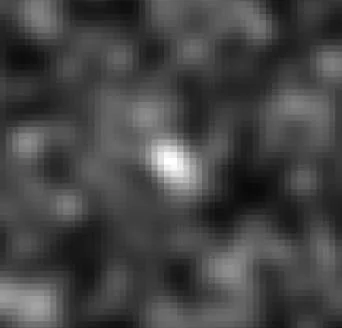
A New Discovery in the Andromeda Halo: The Faint Dwarf Galaxy Pegasus VII
Astronomers have discovered Pegasus VII (Peg VII), a faint ultra-faint dwarf galaxy near Andromeda (M31), using data from the UNIONS survey and follow-up imaging. Peg VII is dim (MV = -5.7), extended (177 pc), and located 331 kpc from M31, possibly beyond its dark matter halo. Its elongated shape suggests a past interaction with M31, but it could also be on its first infall. This discovery hints at more hidden dwarf galaxies in the Local Group, awaiting detection in deep surveys.

Tracing the Past: The Ancient Metal-Poor C-19 Stellar Stream Extends Over 100 Degrees
The C-19 stellar stream, one of the most metal-poor structures in the Milky Way, has been found to extend over 100 degrees in the sky. Using Gaia data and advanced algorithms, researchers identified 12 new members, confirming its ancient origins. The stream is wider and more dynamically hot than expected, suggesting early disruption by dark matter or stellar interactions. These findings provide new insights into the formation of the first stellar structures in our galaxy.

Unveiling the First Stars: How Population III Stars Impact the 21cm Signal
Ventura et al. investigate how Population III stars influence the 21cm signal by using the meraxes semi-analytical model. They find that while Pop. III stars do not significantly alter reionization, their strong X-ray emissions heat the intergalactic medium at z ≥ 15, affecting the 21cm signal. Their simulations suggest that SKA1-low could detect these effects, potentially providing indirect evidence of the first stars in the universe.

Peering into the Starspots: The First Doppler Image of λ Andromedae
Researchers produced the first Doppler image of λ Andromedae, revealing four large starspots and refining its orbital parameters with high precision. By correcting radial velocity signals caused by these spots, they confirmed the star’s nearly circular orbit and identified its companion as a likely brown dwarf. This study improves our understanding of magnetic activity in evolved stars and its impact on orbital measurements.

Stellar Secrets: Mapping M Dwarfs with SAPP
The adapted Stellar Abundances and atmospheric Parameters Pipeline (SAPP) successfully analyzes M dwarf stars, focusing on temperature, surface gravity, and metallicity using near-infrared spectra. Validated with APOGEE data, it shows good accuracy and prepares for missions like ESA’s Plato. Future updates aim to enhance precision and include full chemical abundance analysis.

The Search for Life on Hycean Worlds: Could These Ocean Planets Host Microbial Life?
Hycean worlds are ocean-covered exoplanets with hydrogen-rich atmospheres, offering potential habitats for microbial life. The study shows that small temperature changes significantly affect evolutionary rates, with warmer conditions accelerating complexity and biosignature production. These findings highlight warmer Hycean planets as prime targets for detecting life.
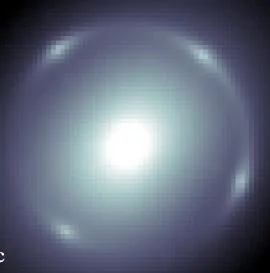
Altieri’s Lens: A Rare Einstein Ring Discovered by Euclid
O’Riordan et al. discovered a rare Einstein ring, “Altieri’s Lens,” around NGC 6505 using Euclid data. The lensing galaxy, at redshift z=0.042, bends light from a background galaxy, forming a near-perfect ring. Detailed analysis reveals a low dark matter fraction and a heavier-than-usual stellar population, providing new insights into galaxy structure and evolution.

Cygnus A Through JWST’s Eyes: Unraveling a Galactic Jet with a Twist
Astronomers used JWST to study Cygnus A, revealing powerful jets from a black hole shaping the galaxy’s gas into a spiral flow. High-speed outflows, or “bullets,” were detected, driven by jet-gas interactions. These findings show how black hole jets influence galaxy evolution by ejecting and heating gas.