

Sniffing Out Sulfur: JWST Detects Chemical Clues in the Atmosphere of TOI-270 d
L. Felix and colleagues used JWST data to study the atmosphere of TOI-270 d, a sub-Neptune exoplanet. They found strong signs of methane, carbon dioxide, and possibly sulfur-based molecules like CS₂. Their high-resolution analysis suggests a clear, metal-rich atmosphere, but further observations are needed to confirm its chemical makeup.
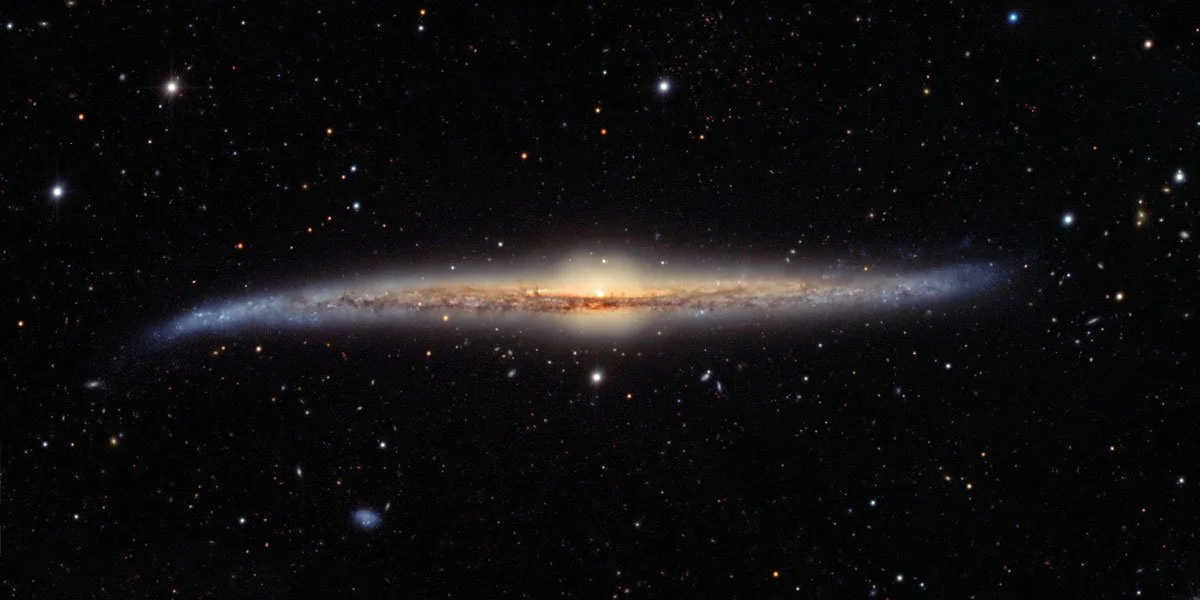
Galactic Warps Through Time: Bending Disks from the Early Universe to Today
This study analyzes nearly 1,000 edge-on galaxies to track how common and strong vertical disk warps were over time. The researchers find that S-shaped warps were far more frequent and pronounced around 10 billion years ago, likely due to increased galaxy interactions and gas content. These results suggest warps are key indicators of a galaxy’s dynamic past.
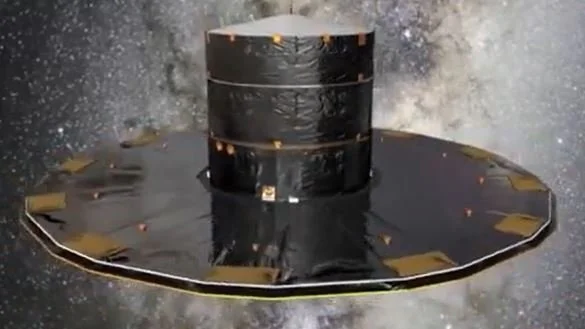
Reading Between the Stars: How to Trust Gaia’s Parallaxes for Unstable Sources
This paper presents a method to correct Gaia's parallax uncertainties for stars with poor astrometric fits, typically caused by binaries. By simulating Gaia observations, El-Badry shows that uncertainty can be reliably adjusted using a formula based on RUWE, brightness, and parallax. This correction allows astronomers to use data from complex systems that would otherwise be discarded.
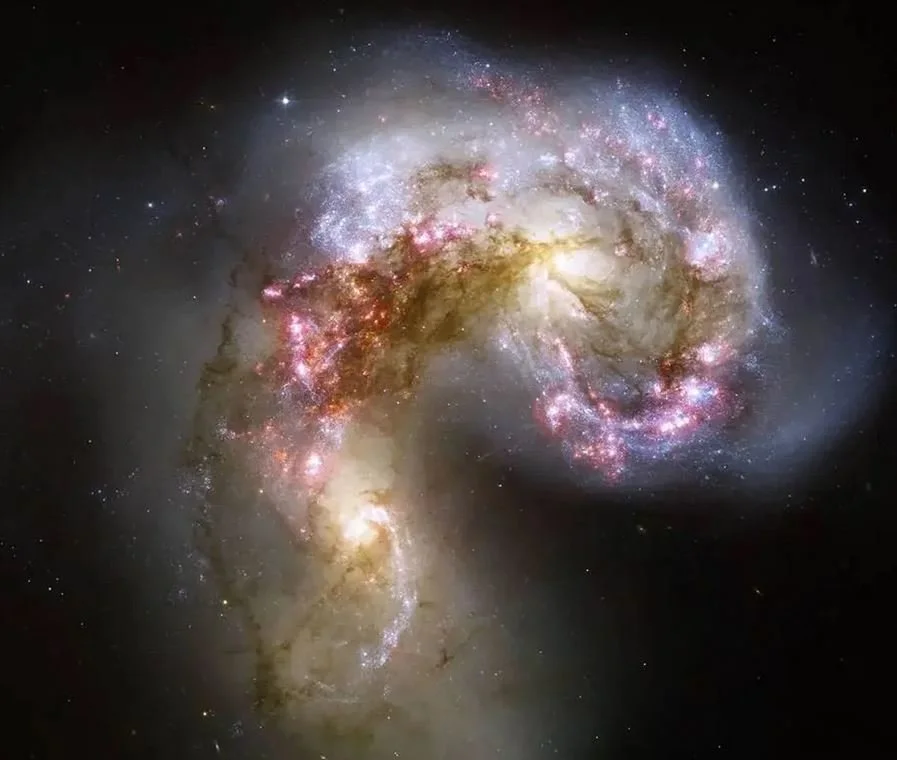
Stars on the Run: Following the Fate of Stripped-Tail Star Formation in Galaxies
This study uses simulations to explore how stars form in gas tails stripped from galaxies by ram pressure. Most stars form near the galaxy and fall back, contributing to a thickened disc rather than escaping into the cluster. While metallicity and velocity trends generally follow outside-in stripping, fallback and mixing complicate the picture. These stars likely don't contribute significantly to intracluster light.

Unwinding the Light: A Deep Dive into the Shape and Brightness of Spiral Arms in Galaxies
This study analyzes the structure of spiral arms in 19 nearby galaxies, using infrared images to measure their shape, brightness, and width. The authors find that traditional models don’t fully capture the complexity of real spiral arms and propose a new, more flexible model. Their work improves how spiral arms are represented, helping us better understand galaxy structure and evolution.
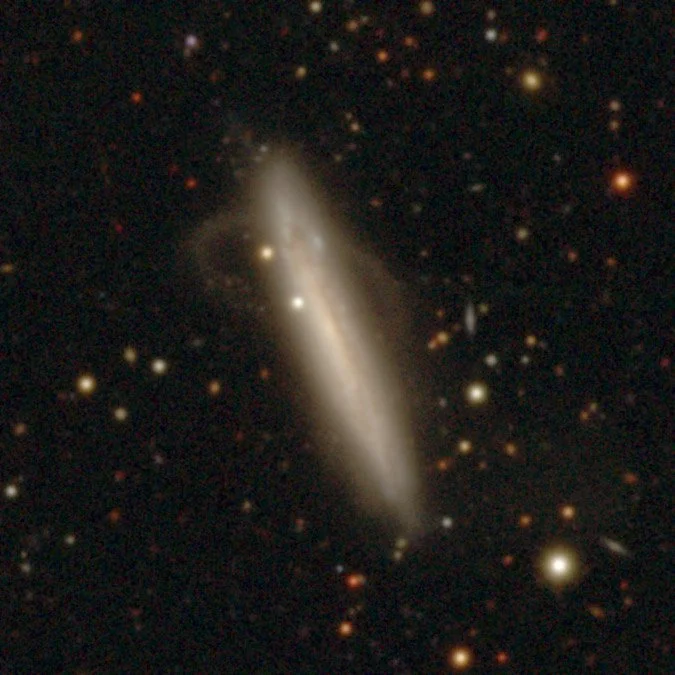
Unraveling the Cocytos Stream: A Stellar Fossil from the Milky Way’s Past
The Cocytos stream is a newly characterized stellar stream likely formed from a disrupted globular cluster brought into the Milky Way by the Gaia–Enceladus merger. It is unusually metal-rich and thick for such streams, with an orbit and composition linking it to other ancient merger remnants like the Virgo Overdensity. This discovery sheds light on the galaxy’s complex formation history.

Searching for Stellar Siblings: Testing Chemodynamical Tagging of Open Clusters in the Milky Way
Barth et al. tested how well stars from open clusters can be identified using their chemical and orbital properties. They found that orbital dynamics performed better than chemistry, but recovery rates remained low. Even with data cuts and added chemical elements, clustering algorithms struggled to reliably find clusters in large datasets.

A Star Devours Its Planet: JWST Catches a Cosmic Meal in Action
Astronomers observed ZTF SLRN-2020, the clearest case yet of a star consuming a planet. Using JWST, they detected warm dust, gas emissions, and possible phosphine—signs of a recent planetary engulfment. The host star remains on the main sequence, suggesting the planet was dragged in by tidal forces, not stellar aging.
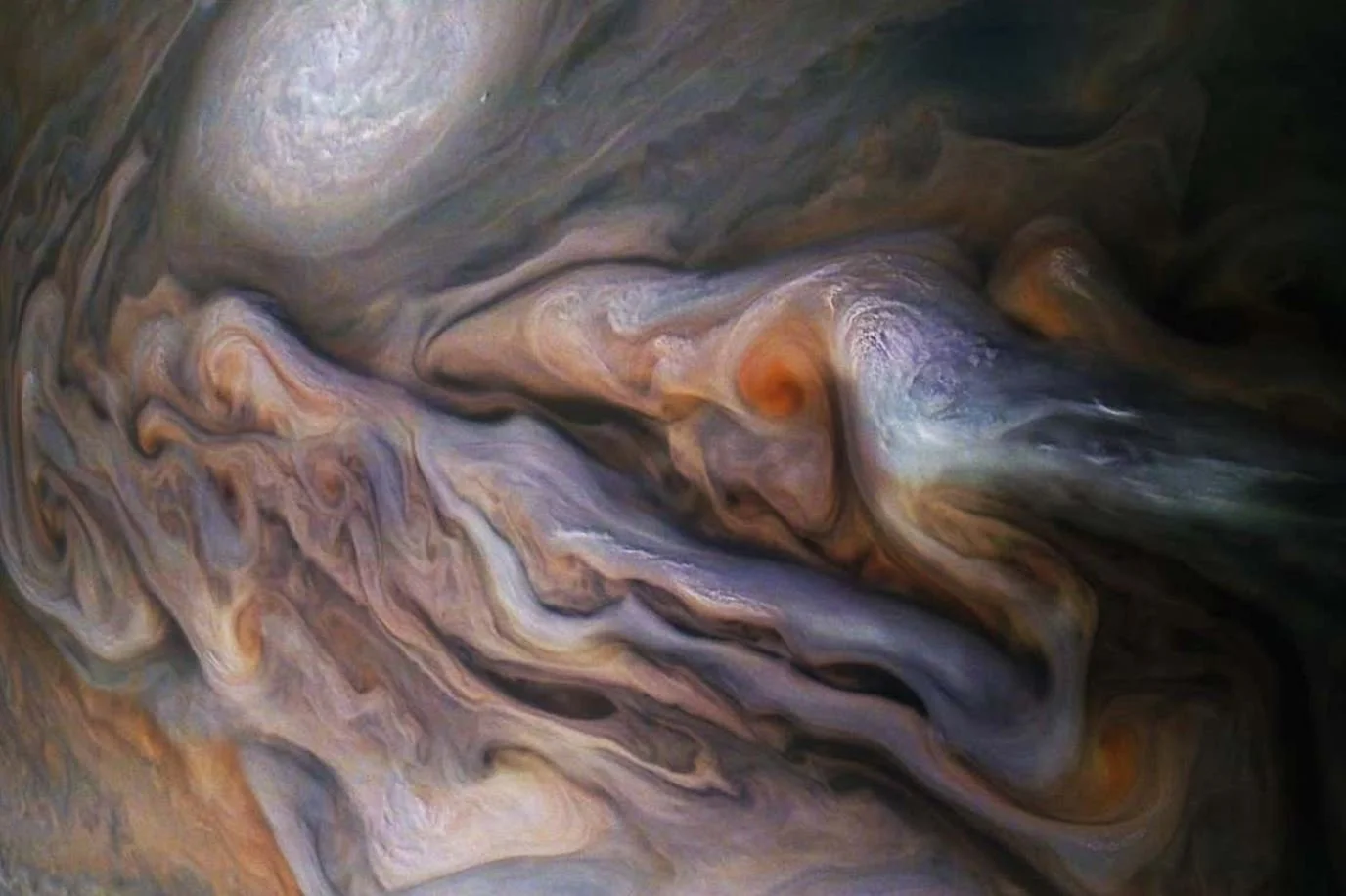
A Silicate Sky: Revisiting the Atmosphere of WASP-39 b with JWST
Ma et al. use a hybrid modeling approach to reinterpret JWST data from WASP-39 b, suggesting silicon monoxide (SiO) and silicate clouds explain key spectral features, previously attributed to sulfur dioxide. Their model fits observations well, highlighting the role of silicon-based chemistry and offering a new strategy for studying exoplanet atmospheres.

When Planets Go Their Own Way: A Stellar Ejection Explains a Misaligned Planetary System
The paper investigates the unusual misalignment in the IRAS04125 system, where a young planet and binary star orbit at a steep angle to the surrounding disc. The authors propose this was caused by the ejection of a third star from a chaotic triple system, which disturbed the disc and orbits. Simulations support this idea, offering a plausible explanation for the system’s geometry.
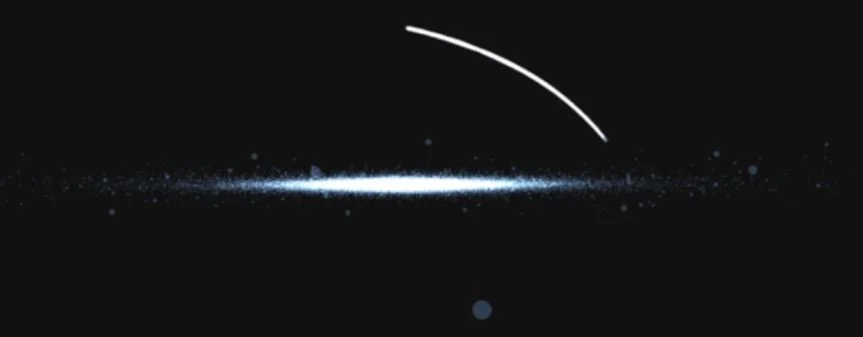
The Tilted Halo Mystery: What the GD-1 Stellar Stream Tells Us About the Shape of Our Galaxy’s Dark Matter
Nibauer and Bonaca use the GD-1 stellar stream to measure the Milky Way’s gravitational field without assuming a specific halo shape. Their data reveals a tilted, triaxial dark matter halo misaligned with the Galactic disk. This result challenges traditional symmetric models and supports predictions from cosmological simulations.

Galactic Fossils: Exploring the Most Metal-Poor Stars in the Universe
This paper reviews the search for and study of the most metal-poor stars, which serve as relics from the early universe. These stars reveal clues about the first stellar generations and galaxy formation. The authors discuss how they’re found, what their chemical patterns tell us, and how their lithium levels challenge cosmological models.

Untangling the Magnetic Puzzle of HD 169142: Clues from a Young Star Hosting Planets
This study explores the magnetic field of HD 169142, a young star with a planet-forming disk. Using polarized light data, the authors detect complex magnetic features likely influenced by both the stellar surface and surrounding gas. Variability in hydrogen lines and elemental spots suggests a dynamic magnetosphere. The findings point to intricate star-disk interactions and highlight the need for further magnetic mapping.

Lighting the Spark of Life? Testing UV Light’s Role in Exoplanet Habitability
Schlecker et al. investigate whether a minimum amount of near-ultraviolet (NUV) light is needed for life to begin on exoplanets. Using simulations and Bayesian analysis, they show that future surveys—especially of planets around M dwarfs—could test this “UV Threshold Hypothesis” if sample sizes are large enough and life is relatively common. Their work offers a new way to probe life’s origins through exoplanet observations.

Tracing the Birthplaces of Stars: How Moving Groups Shape Star Formation in Our Galactic Neighborhood
Swiggum et al. trace the past orbits of star clusters near the Sun and find that many align with three major moving groups: Pleiades, Coma Berenices, and Sirius. Their results link recent star formation to large-scale Galactic dynamics, suggesting that spiral arms shape both the formation and movement of stars in the Milky Way.

Spinning Stars and Stellar Secrets: A Look at Fast Rotators in Magellanic Cloud Clusters
This study found that many stars in four Magellanic Cloud clusters rotate extremely fast, with over 80% of stars in three clusters spinning near their break-up speed. By modeling how rotation affects star brightness and color, the researchers showed that rotation likely explains unusual features seen in star cluster diagrams, challenging previous ideas about age spreads.

Is Our Sun Special? Comparing the Sun to Its Stellar Siblings
Herbst et al. analyzed 48 Sun-like stars to see how closely they resemble the Sun in magnetic activity. Only one star, KIC 11599385, matched the Sun in key properties, including faculae dominance and rotation period. This suggests the Sun may be rare among its peers, highlighting the need for more precise, unbiased observations.

Unveiling Ghostly Traces: Amateur Telescopes Illuminate Hidden Galactic Debris
Martínez-Delgado and collaborators used amateur telescopes to capture deep images of 15 nearby spiral galaxies, revealing faint stellar tidal streams and other signs of past galactic mergers. Their results show that small, accessible telescopes can contribute valuable data to galaxy evolution studies, achieving detection limits comparable to professional observatories.
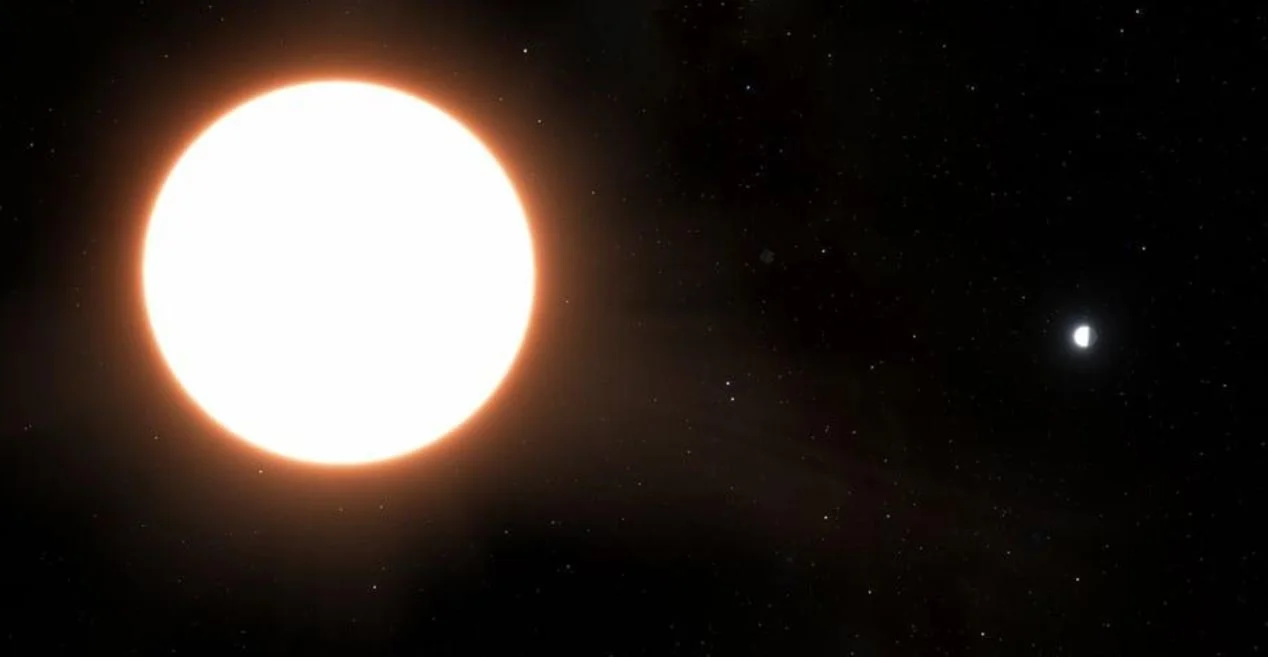
Building Worlds from Pebbles: How Stellar Mass and Metallicity Shape Planetary Systems
Pan et al. use pebble accretion simulations to study how stellar mass and metallicity affect planet formation. They find super-Earths peak around mid-mass stars, while giant planets form more around massive, metal-rich stars. Long-term dynamics reveal that single-planet systems around metal-rich stars are often more eccentric and inclined due to gravitational interactions.

Seeing the Invisible: Why We Need High-Resolution Ultraviolet Spectroscopy to Understand the Universe
This paper argues that high-resolution ultraviolet spectroscopy is essential for studying cold, slow-moving gas in space. It enables detailed analysis of the interstellar medium, exoplanet atmospheres, circumstellar disks, and galactic halos. Current instruments like HST’s STIS are limited, and future telescopes must offer greater sensitivity and resolution to unlock key astrophysical insights.