

Carbon-Enhanced Dwarf Stars: Clues from the Galactic Halo
This study analyzed over 1,000 dwarf carbon stars using SDSS and Gaia data, providing the first reliable distances for such a large sample. The results show that about 60% belong to the Milky Way’s halo and 30% to the thick disc, confirming they are mostly old, metal-poor stars. These findings establish dwarf carbon stars as valuable tracers of the Galaxy’s early history and stellar evolution.

Catching Makemake’s Shadow: A New Look at Its Mysterious Moon
Daniel Bamberger reanalyzed Hubble images of Makemake and its moon MK2, finding an 18-day orbit nearly edge-on to Earth. This alignment could mean eclipses and transits are happening now, offering a rare chance to study the system’s size and surface features. Preliminary results also suggest Makemake is slightly less dense than earlier estimates.

Faint Streams Hidden in Plain Sight: What the Mass–Metallicity Relation Tells Us About Tidal Disruption
Alexander Riley and collaborators use the Auriga simulations to test whether the mass–metallicity relation of galaxies rules out tidal disruption. They find that even heavily stripped satellites still follow the relation with little scatter, matching what’s seen in the Milky Way and Andromeda. This suggests many Local Group satellites have lost large fractions of their stars, and faint tidal streams may be revealed by future surveys.

The Universe’s Hidden Patterns: Fractals in the Cosmic Web
The paper by Jaan Einasto reviews how the Universe’s large-scale structure, the cosmic web, shows fractal-like patterns. Using the ΛCDM model, it explains that galaxies form clusters, filaments, and voids whose distribution follows power laws across scales. While small and medium scales reveal fractal behavior, larger scales smooth out into homogeneity, supporting the cosmological principle.

Untangling the Milky Way’s Halo with Aluminum
This study by Ernandes and collaborators shows that aluminum abundances ([Al/Fe]) are a powerful way to distinguish between stars formed inside the Milky Way and those accreted from dwarf galaxies. Using high-resolution spectra, they demonstrate that aluminum provides a cleaner separation than other elements, even at low metallicities. Their results refine previous classifications and highlight aluminum as a key tracer for unraveling the Galaxy’s merger history.
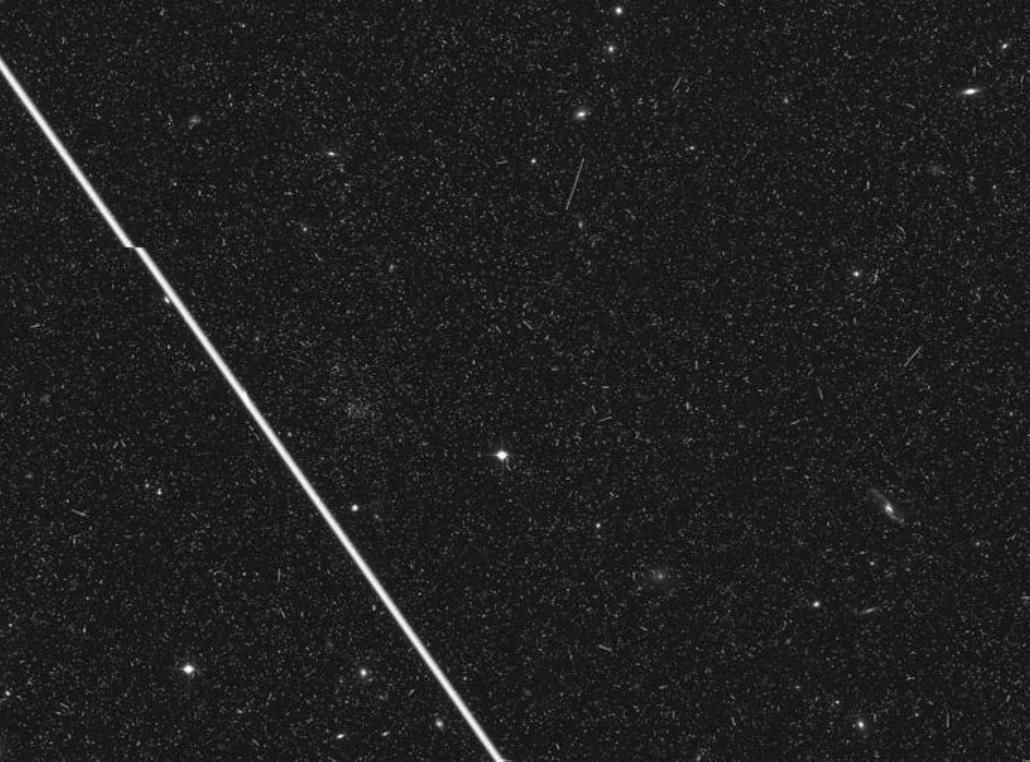
Spotting Satellite Streaks with Deep Learning
Hua-Jian Yu and colleagues developed ASA-U-Net, a deep learning model to detect satellite trails in telescope images. Using data from the Mephisto Telescope, the model combines channel attention and multi-scale pooling to spot faint and complex streaks. Tests show ASA-U-Net outperforms standard methods, reducing false detections and improving recall, making it a promising tool for cleaning astronomical survey data.

Building Worlds: How Protoplanetary Disk Chemistry Shapes Rocky Planets
Spaargaren and colleagues show that rocky planet compositions depend strongly on the chemistry of their birth disks. Using simulations of condensation for 1,000 stellar compositions, they find that Earth-like planets form in low carbon-to-oxygen disks, while higher ratios yield graphite-rich or metal-heavy planets. Their results suggest rocky exoplanets are far more chemically diverse than previously assumed.
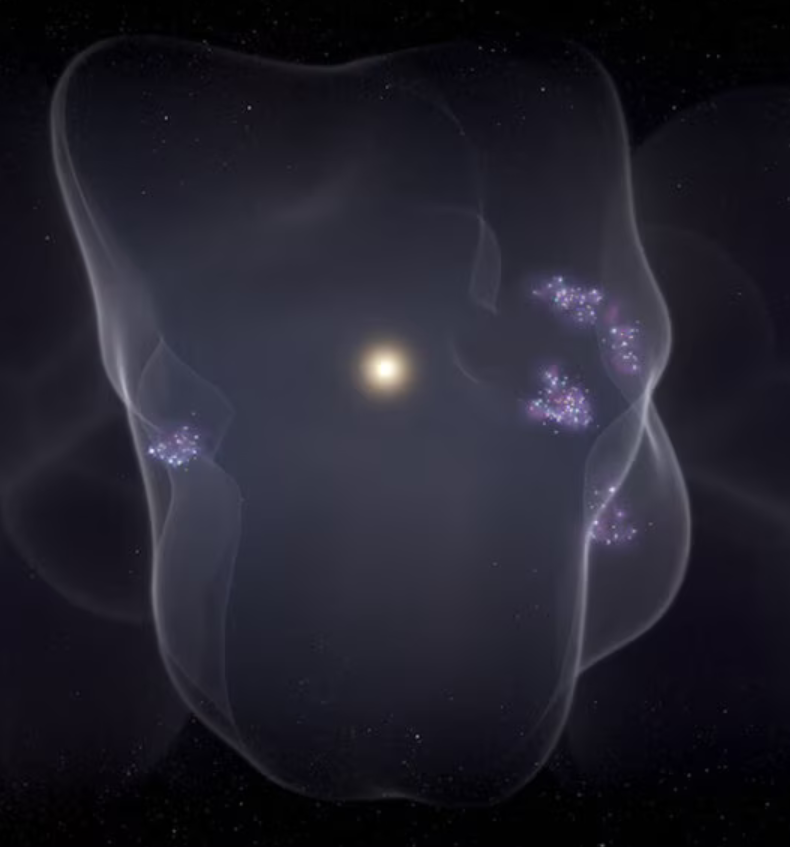
How Supernova Explosions May Have Stopped Star Formation Near the Sun
Leonard Romano’s study revises the history of the Local Bubble, finding it to be only 3.5–5.5 million years old and powered by about 19–30 supernovae, not 14 million years and fewer explosions as once thought. Using 3D dust maps and simulations, the work shows the bubble’s rapid expansion likely quenched star formation near the Sun, challenging earlier claims that it triggered new stars.

Mapping Jupiter’s Skies: A Full-Atmosphere Model
Antonín Knížek and colleagues built the first full-atmosphere model of Jupiter, combining deep thermochemistry with upper-atmosphere photochemistry. The model predicts a mixed ammonia–ammonium hydrosulfide cloud layer, stable nitrogen levels from quenching, and a stratospheric region where hydrogen cyanide forms at detectable levels. These results bridge gaps between earlier models and make new, testable predictions for future missions.
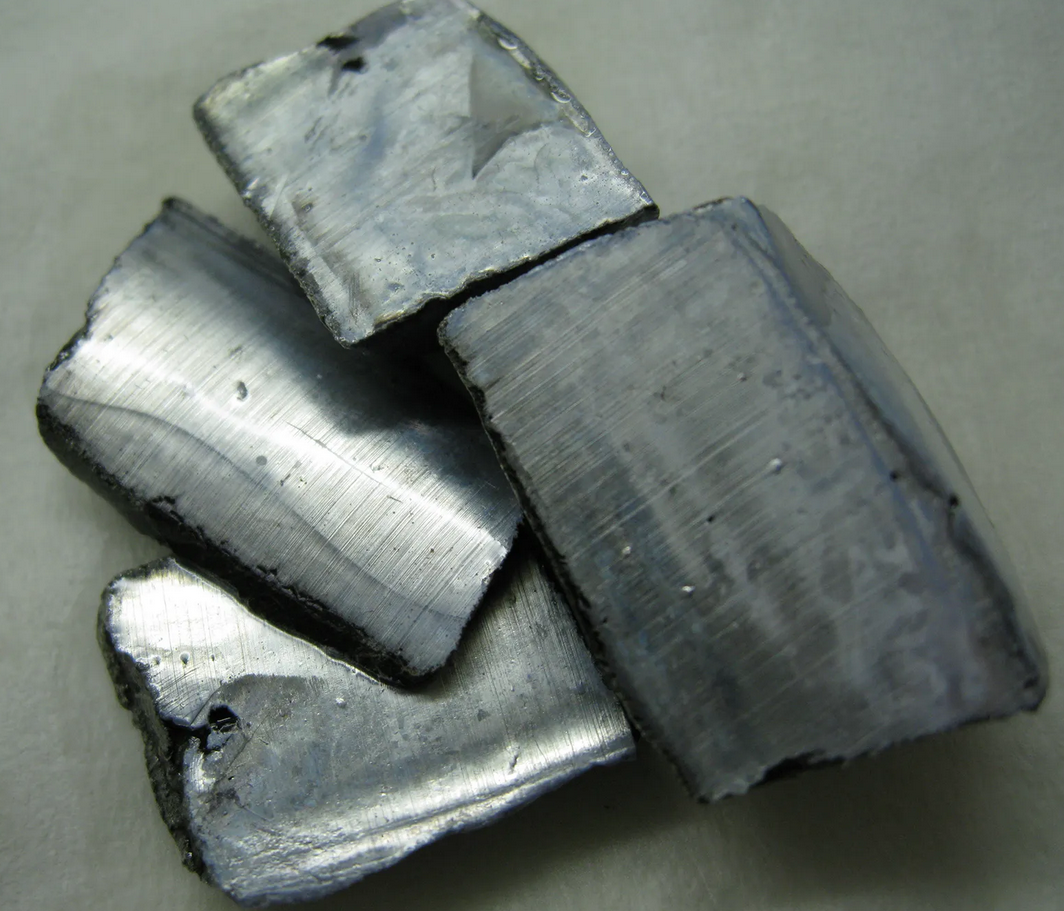
Tracking Potassium in the Oldest Stars: What It Tells Us About Stellar Explosions
Miho Ishigaki and collaborators measured potassium in extremely metal-poor stars using the Subaru Telescope. They found that potassium-to-iron and potassium-to-calcium ratios were consistently enhanced with little scatter, unlike sodium-to-magnesium ratios, which varied widely. These results suggest potassium is produced through stable processes in massive stars and supernovae, making it a valuable tracer of how the earliest stars ended their lives.
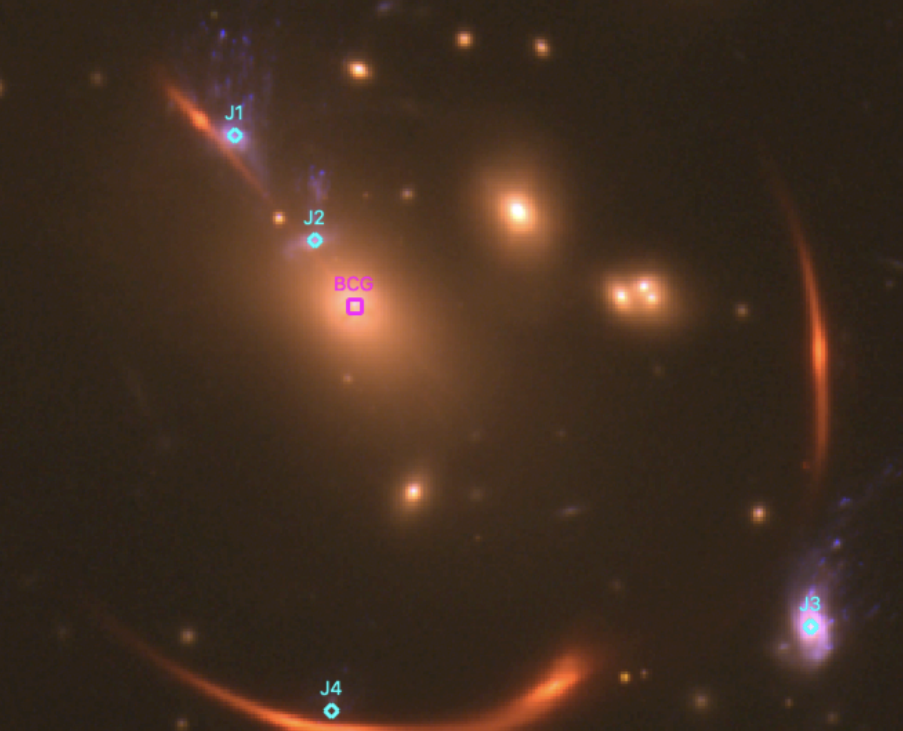
A Tale of Tails: Stripping and Star Birth in Jellyfish Galaxies
Astronomers studied four galaxies in the cluster MACS J0138.0-2155, three of which are jellyfish galaxies with long gas tails caused by ram-pressure stripping. J1 and J2 show quenched centers but star formation in their tails, while J3 is earlier in its transformation with strong central star formation. These results highlight how cluster environments strip gas, quench galaxies, and trigger new stars in their tails.
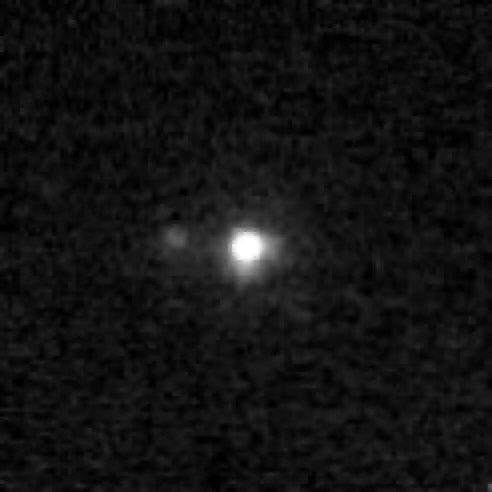
Icy Giants of the Kuiper Belt: JWST Looks at Salacia and Máni
Using JWST, Wong and colleagues observed the Kuiper Belt Objects Salacia–Actaea and Máni, finding strong water and carbon dioxide ice signatures but no methane or hydrocarbons. Compared to other KBOs, larger bodies show more water ice and weaker CO₂ features, suggesting internal heating and cryovolcanism may refresh their surfaces. These results place Salacia and Máni in the “Prominent Water” class, linking their origins to the inner Kuiper Belt.
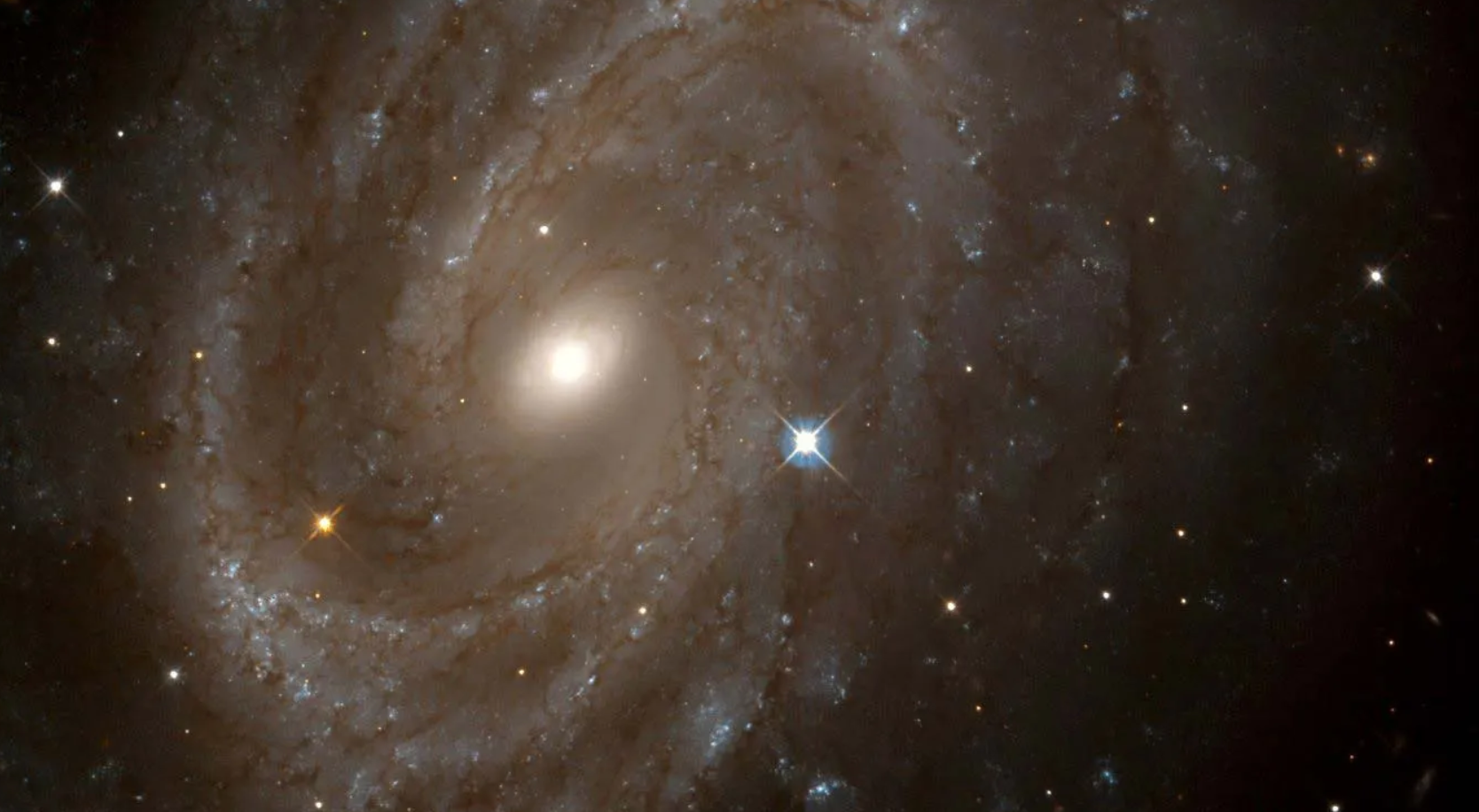
Shining Light on Cepheids: How Metal Content Affects Their Role in Measuring the Universe
Ripepi and collaborators, using the C–MetaLL survey, studied 290 Cepheids with precise metallicity and Gaia distance data. They found that metal content significantly affects Cepheid brightness—about 0.4–0.5 magnitudes per tenfold metallicity change—stronger than some past estimates. Their results refine distance measurements, impact Hubble constant calculations, and suggest metallicity plays a key role in the cosmic distance ladder.

Seeing the Hidden Differences: Neutron-Capture Elements in Stellar Doppelgängers
Catherine Manea and collaborators studied “chemical doppelgängers,” stars that look identical in APOGEE survey data. Using high-resolution optical spectra, they found that while these stars match in lighter elements, they often differ in heavier neutron-capture elements like Ba and Eu by up to 140%. This shows APOGEE alone can miss hidden chemical differences, highlighting the need for optical data to fully trace the Milky Way’s history.
Teaching a Neural Network to Predict the Birth of the First Stars
Sojun Ono and Kazuyuki Sugimura developed a neural network emulator to model how the first stars (Population III) formed. Their method uses DeepONets split across density ranges and a new timescale-based update to keep predictions stable. The emulator reproduces chemical and thermal evolution with high accuracy while running up to a thousand times faster than traditional simulations, making it a powerful tool for studying early star formation.

Did Eris Once Hide an Ocean Beneath Its Surface?
Eris, a large Kuiper Belt object, likely once had a subsurface ocean that helped explain its current orbital state with its moon Dysnomia. Modeling by Akiba and Nimmo shows that spinning down Eris without an ocean is very difficult, while oceans appear in most successful scenarios. Though such oceans may have since frozen, insulation by porous ice, clathrates, or antifreeze like ammonia could have sustained them for billions of years.
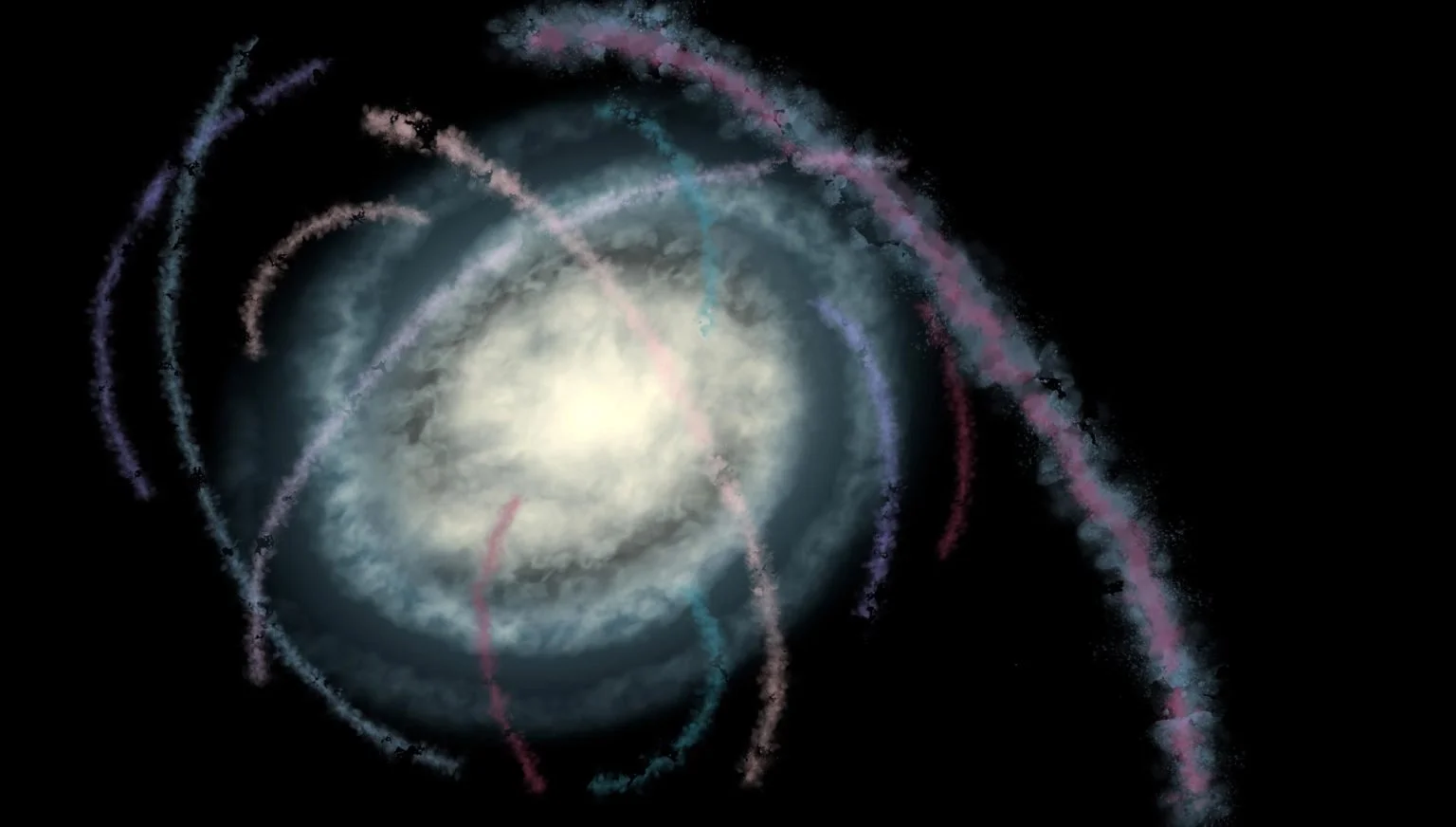
Uncovering Hidden Galactic Streams with Metallicity Fingerprints
The study by Kim et al. introduces a new way to identify Milky Way halo substructures by combining metallicity distribution functions with orbital data. They find four main retrograde groups (LRS 1–4) and uncover a new one, LRS 2B, highlighting the galaxy’s complex merger history. Their method shows how chemistry and dynamics together can reveal hidden stellar streams and their origins.

A Massive Ancient Merger: Tracing the Origins of the Gaia–Enceladus Galaxy
Plevne and Akbaba use Gaia and APOGEE data with machine learning to identify Gaia–Enceladus stars and model the galaxy’s chemical evolution. They estimate its initial gas mass at about 4.9 billion Suns, making it one of the Milky Way’s most massive accreted satellites. The results suggest a short, intense star formation period, strong outflows, and a merger that ended star formation within the first 4 billion years.
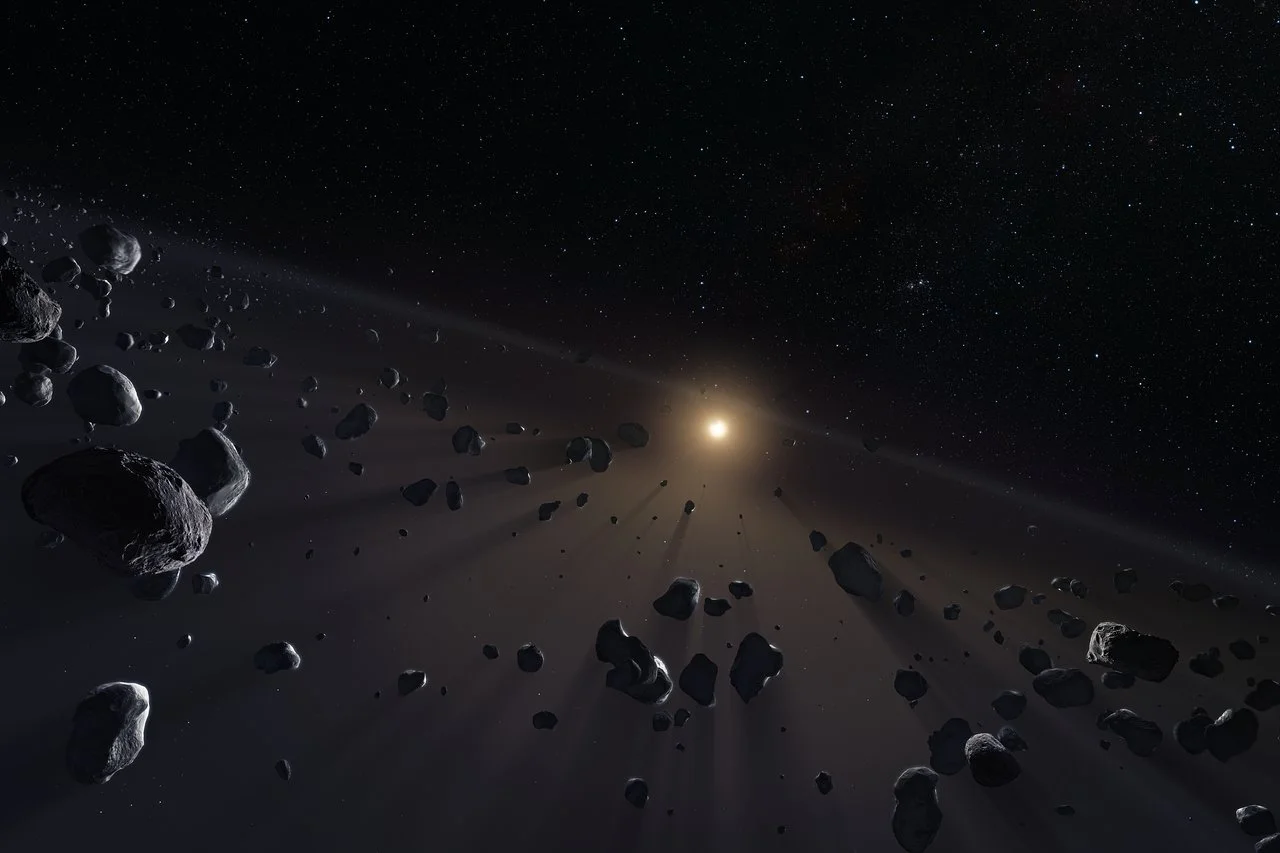
A Warp in the Kuiper Belt: Could a Hidden Planet Be Bending Orbits?
Amir Siraj and colleagues present a new, bias-free way to measure the Kuiper Belt’s mean plane. They find the belt aligns with the solar system’s invariable plane at 50–80 AU, but shows a warp at 80–200 AU and 80–400 AU. Simulations suggest this could be caused by an unseen planet between Mercury- and Earth-mass, orbiting 100–200 AU from the Sun, a body distinct from the hypothesized Planet Nine.

Building Earths in Tandem: A New Theory for Planet Formation
Nimura and Ebisuzaki propose a “tandem planet formation” model where rocky planets form at the inner edge and gas giants at the outer edge of calm regions in a star’s disk. Their simulations naturally produce Earth- and Venus-like planets, while smaller worlds like Mars and Mercury may form from leftover material. The model also explains Earth’s unique chemistry and offers a framework for understanding exoplanet diversity without requiring giant planet migrations.