

Unraveling the Milky Way's Warp: Insights from Open Clusters
Peng and He analyzed the Milky Way's warp using open star clusters, revealing a flattening trend influenced by a local tilt in the Galactic disk near the Sun. They found systematic differences between dynamical and geometric warp measurements, with older clusters showing more pronounced warping. The study refined the Sun's vertical velocity and highlighted dynamic changes in the warp’s structure, challenging earlier models and paving the way for future research.
Exploring the Metal-Poor Stream C-19: A Glimpse into Galactic Formation
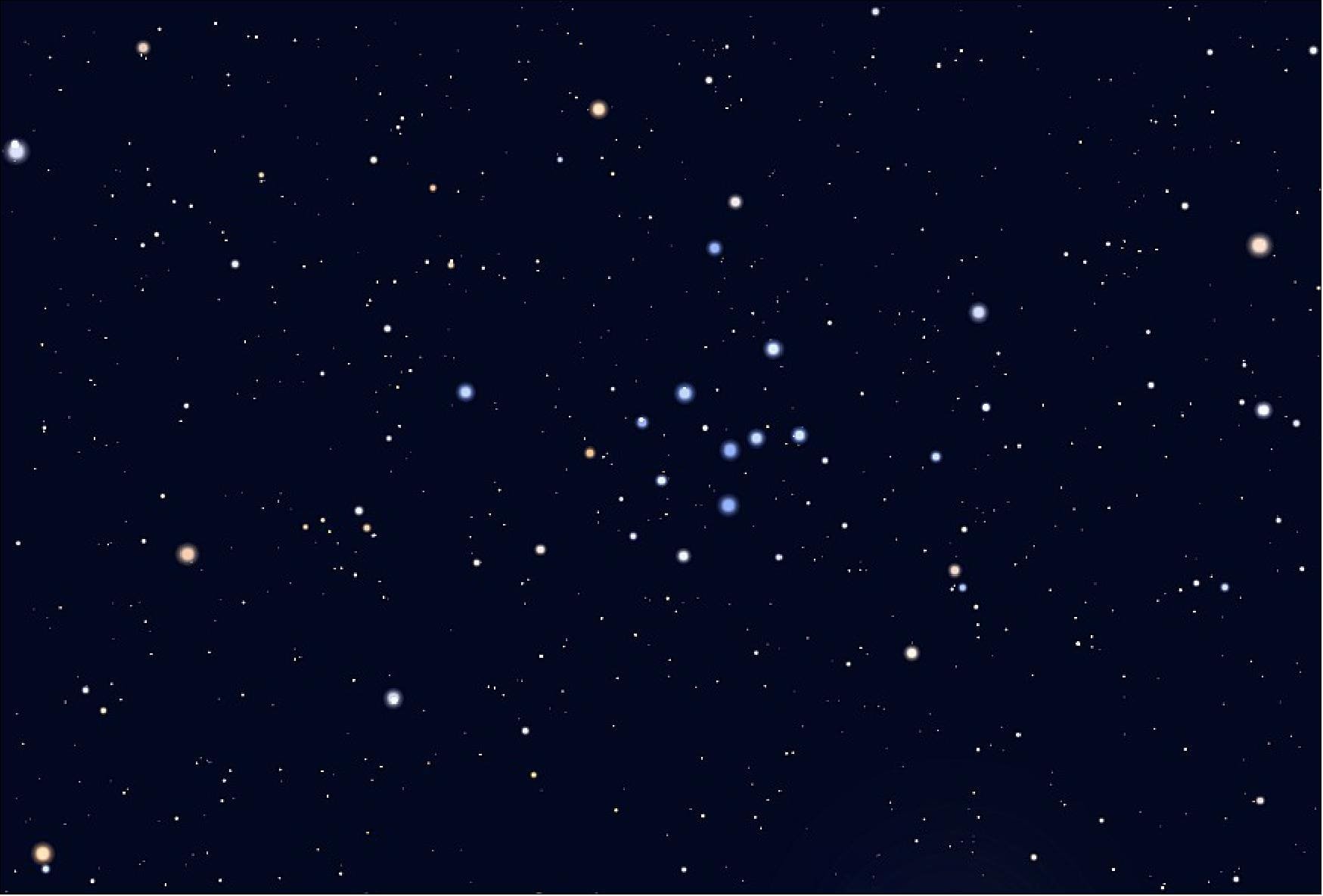
The C-19 stellar stream, the most metal-poor known, may originate from a disrupted globular cluster or dwarf galaxy. Researchers confirmed its uniform metallicity and velocity dispersion, challenging existing formation theories. The findings highlight C-19's potential as a key to understanding early galactic evolution.

Crafting Accurate Orbits: Simplifying the Path to Keplerian Elements
Flores and Fantino propose a branchless algorithm (AL3) to improve the accuracy and efficiency of converting spacecraft trajectories into Keplerian orbital elements. By eliminating branching and using the ATAN2 function, their method enhances precision by up to 100 times and reduces computational time by 43%. For systems with limited capabilities, a hybrid approach (AL5) balances performance and simplicity, making these advancements crucial for modern satellite navigation and orbit optimization.

Unveiling the Chemical Diversity of Interstellar Gas in the Solar Neighborhood
Ramburuth-Hurt et al. studied interstellar gas near the Sun, revealing significant chemical diversity. Using UV spectroscopy, they found large variations in dust depletion and estimated metallicities for individual gas clouds, uncovering some with super-Solar metallicities. Their work highlights the complexity of the interstellar medium and the importance of analyzing individual components to understand the Milky Way's evolution.

Spinning Stars: Exploring Rotation Across Stellar Spectral Types
This study examines how stellar rotational velocity varies with spectral type and evolutionary stage. Using data from nearly 50,000 stars, it finds that hot stars (O0 to F2) rotate faster than cool stars (F2 to M9), with rotation slowing significantly as stars evolve. Magnetic braking and stellar winds are key factors in this decline, highlighting how rotation influences a star's lifecycle.

How Many Starbursts Does It Take to Shape a Galaxy Core?
Olivia Mostow and collaborators explore how bursts of star formation reshape galaxy cores, addressing the core-cusp problem in low-mass galaxies. Using innovative simulations, they show that repeated bursts effectively flatten dark matter cusps, while single bursts struggle to do so, especially in ultra-faint dwarf galaxies. The study emphasizes the importance of burst timing and energy, offering insights into galaxy evolution and dark matter behavior.

Mapping the Stars: A Deep Dive into the Kepler Input Catalog
The study refined atmospheric parameters for nearly all 195,478 stars in the Kepler Input Catalog using photometric data and machine-learning techniques. A new 3D dust map improved accuracy in measuring properties like metallicity, temperature, and gravity. The results, validated against independent datasets, enhance our understanding of stellar populations and support exoplanet and astrophysical research, offering a more precise catalog for future studies.

Tracking Galactic Motions: Shapes and Tilts of Stellar Velocity Patterns
Dmytrenko et al. analyze velocity ellipsoids of red giants and subgiants from Gaia DR3, uncovering kinematic distortions like the Galactic warp and non-axisymmetric features. They find that ellipsoid shapes and orientations vary with Galactocentric distance, reflecting gravitational influences and anisotropic stellar motions. This study provides detailed insights into the Milky Way's complex dynamics beyond the solar neighborhood.
Decoding Galactic History: How the Milky Way’s Disk Thickness Tells the Tale of Cosmic Collisions
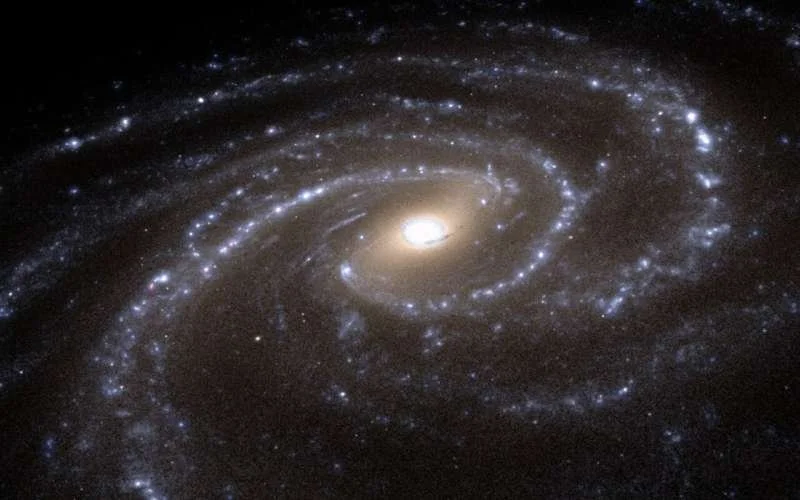
The study reveals the Milky Way’s merger history through its disk thickness, using stellar age data and simulations. Key events include the Gaia-Sausage-Enceladus merger 11 billion years ago and interactions with the Sagittarius dwarf galaxy. Simulations confirm these patterns, showing a transition from a thick to thin disk over billions of years. Despite uncertainties, the findings provide a robust method to trace galactic evolution.

Unveiling Three New Stars: Rare Hot Pre-White Dwarfs Discovered
Astronomers discovered three rare hydrogen-deficient pre-white dwarfs with helium-dominated atmospheres. These include an O(He) star likely formed from helium white dwarf mergers, a PG1159 star with the lowest known surface gravity in its class, and a CO-sdO star formed from disrupted white dwarf mergers. Their unique characteristics shed light on unconventional stellar evolution pathways.

Unraveling the Secrets of Globular Clusters: Stars in Motion
The study explores the kinematics of 30 Milky Way globular clusters and their multiple stellar populations (MPs), analyzing rotation, anisotropy, and correlations with cluster properties. Using data from Hubble, Gaia, and spectroscopic surveys, the researchers found that MPs generally share similar rotational behaviors, with some differences tied to cluster age and dynamics. This work provides clues about globular cluster formation and evolution.

Tracing the Milky Way’s Warp: A New Chemical Clue
The study explores the Milky Way's warp—a twist in its disk—using the chemical composition (metallicity) of over 170,000 stars. Researchers found that the galaxy's north-south metallicity asymmetry mirrors its warp, offering a new tracer to map this structure. Their results align with previous studies of young stars and overcome limitations of traditional methods like star motions.
Exploring Stellar Halos: Unraveling Cosmic Histories with Chemical Clues
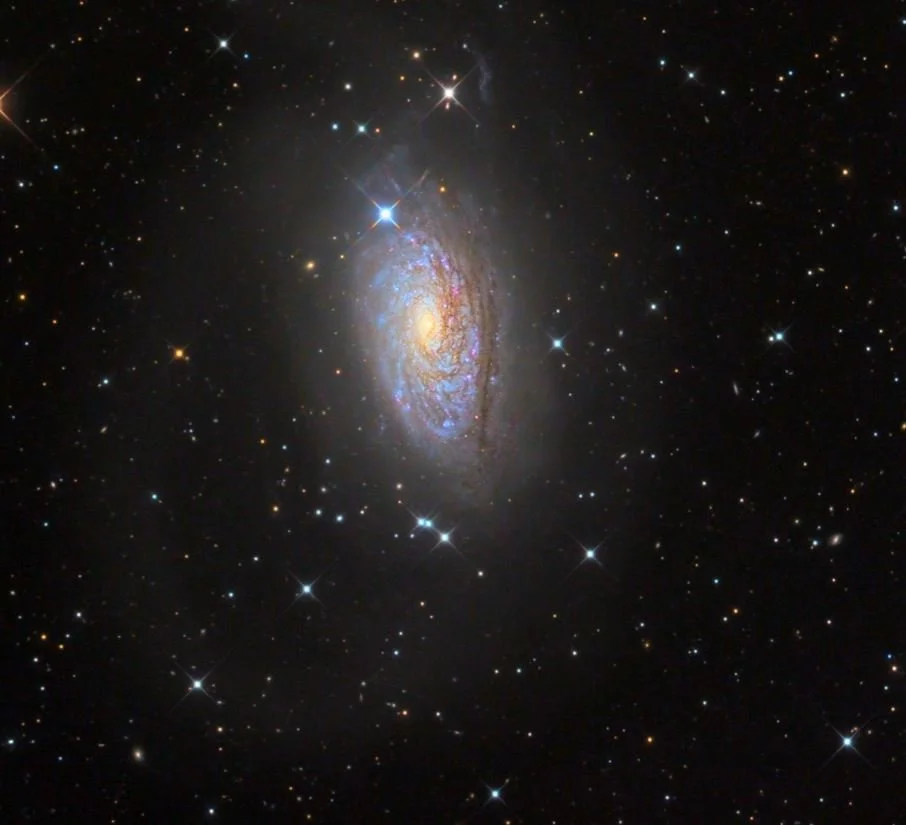
Stellar halos, the faint outskirts of galaxies, hold clues about galaxy formation. Using simulations, researchers divided halo stars into ex-situ, endo-debris, and in-situ categories, tracing their origins and chemical fingerprints. Most halo stars come from merged galaxies, with larger halos requiring more mergers. The study revealed a clear mass-metallicity relationship, linking chemical patterns to galaxy formation histories and enhancing our understanding of cosmic evolution.

The Hottest Neptunes: Exploring Planet Formation in Metal-Rich Systems
The study explores "Neptune desert" planets—rare, close-orbiting worlds between Neptune and Saturn in size—and finds they orbit metal-rich stars. These planets likely formed from gas giants that lost their outer layers, as their host stars' metallicities resemble those of hot Jupiter hosts. The findings challenge other formation theories, offering new insights into planetary evolution near stars.

Unveiling a Trio of Earth-Sized Worlds Around a Neighboring Star
Astronomers discovered two Earth-sized planets, HD 101581 b and c, and a potential third around a nearby K-dwarf star, just 12.8 light-years away. These planets exhibit a "peas-in-a-pod" configuration, with similar sizes and evenly spaced orbits, making them excellent for studying planetary formation and atmospheres. The system’s brightness enables detailed follow-up observations to confirm the third planet and analyze the planets’ masses and atmospheric properties.

Exploring the History of the Milky Way with Gaia’s Giant Stars
The study uses Gaia data and machine learning models to estimate the ages of giant stars, revealing insights into the Milky Way's evolution. By analyzing over 2.2 million stars, the researchers identified three major phases in the galaxy's history, including a starburst triggered by a major merger and the formation of the thin disc. Their method advances our ability to trace the Milky Way's structure and development.

Tracing the Origins of Alpha-Poor, Very Metal-Poor Stars
Alpha-poor very metal-poor stars are rare stars with unique chemical signatures, primarily explained by core-collapse supernova ejecta. Some stars also show contributions from sub-Chandrasekhar Type Ia supernovae. Pair-instability supernovae play a minimal role, highlighting the diversity of processes shaping early cosmic chemical evolution.

The Riddle of Cosmic Heavyweights: How Stars Forge Elements in the Early Universe
The CERES project investigates how early stars formed heavy elements through neutron-capture processes. Focusing on 52 ancient metal-poor stars, the study found that the rapid r-process dominated at low metallicities, while the slower s-process emerged later. Variations in element abundances suggest diverse nucleosynthesis events, with findings aligning well with galactic chemical evolution models, shedding light on the universe's early chemical enrichment.

Understanding the Evolution of Sun-like Stars in Nearby Stellar Streams
Lehmann et al. analyze Sun-like stars in nearby moving groups using precise measurements from the GALAH DR3 survey. They uncover age-metallicity trends, showing younger stars with consistent metallicity and older stars with declining metallicity. The Hercules stream stands out for hosting young, metal-rich stars which likely migrated from the inner Galaxy, revealing insights into Galactic evolution and stellar migration driven by the Galactic bar.
Tracing Galactic History: Age and Motion in the Milky Way Disk
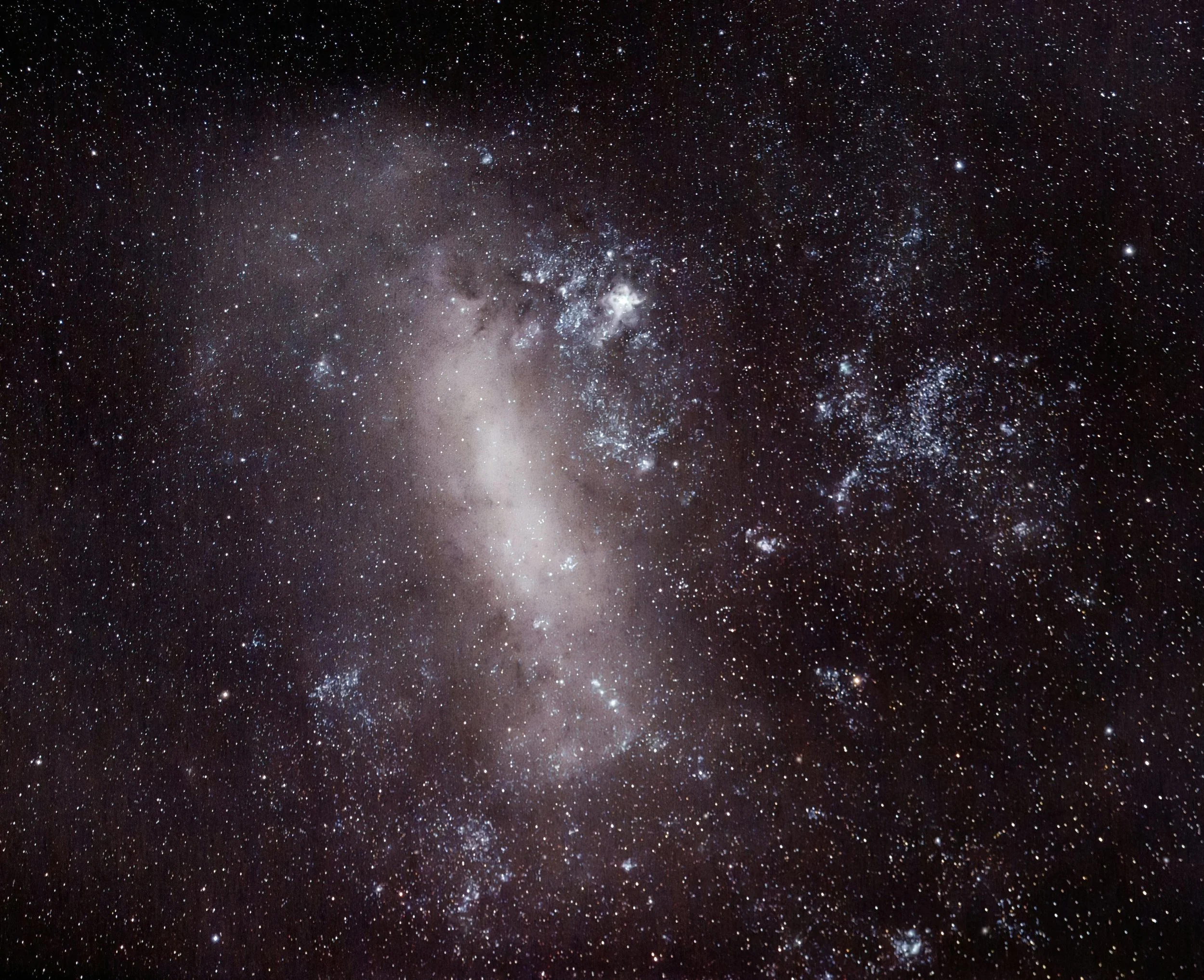
Weixiang Sun et al. studied over 230,000 red clump stars to explore how stellar motions vary with age across the Milky Way’s thin and thick disks. They found that older stars have higher velocity dispersions, with differences shaped by processes like giant molecular cloud heating, spiral arms, and galaxy mergers. The study highlights the thin disk’s gradual heating and the thick disk’s turbulent formation, offering insights into the Milky Way’s dynamic history.