
TRAPPIST-1 d: Searching for Signs of Air on a Nearby Earth-Sized World
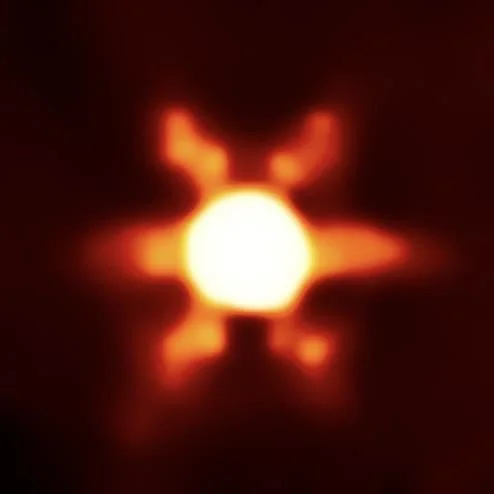
Astronomers used JWST to study TRAPPIST-1 d, an Earth-sized planet near the habitable zone of its star. The data revealed a flat transmission spectrum, ruling out thick atmospheres of hydrogen, methane, water vapor, or carbon dioxide. This suggests TRAPPIST-1 d is either airless, has only a very thin atmosphere, or is shrouded by high-altitude clouds, offering key insights into how rocky planets around small stars evolve.
From Clouds to Planets: Tracking Organic Molecules Through Star Formation
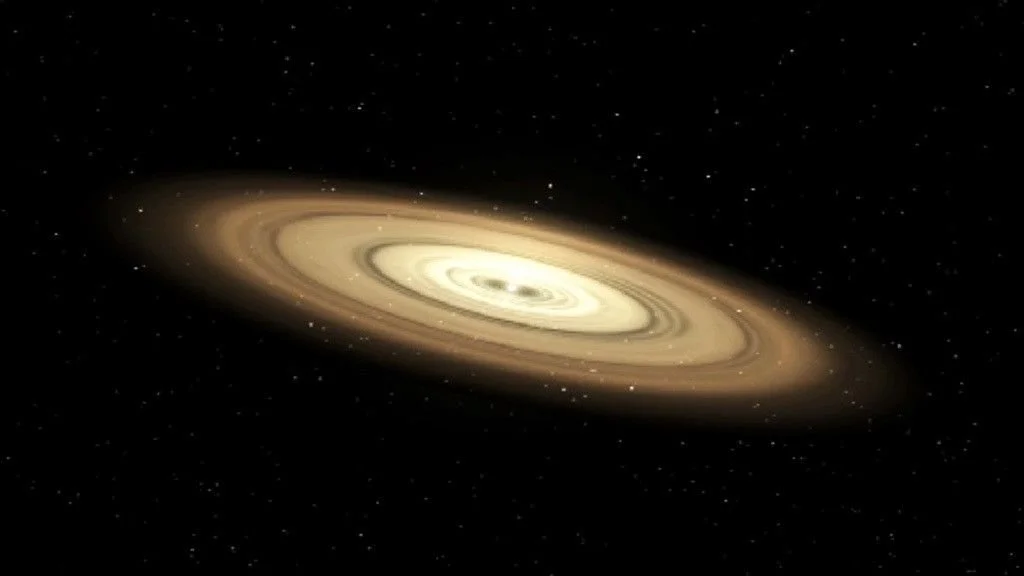
Pierre Marchand and collaborators used simulations to study how complex organic molecules (COMs) evolve during star formation. They found that only simple COMs like methanol and ethanol are mostly inherited from the parent cloud, while heavier molecules form later during collapse or in the disk. Abundances change with time and depend on environmental conditions, meaning the chemical makeup of forming planets is shaped by both inheritance and new formation.

Breaking Up Star Clusters: The Source of Blue Light in NGC1275
NGC1275, the central galaxy of the Perseus Cluster, shows unusual bluish light in its inner regions. Levitskiy and colleagues argue this glow comes from the tidal disruption of super star clusters formed about 500 million years ago, triggered by activity from the galaxy’s black hole. The surviving clusters, disrupted stellar streams, and central spiral disk all fit into this unified scenario.

How Binary Stars Complicate the Dark Matter Mystery in Tiny Galaxies
Gration and collaborators show that binary stars can skew measurements of ultrafaint dwarf galaxies by inflating their stellar velocity dispersions. Using simulations, they find unresolved binaries add significant “noise,” sometimes making globular clusters appear like galaxies. The effect is even stronger if the galaxies form fewer low-mass stars. Their work highlights the need to account for binaries when estimating galactic masses and testing dark matter theories.

Building Earth Through Cosmic Collisions: How Giant Impacts Shaped Rocky Planets
The study by Maeda and Sasaki shows that Earth-like planets form through repeated giant impacts and chemical reactions between atmospheres, magma oceans, and cores. Early impacts load protoplanets with too much hydrogen, while later collisions, after the gas disk fades, strip and rebalance this excess. This sequence produces planets with core compositions and densities similar to Earth’s, highlighting the importance of timing in planet formation.

Listening to the Stars: Predicting Massive Star Properties with Machine Learning
Rachel Zhang and collaborators tested whether machine learning can estimate properties of massive O-type stars from TESS light curves. Using spectroscopic data from the IACOB project, they compared two approaches: neural networks trained on simple “red noise” parameters versus convolutional networks trained on full periodograms. The latter performed much better, showing that light curves contain enough information to predict stellar temperatures and luminosities, a valuable tool for future large surveys.

Counting the Milky Way’s Hidden Satellites: The DELVE Census
Tan and collaborators present the DELVE Milky Way Satellite Census, combining DES, DELVE, and PS1 data to search for faint companion galaxies. Using strict detection methods and efficiency tests, they recovered 49 known satellites and predicted about 265 in total. The results show satellites cluster near the Large Magellanic Cloud and broadly match cosmological predictions, offering key insights into galaxy formation and dark matter.
A Thick Blanket for Early Mars: Evidence of a Massive Primordial Atmosphere
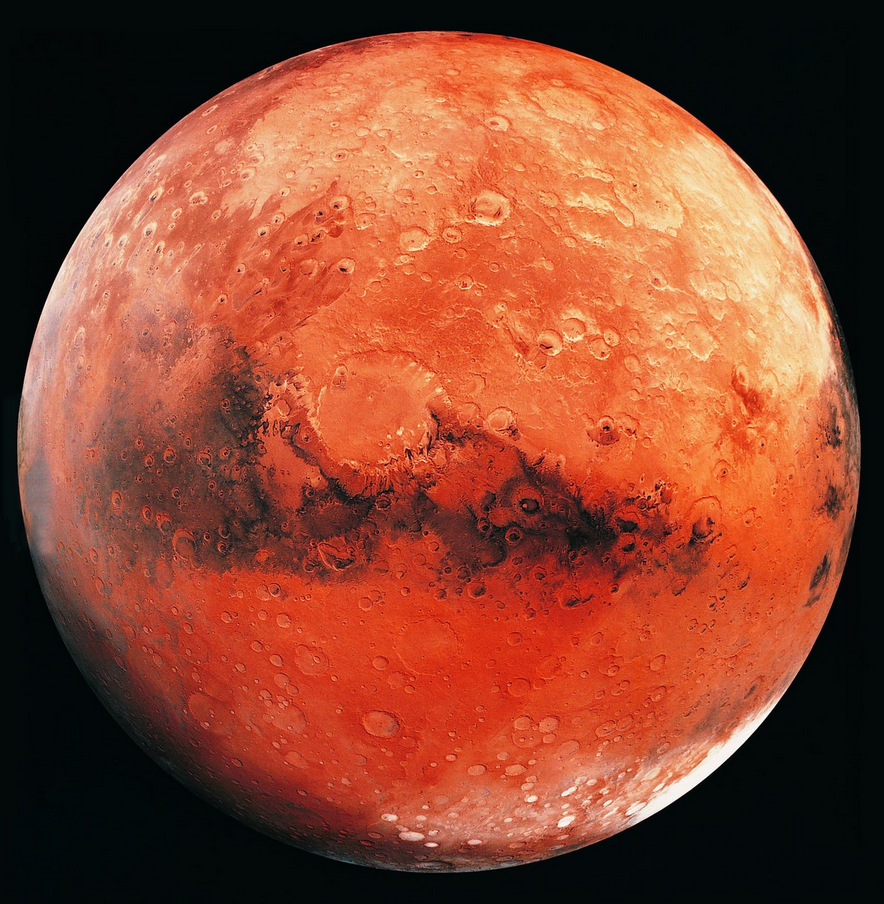
Sarah Joiret and colleagues show that Mars once had a massive primordial atmosphere, captured from the solar nebula. By modeling comet impacts and comparing expected xenon delivery with today’s measurements, they find Mars’s atmosphere must have been at least 2.9–14.5 bar. This thick hydrogen-rich blanket may have warmed early Mars and shaped its volatile history.

Tracing the Milky Way’s Past with HDBSCAN: Finding the Ghosts of Ancient Galaxies
Andrea Sante and collaborators test the HDBSCAN clustering algorithm to trace the Milky Way’s merger history using Auriga simulations. By optimizing parameters and using a 12-dimensional feature space, they show HDBSCAN reliably identifies recent stellar streams but struggles with older, well-mixed debris. Contamination from stars formed inside the Milky Way further limits recovery, though cluster purity remains high.

Following the Tides: Stellar Streams in Open Clusters with Gaia DR3
Ira Sharma and collaborators used Gaia DR3 data and machine learning to detect tidal tails in five open clusters. These stellar streams, spanning 40–100 parsecs and containing up to 200 stars, lacked massive stars but showed higher binary fractions. The team also detected rotation in M67 and NGC 2281, estimating cluster masses with Plummer models. Their methods expand tidal tail studies to more distant clusters, improving our understanding of cluster evolution.
How the Milky Way’s Disc Survived a Cosmic Collision
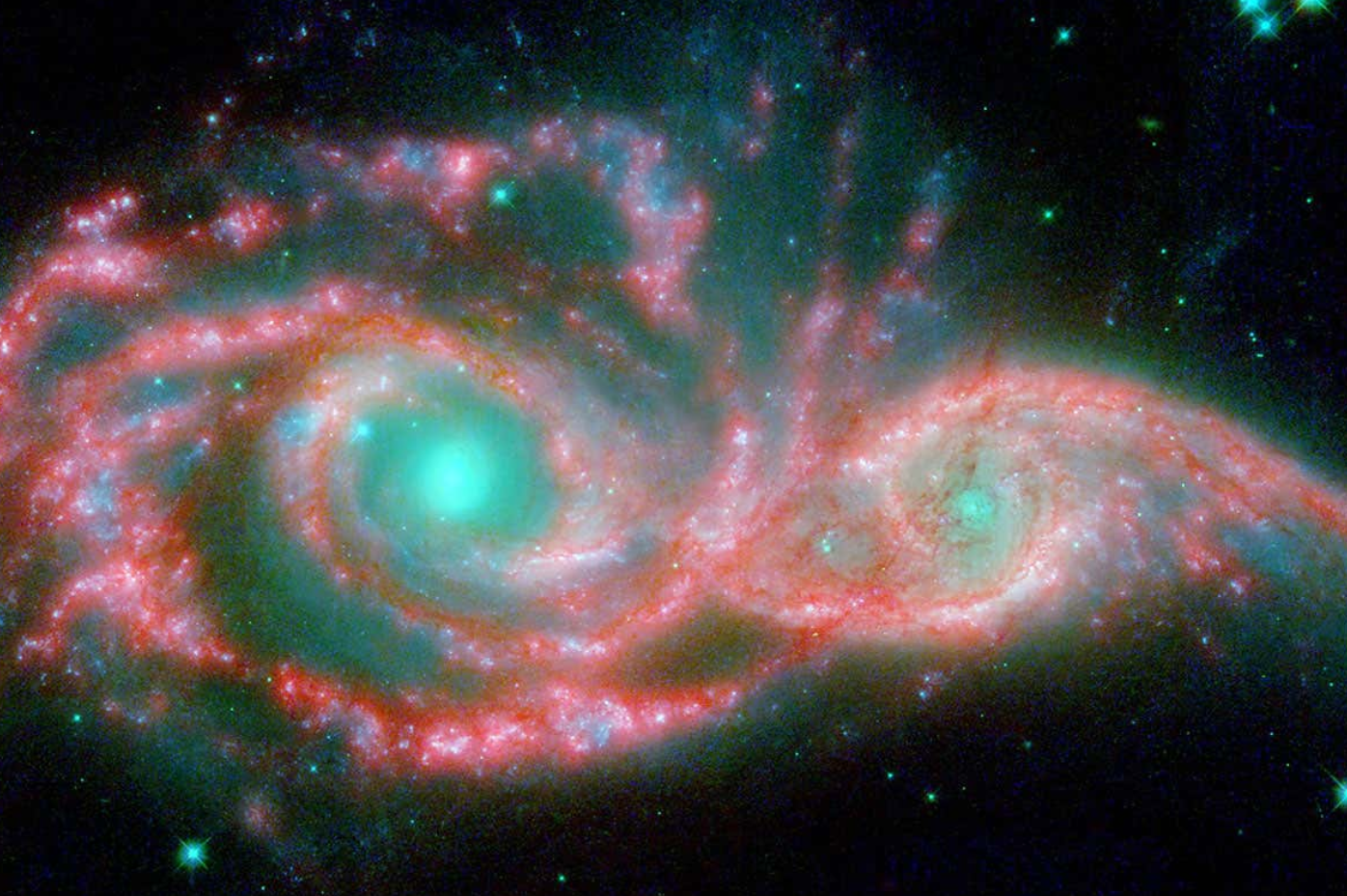
This paper explores how the Milky Way’s disc formed and survived an ancient collision with the Gaia-Sausage-Enceladus galaxy. Using simulations and Gaia data, Orkney and colleagues show the disc was already spinning about 11 billion years ago and that the merger was likely minor, not major. Despite disruption, the disc reformed, with starbursts and globular clusters marking the event’s impact.

Tracing Stellar Mergers with Chemistry: Carbon Isotopes Reveal Clues to Mysterious Stars
Astronomers studied massive α-enriched (MAE) stars, which look chemically old but appear too massive to be ancient. By measuring carbon isotope ratios (¹²C/¹³C), Zachary Maas and collaborators found most MAE stars resemble thick disk stars, while a few show evidence of mass transfer or mergers. The results suggest MAE stars form through multiple pathways, with carbon isotopes serving as key clues to their hidden histories.

Makemake’s Hidden Activity: JWST Finds Methane Gas and Hydrocarbon Ices
JWST observations show that Makemake’s surface holds methane, ethane, acetylene, and possibly methanol, arranged in layered ices. The telescope also detected methane gas, either from a thin atmosphere or plume-like outgassing. These findings suggest Makemake is more active and chemically complex than once thought, challenging its image as a frozen, inactive world.
Exploring the Coldest Brown Dwarfs with Near-Infrared Colors
Leggett and collaborators use JWST data to study extremely cold Y dwarfs, comparing their near-infrared colors across JWST, Euclid, and Roman filters. They show that mid-infrared brightness at 4.6 microns reliably tracks temperature, while near-infrared colors vary with metallicity and gravity. The work highlights both the promise of upcoming surveys and the challenges of incomplete atmospheric models.

A Closer Look at Carbon-Chain Depleted Comets
Allison Bair and David Schleicher analyzed 17 strongly carbon-chain depleted comets using Lowell Observatory’s long-term photometry database. These comets, mostly Jupiter-family objects, show far lower levels of C₂ and C₃ (and sometimes NH) compared to typical comets, though their dust-to-gas ratios are similar. The authors argue this depletion reflects primordial formation conditions in the Kuiper Belt, rather than later heating in the inner Solar System.

Carbon-Enhanced Dwarf Stars: Clues from the Galactic Halo
This study analyzed over 1,000 dwarf carbon stars using SDSS and Gaia data, providing the first reliable distances for such a large sample. The results show that about 60% belong to the Milky Way’s halo and 30% to the thick disc, confirming they are mostly old, metal-poor stars. These findings establish dwarf carbon stars as valuable tracers of the Galaxy’s early history and stellar evolution.

Catching Makemake’s Shadow: A New Look at Its Mysterious Moon
Daniel Bamberger reanalyzed Hubble images of Makemake and its moon MK2, finding an 18-day orbit nearly edge-on to Earth. This alignment could mean eclipses and transits are happening now, offering a rare chance to study the system’s size and surface features. Preliminary results also suggest Makemake is slightly less dense than earlier estimates.

Faint Streams Hidden in Plain Sight: What the Mass–Metallicity Relation Tells Us About Tidal Disruption
Alexander Riley and collaborators use the Auriga simulations to test whether the mass–metallicity relation of galaxies rules out tidal disruption. They find that even heavily stripped satellites still follow the relation with little scatter, matching what’s seen in the Milky Way and Andromeda. This suggests many Local Group satellites have lost large fractions of their stars, and faint tidal streams may be revealed by future surveys.

The Universe’s Hidden Patterns: Fractals in the Cosmic Web
The paper by Jaan Einasto reviews how the Universe’s large-scale structure, the cosmic web, shows fractal-like patterns. Using the ΛCDM model, it explains that galaxies form clusters, filaments, and voids whose distribution follows power laws across scales. While small and medium scales reveal fractal behavior, larger scales smooth out into homogeneity, supporting the cosmological principle.

Untangling the Milky Way’s Halo with Aluminum
This study by Ernandes and collaborators shows that aluminum abundances ([Al/Fe]) are a powerful way to distinguish between stars formed inside the Milky Way and those accreted from dwarf galaxies. Using high-resolution spectra, they demonstrate that aluminum provides a cleaner separation than other elements, even at low metallicities. Their results refine previous classifications and highlight aluminum as a key tracer for unraveling the Galaxy’s merger history.