

How Binary Star Systems May Launch Rogue Jupiters
Aleksandra Ćalović and collaborators show that Jupiter-like free-floating planets may be ejected from young binary systems formed by disc fragmentation. Their 3D simulations reveal that as a secondary star grows, its gravitational interactions with nearby planets often fling them into interstellar space. These ejections are most common in massive binaries and could explain the abundance of rogue Jupiters observed in young star clusters.

Trading Oxygen for Iron: Rethinking How the Universe Built Its Stars
The paper argues that oxygen and iron trace galaxy evolution very differently because they form on different timescales. Using a new [O/Fe]–sSFR relation, the authors show that most stars formed with non-solar O/Fe, especially in the early universe. Their iron-based cosmic star formation history aligns with RR Lyrae, globular cluster, and GRB-host data, highlighting that models assuming solar abundance patterns often misrepresent real cosmic conditions.

Tracing the Chemistry of Massive Stars Before They Shine: A Tour Through High-Mass Star-Forming Regions
High-mass stars form in dense, distant, and fast-evolving environments that produce distinct chemical signatures. The chemistry progresses from simple, highly deuterated molecules in cold starless cores to rich complex organic molecules in warmer protostellar objects, then becomes dominated by ultraviolet-driven processes in H II regions. Upcoming ALMA and JWST observations are expected to clarify this chemical evolution and its implications for star and planet formation.
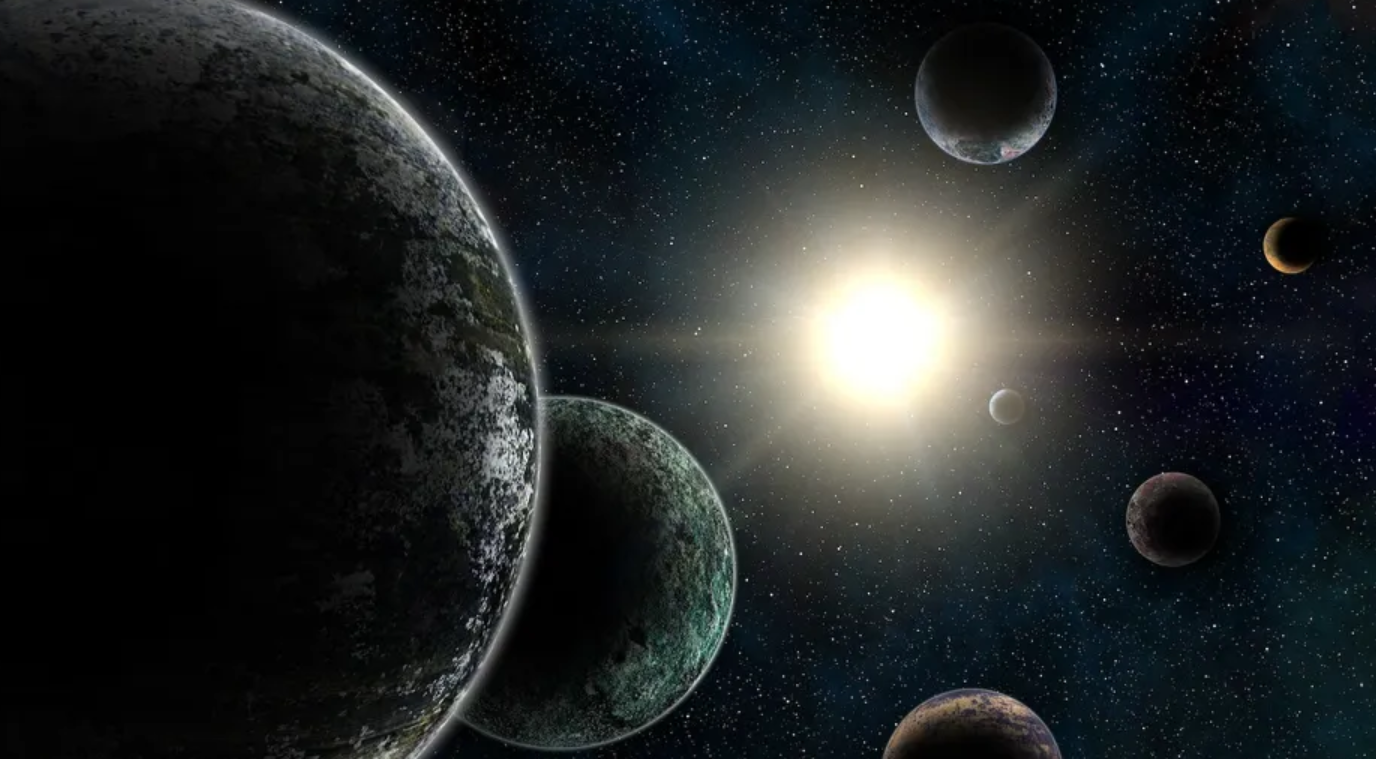
Milky Way Worlds: A High-Resolution Look at Our Galaxy’s Exoplanets
The paper combines detailed Milky Way simulations with planet-formation models to predict exoplanet populations across the Galaxy. In the simulated solar neighbourhood, most planets are Earth-like or super-Earth/Neptunes, with about a quarter in the habitable zone. A forward model of the Kepler field reproduces many observed trends but overpredicts planets around hotter stars. Across different Galactic regions and simulated galaxies, planet-type proportions remain broadly consistent.

Where Planets Become Brown Dwarfs: Tracing a Hidden Boundary in the Metal Content of Stars
Giacalone et al. analyze companions between 1–50 au and find that host-star metallicities split into two groups at a transition mass of about 27 MJup. Lower-mass companions orbit metal-rich stars, consistent with bottom-up planet formation, while higher-mass companions orbit stars with near-solar metallicity, indicating star-like formation. Orbital eccentricities also differ, supporting two distinct formation pathways.
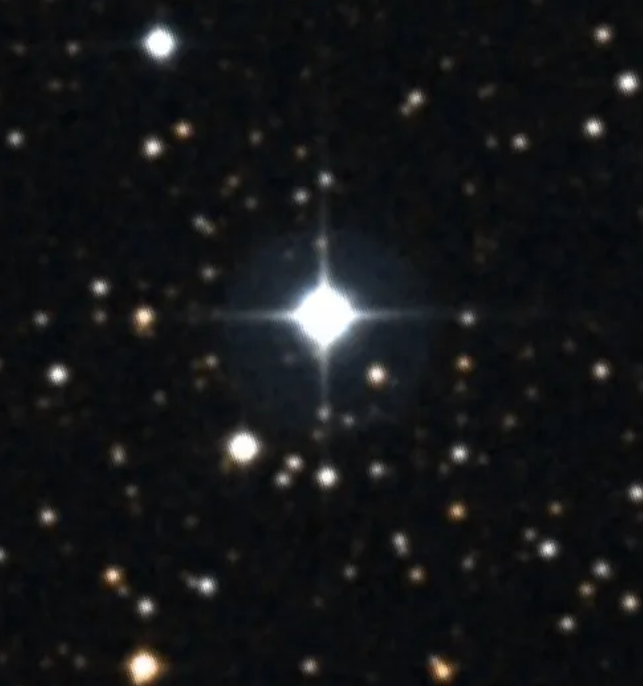
When a Star Flew Too Close: Could HD 7977 Have Sparked an Ancient Comet Shower?
Cao et al. investigate whether the star HD 7977 passed close enough to the Sun about 2.5 million years ago to disturb the Inner Oort Cloud and trigger a long-lasting comet shower. Their simulations show that such a flyby could sharply increase the number of kilometer-scale comets entering the inner Solar System, raising Earth’s impact rate by up to an order of magnitude. They compare these predictions with known craters to suggest the event may align with impacts near the Pliocene-Pleistocene transition.
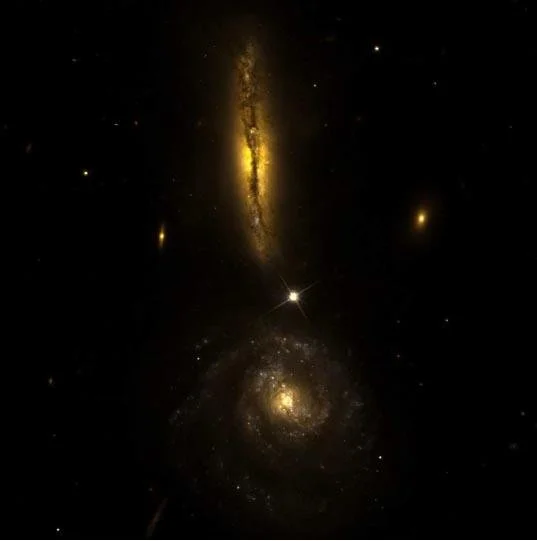
Peering Into Galaxy Halos With Only a Few Clues: What Stellar Motions Can Really Tell Us
Gherghinescu and collaborators test how well action-based dynamical models can recover a galaxy’s mass and dark matter distribution when only limited stellar data are available. They find that total mass profiles remain reliable even with incomplete phase-space information, though uncertainties increase. However, the dark matter halo’s flattening cannot be constrained with 3D or 4D data, revealing a fundamental degeneracy rather than a failure of the method.

How Different Star-Sorting Methods Change Our View of the Milky Way’s Discs
The paper examines how five different methods for separating Milky Way thin- and thick-disc stars, chemical, age-based, kinematic, and dynamical, lead to different measurements of the discs’ structures. Chemical and age selections give the cleanest separation, while motion-based methods mix the populations. Across all approaches, the thin disc flares with radius, the thick disc stays roughly constant in height, and the thin disc has a longer scale length.

Learning the Chemistry of Stars Without Models: A New Way to Spot Unusual Stars
Theosamuele Signor and collaborators present a neural network that learns stellar chemical abundances directly from spectra without using theoretical models. Using a variational autoencoder, the model isolates chemical information for iron, carbon, and α-elements, successfully identifying unusual stars like CEMP and αPMP types. This data-driven, model-free approach could transform how astronomers study stellar chemistry and the Milky Way’s history.

JWST Uncovers a Carbon-Rich Planet-Forming Disk Around a Young Star
JWST observations of the transitional disks GM Aur and J1615 reveal that, despite their similar stars, the two systems have strikingly different inner-disk chemistry. J1615 hosts abundant carbon-rich molecules, while GM Aur shows mostly water and OH. The authors suggest that J1615’s low accretion rate and more processed dust help preserve carbon-bearing gas, highlighting how small physical differences can dramatically alter planet-forming environments.

Tracing the Galactic Past: Chemical Clues from the Milky Way’s Faint Companions
Cheng Xu and collaborators used APOGEE data to study the chemical makeup of four dwarf galaxies orbiting the Milky Way. They found that galaxy mass influences how elements like magnesium and iron evolve over time, with larger galaxies retaining alpha elements longer. In Fornax, they discovered nitrogen-rich stars likely from disrupted globular clusters, offering clues about early star formation and galactic evolution.
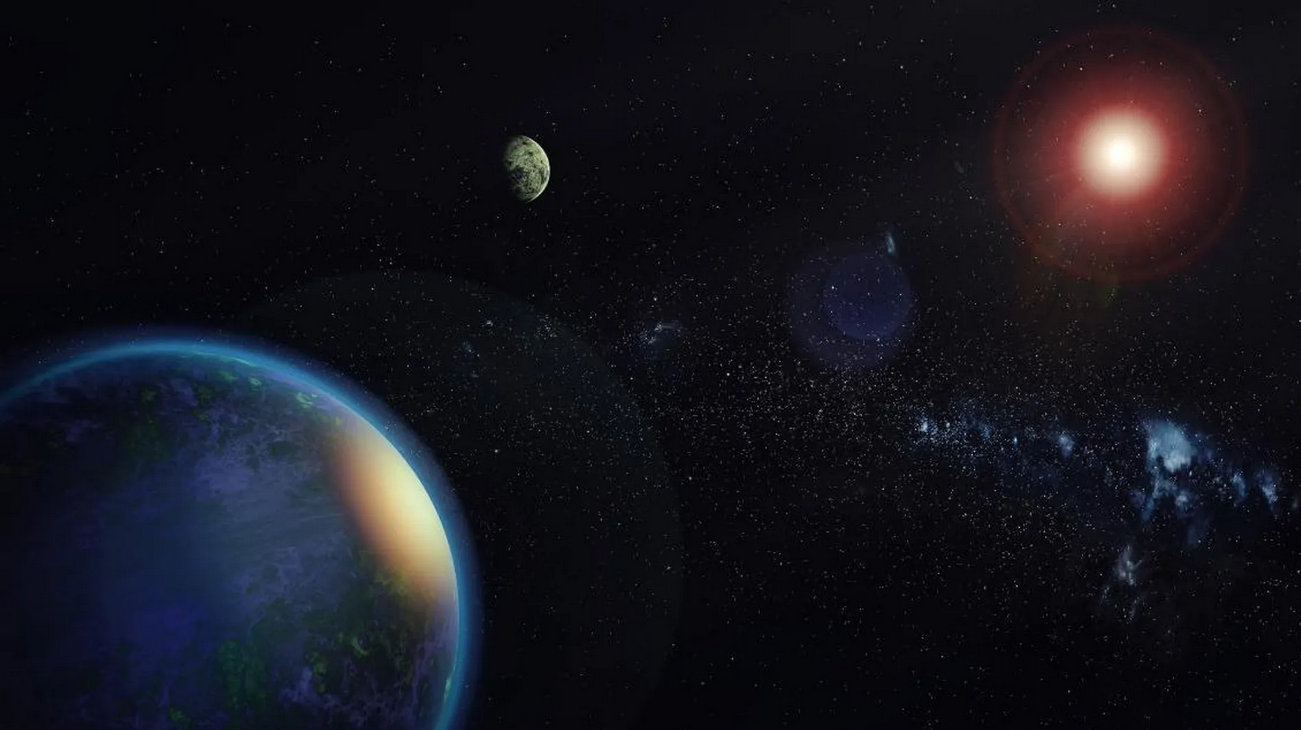
Are We There Yet? Understanding How Often Earth-like Worlds Exist Around Other Stars
Rachel Fernandes and colleagues review the difficulty of determining η⊕, the fraction of Sun-like stars hosting Earth-like planets in the habitable zone. Using Kepler data, they find estimates vary widely due to differing definitions, limited detections, and hidden factors like binary stars, planet multiplicity, and stellar chemistry. They conclude that future missions and improved data will be essential to refine η⊕ and guide the search for life.
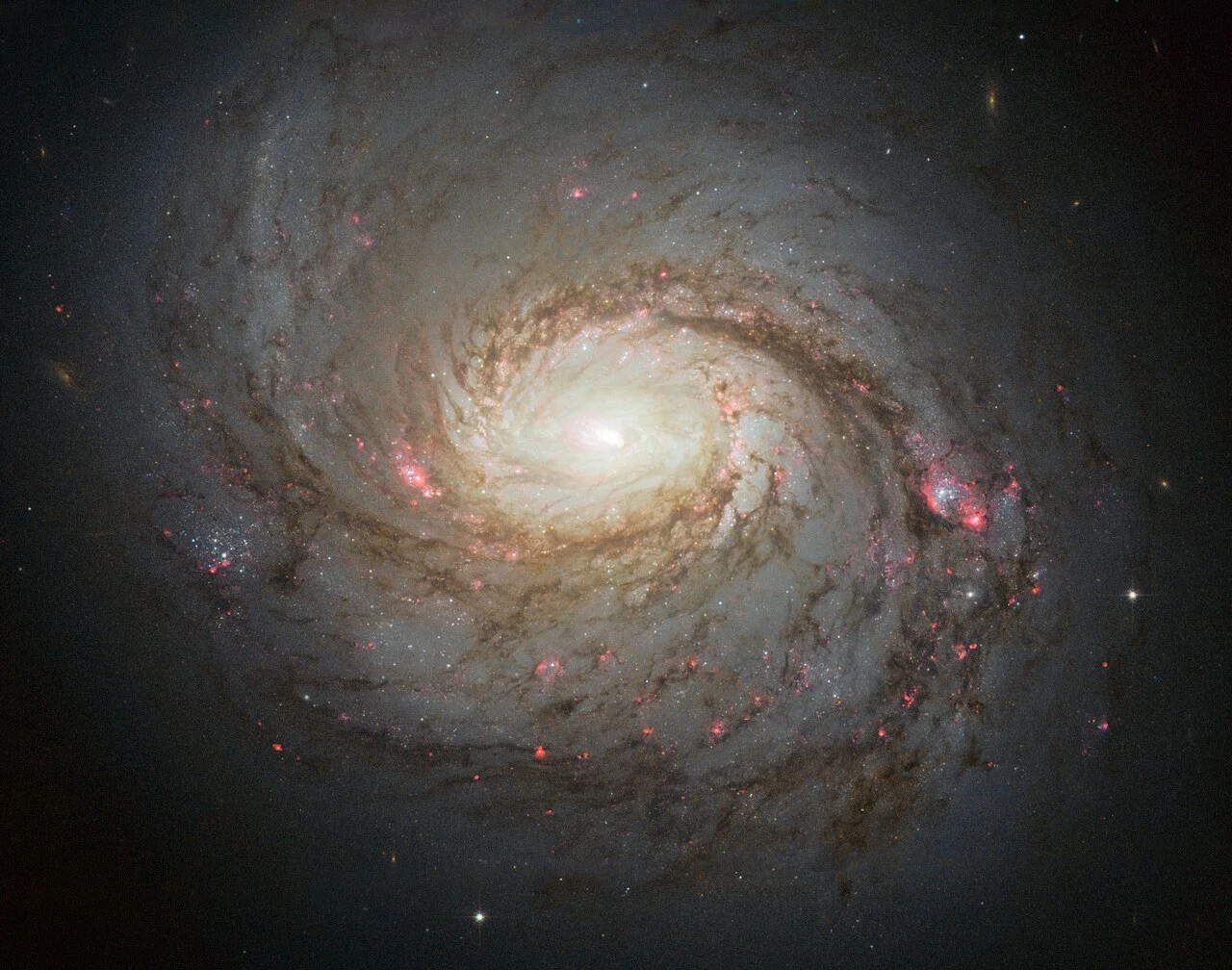
Peering Past the Galactic Bar: Uncovering a Hidden Spiral Arm in the Milky Way
Simran Joharle and collaborators analyzed red clump stars near the Milky Way’s center using motion and dust data from the VVV survey. They found that one group of stars lies farther away and moves differently, consistent with Galactic rotation. Slightly higher extinction toward this group suggests it belongs to a spiral arm beyond the Galactic bar, providing new insight into the Galaxy’s hidden structure.

Shielding the Moon: How NASA Models Micrometeoroid Threats to Future Artemis Bases
Daniel A. Yahalomi and colleagues used NASA’s Meteoroid Engineering Model to predict how often micrometeoroids strike a lunar base. They found that an unshielded base would face up to 23,000 impacts yearly, but modern Whipple shields block 99.9997% of them. A shielded base might experience a penetrating impact only once every few decades, with the lunar south pole emerging as the safest site for long-term Artemis missions.
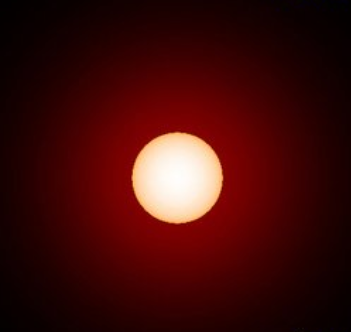
Rare Earth Elements in the Stars: Detecting Dy, Er, Lu, and Th in Cepheids
Trentin et al. (2025) analyzed 60 Classical Cepheids in the C-MetaLL survey, detecting rare elements, Dysprosium, Erbium, Lutetium, and Thorium, for the first time in such stars. Using high-resolution spectroscopy, they confirmed a negative metallicity gradient across the Milky Way and showed that Cepheids trace its spiral arms. These results reveal Cepheids as powerful probes of Galactic chemical evolution and heavy-element enrichment.
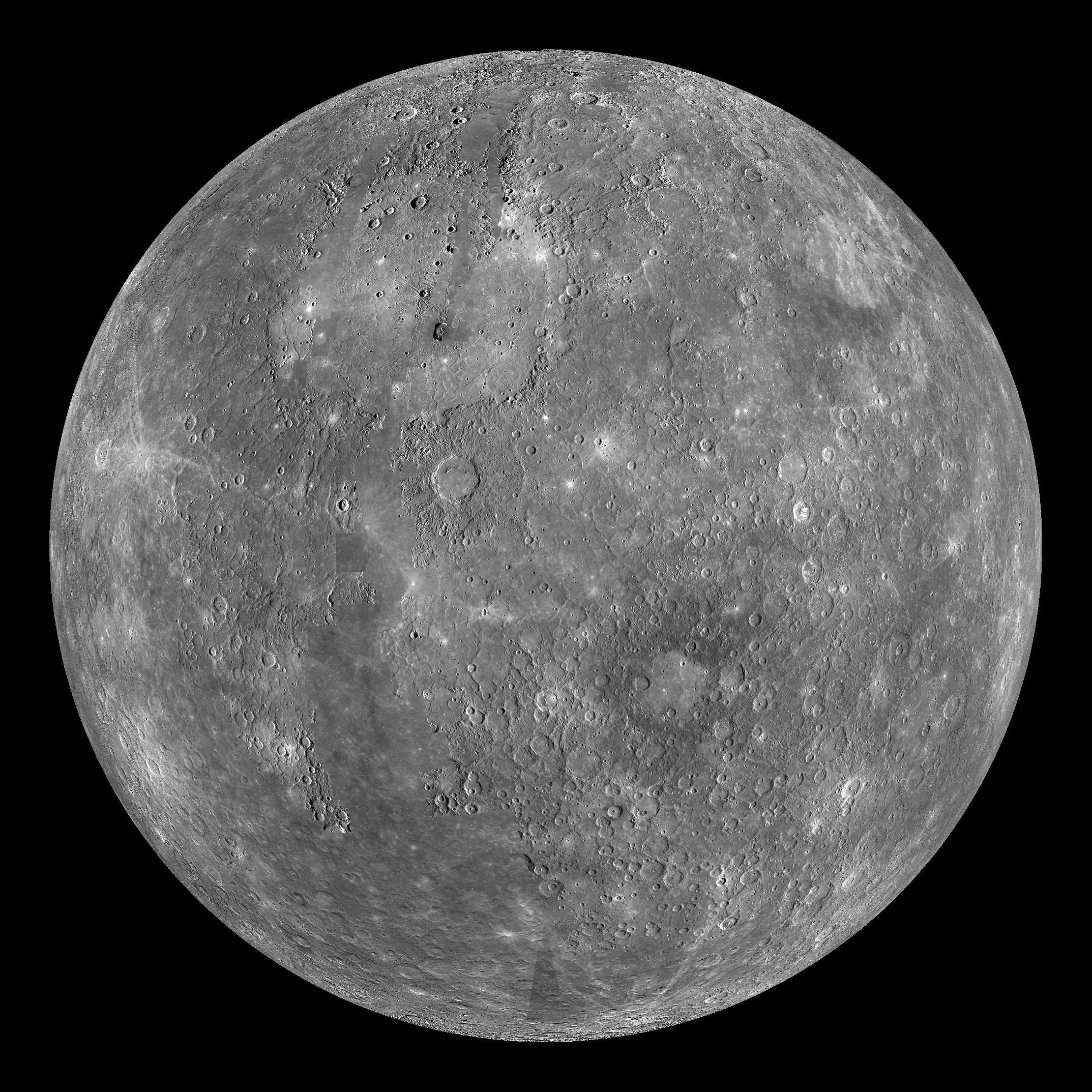
Mercury’s Iron Heart: How Simulations Reveal the Origins of the Solar System’s Most Metal-Rich Planet
Haniyeh Tajer and colleagues used N-body simulations to explore why Mercury’s iron core is so large. They found that giant impacts alone cannot explain its composition. Instead, an iron-rich inner disk in the early solar system best reproduces Mercury-like planets, while outer regions yield Earth-like worlds. This suggests chemical gradients, not catastrophic collisions, shaped both Mercury and similar dense exoplanets.

A Patchy Galaxy: Unraveling the Flocculent Structure of the Milky Way’s Inner Disk
Balser and Burton use modern hydrogen (H I) data from the HI4PI survey to reexamine the Milky Way’s inner structure. They find no evidence for the clear spiral arms expected in a Grand-design galaxy. Instead, the inner disk shows a disordered, patchy distribution of gas, suggesting that the Milky Way is a flocculent spiral with irregular, loosely connected features rather than majestic, continuous arms.

Caught in the Act: Pristine Gas Feeding a Galaxy in the Cosmic Void
Egorova et al. study the void galaxy VGS 12, finding strong evidence that it is actively accreting pristine, metal-poor gas from the cosmic web. Using radio and optical observations, they detect a misaligned, clumpy gas disk and unusually low oxygen but high nitrogen abundance, signatures of recent inflow. These results show that galaxies in cosmic voids can still grow through cold gas accretion even in the modern universe.

Mapping the Stars with CSST: New Photometric Methods for Measuring Metallicity and Gravity
Lu et al. develop two methods to estimate stellar metallicity and surface gravity using CSST-like photometry. Testing both synthetic and real data, they achieve precisions of about 0.1 dex for metallicity and 0.4 dex for surface gravity. Their “giant–dwarf loci” method performs best, accurately classifying stars and improving metallicity precision. These techniques will enable large-scale stellar characterization with future CSST surveys.

Unraveling the Milky Way’s Past: Tagging Stellar Substructures with Chemistry and Motion
Kristopher Youakim and Karin Lind used a new chemo kinematic tagging method combining stellar motions and chemical compositions to trace the Milky Way’s merger history. Using data from over 5000 stars, they identified known structures like Gaia Sausage Enceladus and Sequoia, linked many globular clusters to past mergers, and revealed new connections such as between the Orphan Chenab stream and Grus II dwarf galaxy.