
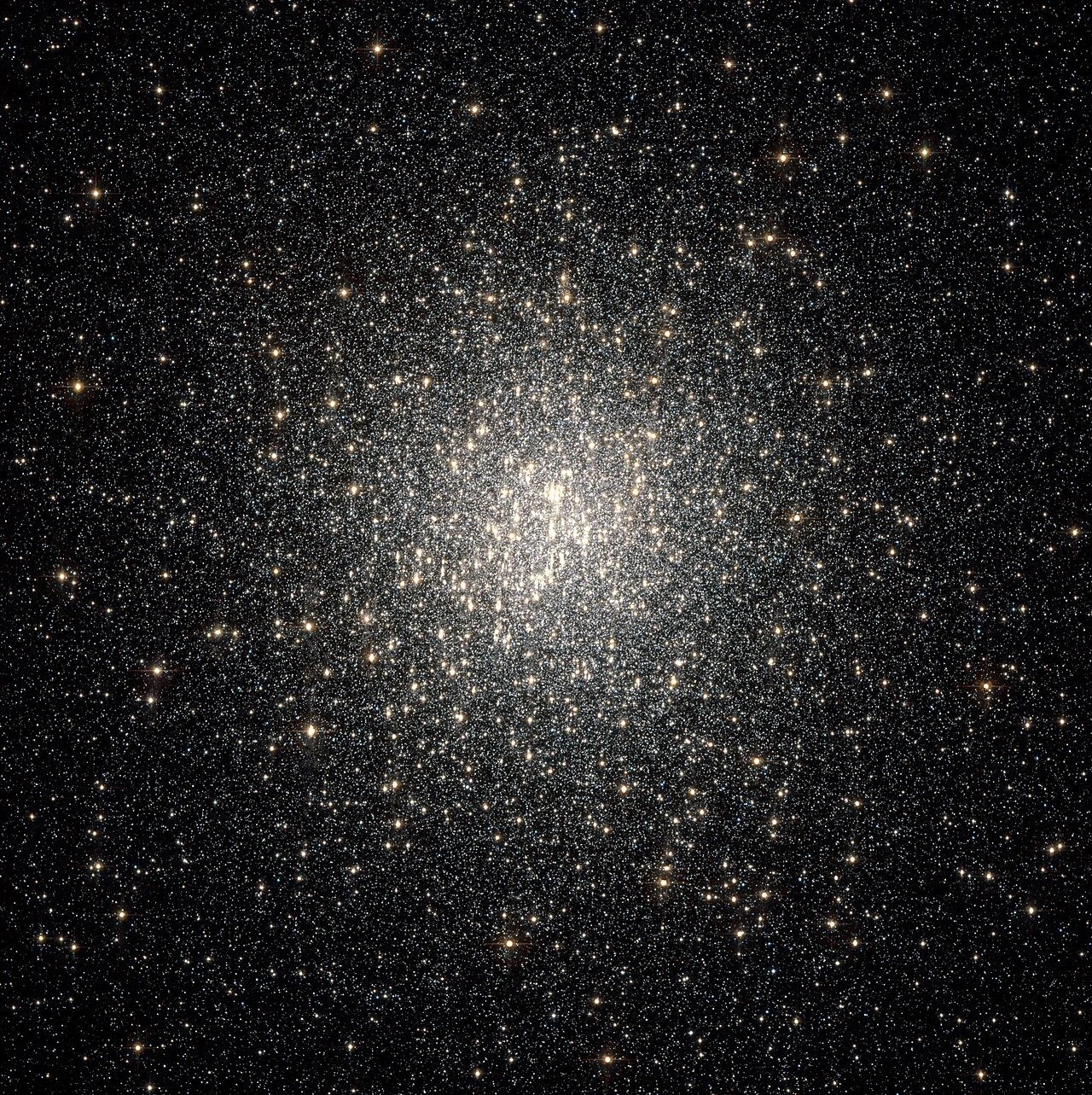
Neon, Argon, and the Puzzle of Multiple Stellar Populations in Globular Clusters
This paper explores why globular clusters like NGC 2808 contain stars with very different chemical compositions. The authors show that uncertainties in the initial abundances of noble gases, especially neon, and possibly argon, can significantly affect models of massive AGB stars. Enhancing neon and slightly lowering metallicity helps reproduce most observed abundance patterns, though the most extreme stars remain challenging to explain.
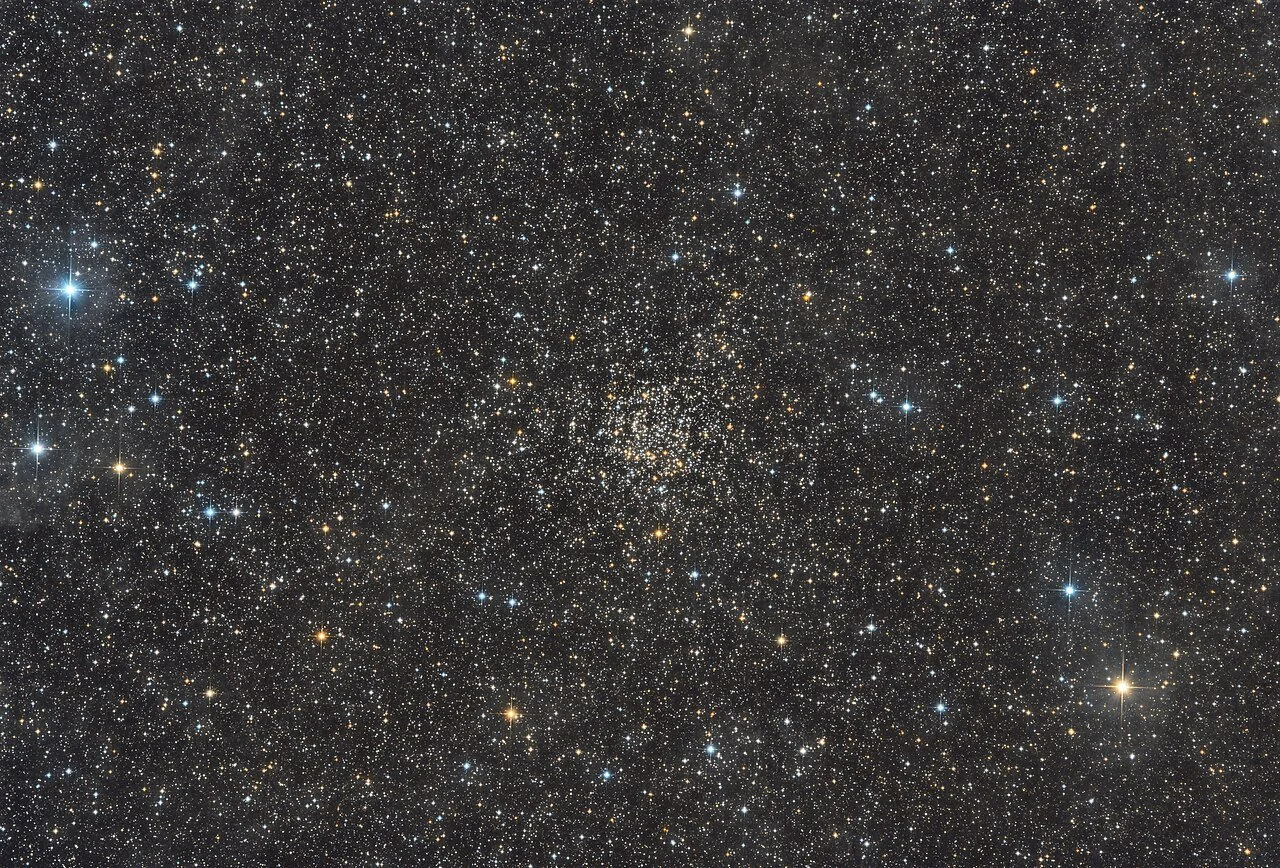
Binary Star Clues Reveal a Sharper Age for Star Cluster NGC 7789
Yakut and collaborators use six well-measured binary systems in NGC 7789 to derive a precise, physically grounded cluster age. By combining radial velocities, TESS light curves, and multiwavelength SEDs, they determine an age of 1.26 ± 0.09 Gyr, an extinction of Aᵥ = 0.90, and confirm cluster membership through Gaia astrometry. Their binary-based method overcomes common photometric uncertainties and provides a consistent framework for studying stellar evolution.
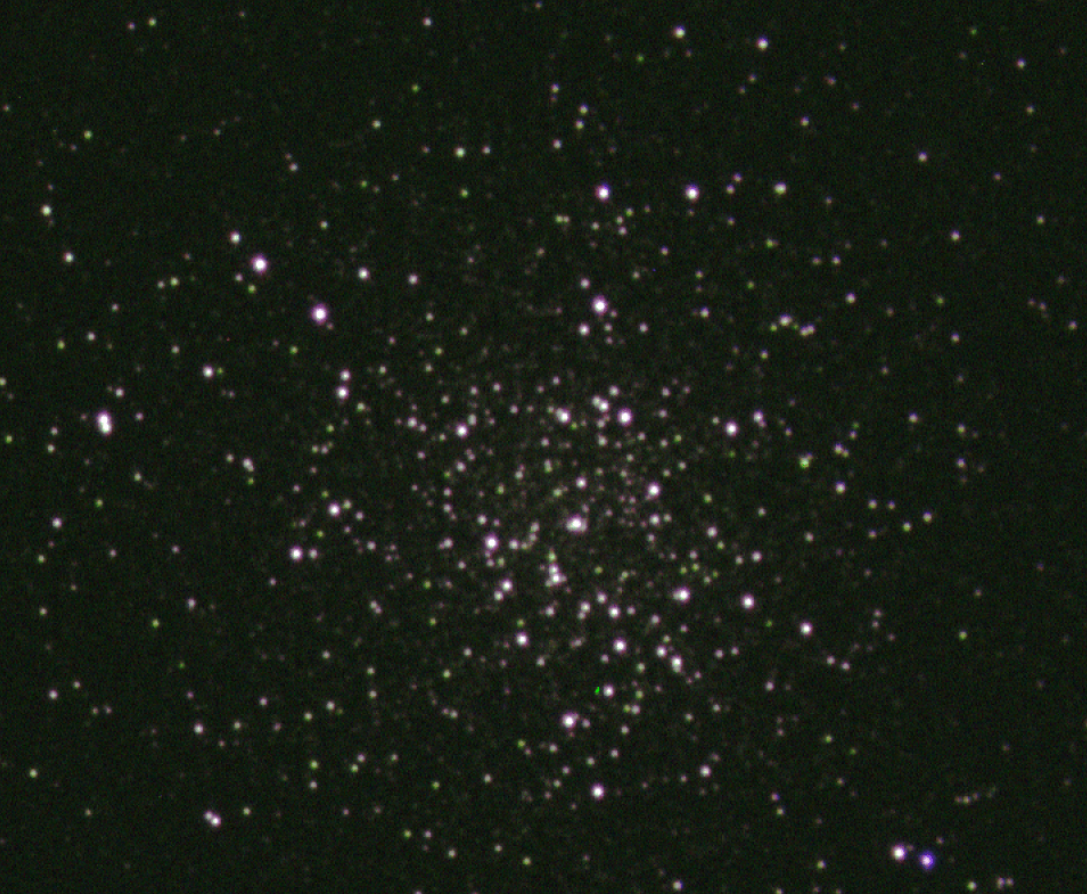
Hidden Clusters in the Dust: Using RR Lyrae Stars to Uncover the Milky Way’s Missing Building Blocks
The paper presents a search for hidden globular clusters in the Milky Way’s dusty plane and bulge using RR Lyrae stars as tracers of old stellar populations. By combining Gaia and near-infrared data with a carefully calibrated clustering algorithm, the authors recover known clusters and identify several compact RR Lyrae groups that may represent previously undiscovered or disrupted clusters.
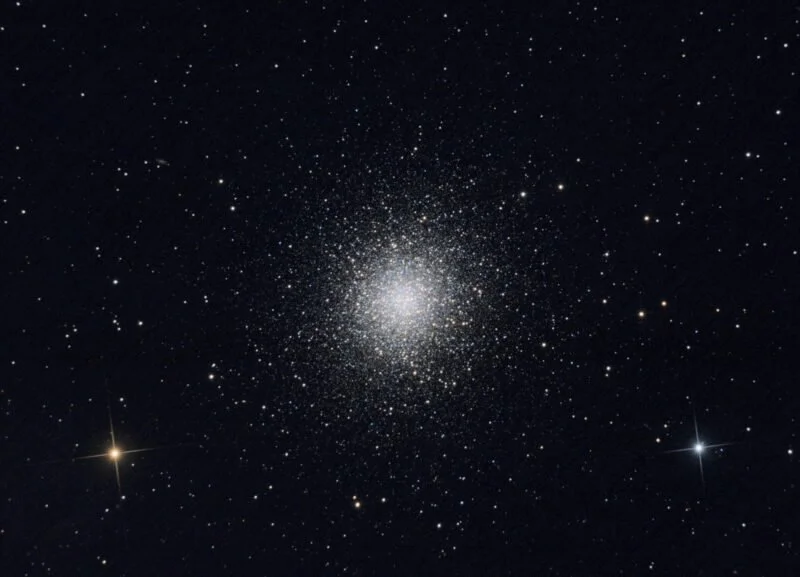
Globular Clusters as Cosmic Black Hole Factories
This study shows that globular clusters in and around the Milky Way are efficient factories for dynamically formed binary black holes. Using a galaxy formation model coupled to cluster simulations, the authors find that dense, massive clusters can produce very heavy black holes through repeated mergers, especially in the early Universe. These results help explain gravitational-wave detections and highlight the importance of future observatories.

Mapping the Many Lives of Omega Centauri: Untangling 14 Stellar Families in the Milky Way’s Most Complex Cluster
Callie Clontz and collaborators used data from the Hubble Space Telescope and MUSE to identify 14 distinct stellar subpopulations in Omega Centauri. They found that chemically enriched stars (P2) are about 1 billion years younger than primordial ones (P1), with intermediate groups in between. The results suggest multiple star-formation episodes and support the idea that Omega Centauri is the remnant core of a captured dwarf galaxy.

Unraveling Nephele: The Hidden Galaxy Behind Omega Centauri
Pagnini et al. (2025) reveal that Omega Centauri was once the core of a vanished dwarf galaxy named Nephele. Using stellar chemistry and motion data from APOGEE, they identify hundreds of stars once belonging to this system. Their findings suggest Nephele’s remnants form extended stellar streams, showing how the Milky Way grew by merging with smaller galaxies.

Liller 1: A Galactic Mystery, Uncovering the Origins of a Massive Star Cluster in the Milky Way’s Heart
Anna Liptrott and colleagues used APOGEE data to study whether Liller 1 helped form the Milky Way’s bulge. By comparing its chemical makeup with stars from the bulge and disk, they found that Liller 1’s α-element abundances differ significantly, showing it’s chemically distinct. The results rule out it being a major bulge “building block,” suggesting instead that Liller 1 is a minor or possibly extragalactic remnant.

Breaking Up Star Clusters: The Source of Blue Light in NGC1275
NGC1275, the central galaxy of the Perseus Cluster, shows unusual bluish light in its inner regions. Levitskiy and colleagues argue this glow comes from the tidal disruption of super star clusters formed about 500 million years ago, triggered by activity from the galaxy’s black hole. The surviving clusters, disrupted stellar streams, and central spiral disk all fit into this unified scenario.
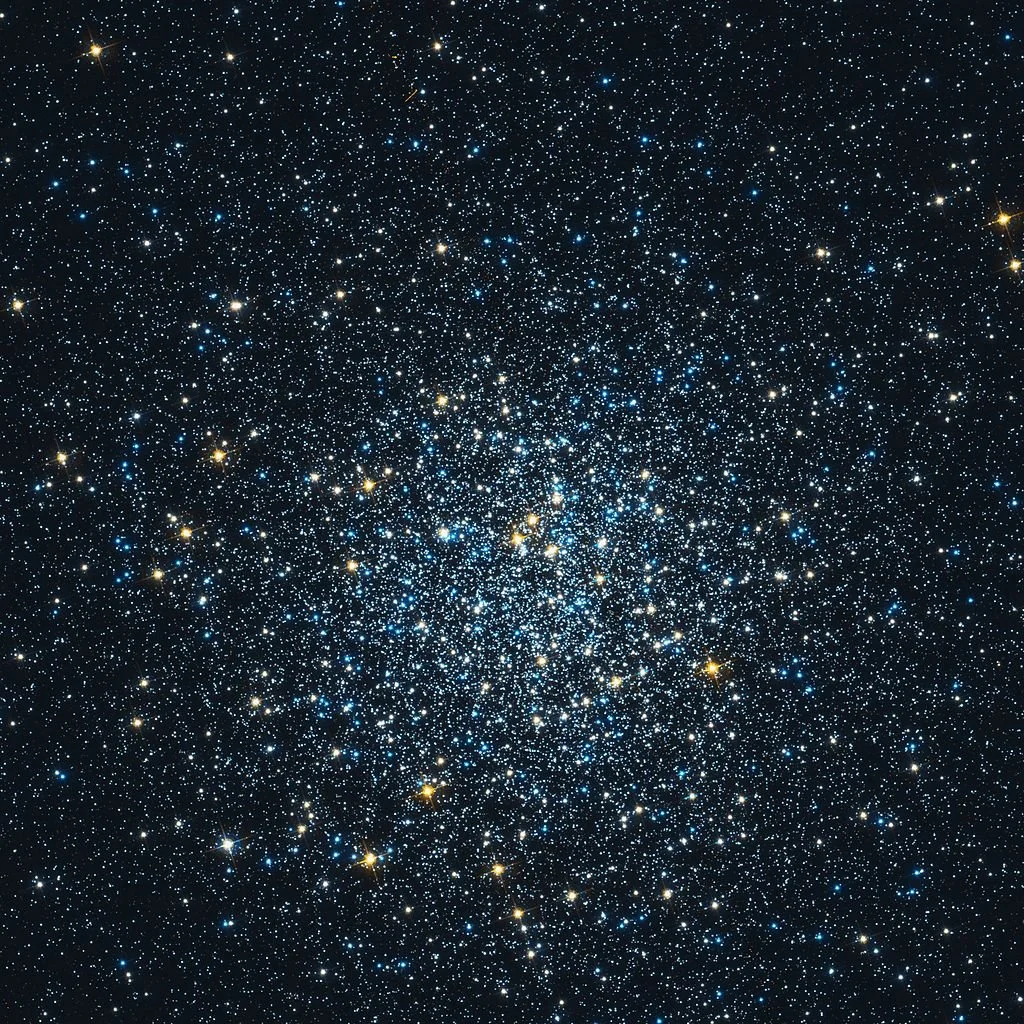
A Tenuous Signal: Searching for Heavy Element Dispersion in the Stars of M5
Nalamwar and collaborators studied 28 stars in the globular cluster M5 using Keck spectra to test for r-process variations. They found a small spread in neodymium among first-generation stars but no clear dispersion in europium or second-generation stars. This suggests early, uneven enrichment of heavy elements in M5, possibly from a rare stellar explosion or merging gas clouds, though the evidence remains tentative.
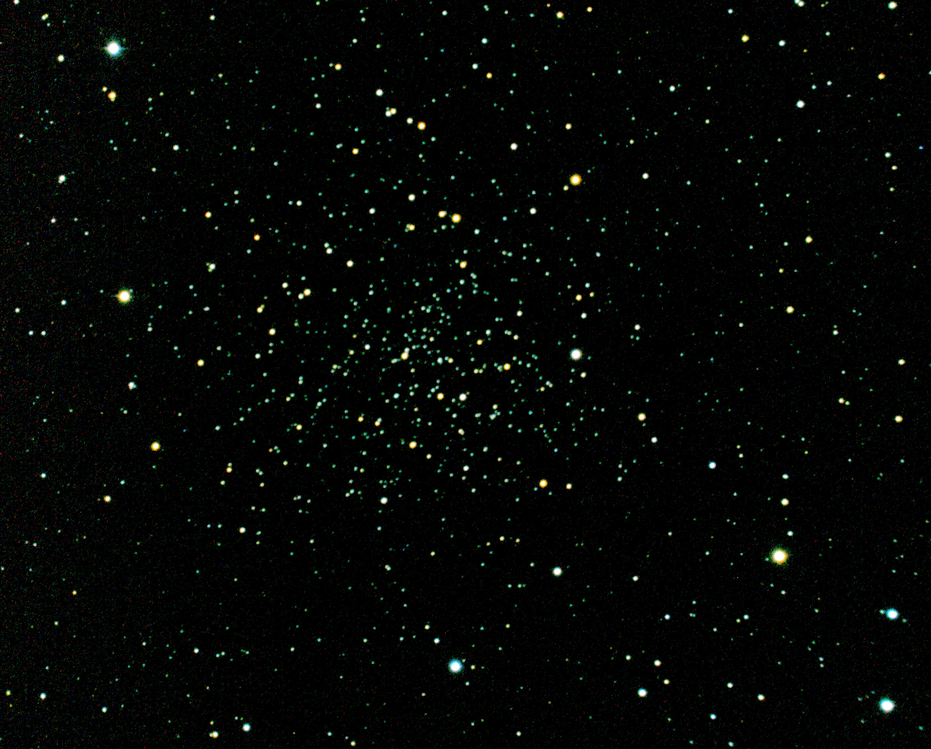
Measuring Time in the Stars: A New Way to Age the Ancient Cluster NGC 188
Yakut et al. introduce a new method for dating star clusters by jointly fitting spectral energy distributions and radial velocity data from six binary systems in NGC 188. Using Gaia astrometry, TESS photometry, and stellar evolution models, they determine a precise age of 6.41 ± 0.33 Gyr and a distance of ~1,850 pc. The method works even without eclipsing binaries and offers a robust framework for refining cluster ages.
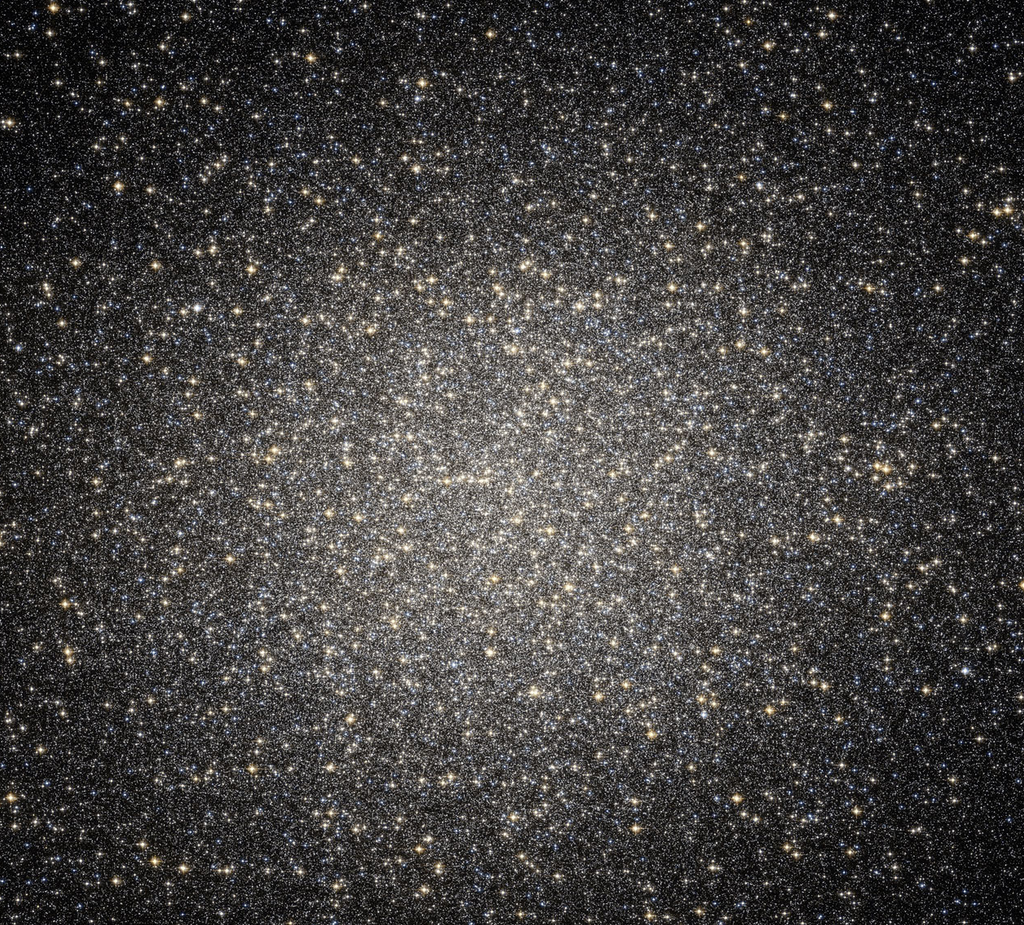
A New Light on an Ancient Giant: JWST Unveils the Hidden Stars of Omega Centauri
Using JWST and HST data, Scalco et al. studied the faint stars in Omega Centauri, revealing three main stellar populations with distinct chemical compositions. They found differences in brightness and mass distributions tied to helium, oxygen, and carbon. The study confirms a complex formation history and shows that simple models can’t fully explain the cluster’s stellar makeup.
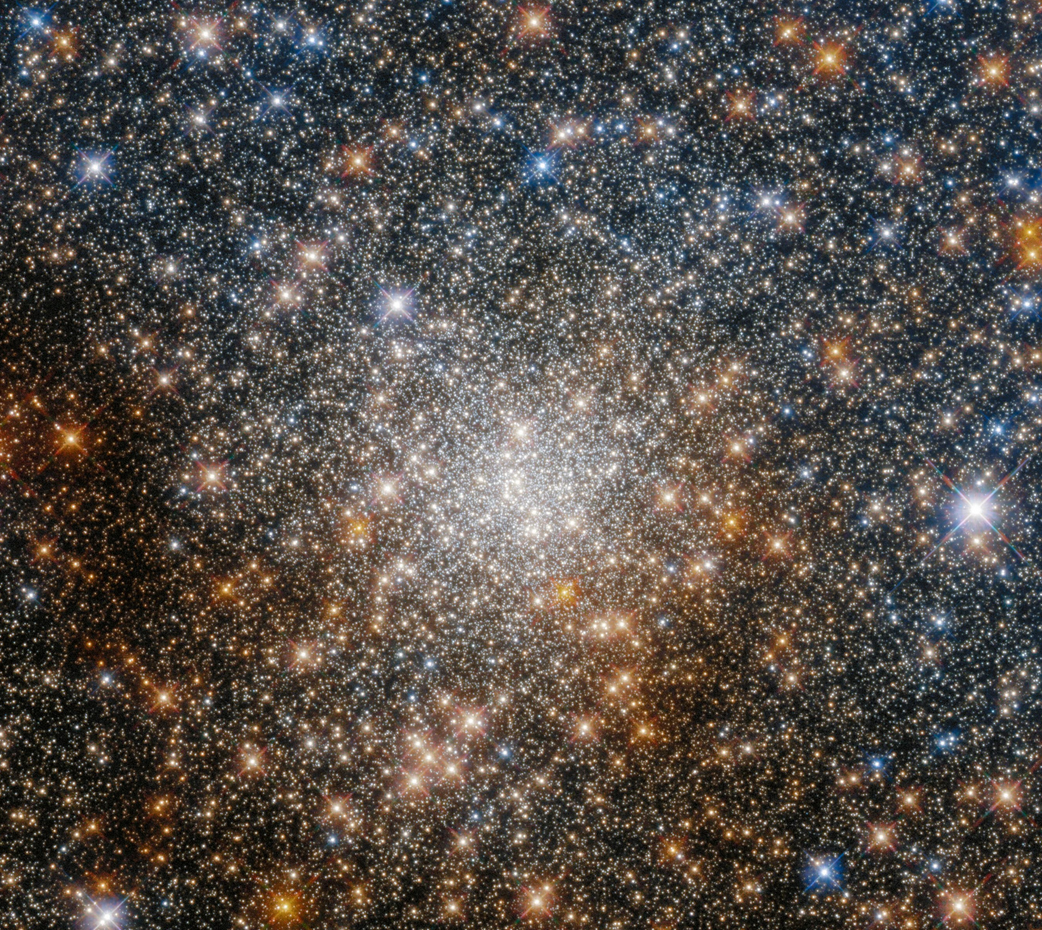
Decoding the Origins of Globular Clusters with Magnesium and Aluminum Clues
Lin et al. use magnesium and aluminum abundances in ancient stars to classify globular clusters as either formed inside the Milky Way or accreted from other galaxies. By focusing on primordial stars within clusters, they reveal a clear chemical distinction that remains robust across datasets. This method offers a reliable alternative to traditional orbit-based classifications.
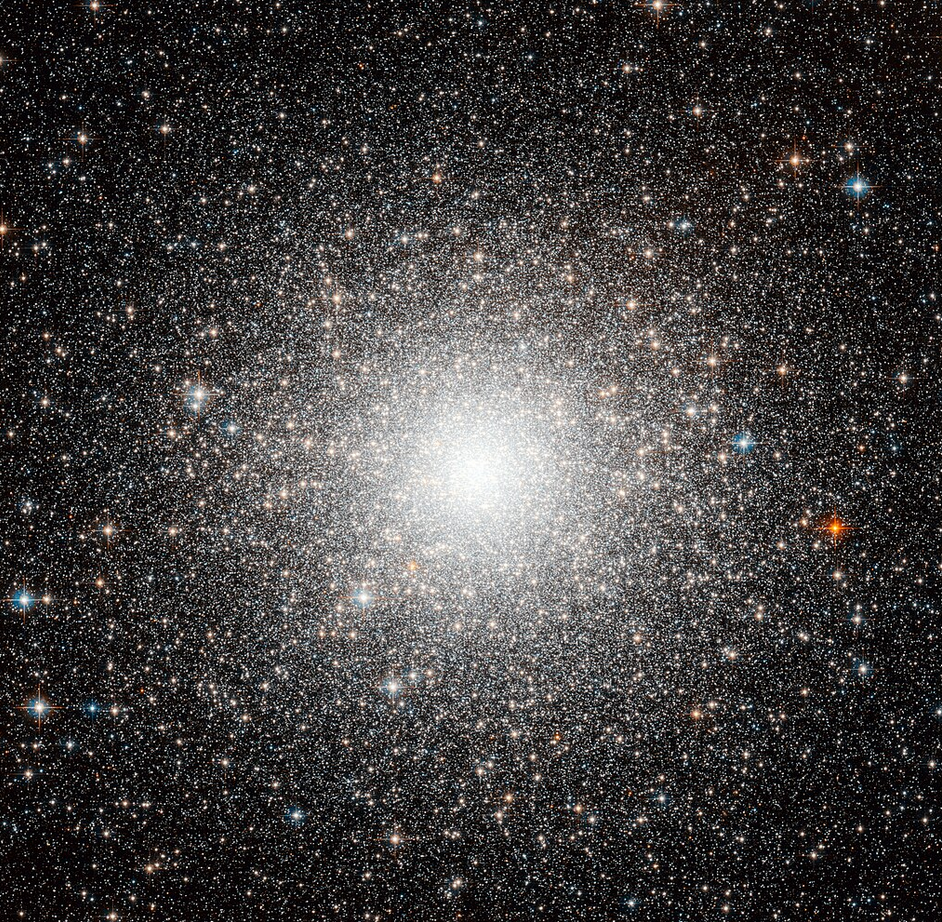
Caught in the Act: Dissecting the Sagittarius Dwarf Galaxy’s Heart with Gaia
This study uses Gaia DR3 and APOGEE data to examine the Sagittarius dwarf galaxy and its nearby cluster, Messier 54. The authors identify hundreds of thousands of member stars, measure precise distances using red clump stars, and analyze stellar motions and compositions. Their findings suggest the two systems currently overlap but likely formed separately.
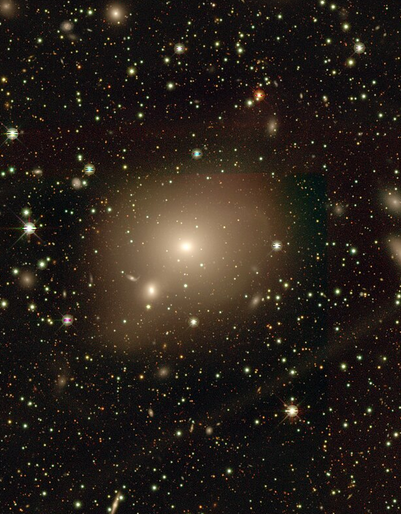
A Bridge Between Giants: Tracing the Past of NGC 4709 Through Its Star Clusters
This study investigates NGC 4709's globular cluster system to trace its interaction history with NGC 4696. The clusters show a bimodal color pattern and spatial alignment pointing to a past encounter. A bridge of clusters between the galaxies and differing distances supports a high-speed flyby scenario, with future work planned using simulations to model their trajectories.
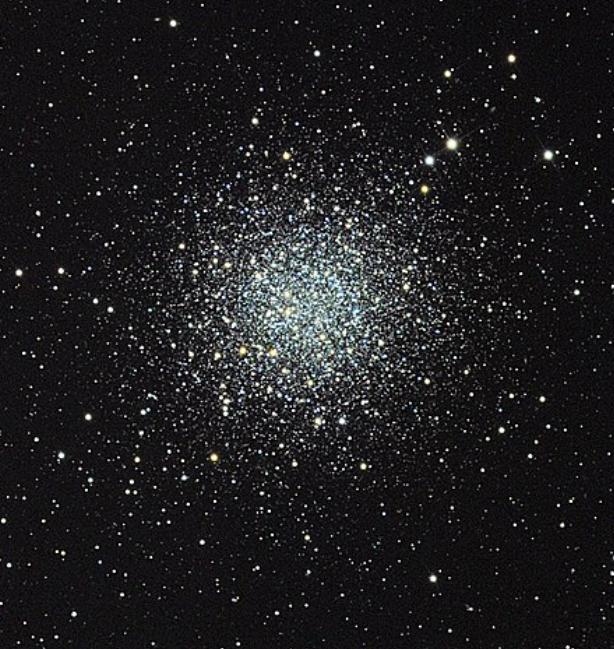
Unveiling the Faint Edges of Star Clusters in the Milky Way
Chiti et al. used DELVE survey data to search for faint, extra-tidal features around 19 Milky Way globular clusters. They discovered a clear stellar envelope around NGC 5897 and tentative evidence around NGC 7492. Simulations suggest deeper surveys like LSST can improve detections, though additional techniques may still be needed.

Tracing the Milky Way’s Past: How Globular Clusters Reveal the History of the Gaia-Sausage-Enceladus Merger
Fernando Aguado-Agelet and colleagues studied 13 globular clusters linked to the Gaia-Sausage-Enceladus (GSE) merger to trace the Milky Way’s history. They found most clusters follow a clear age-metallicity pattern, with two distinct star-formation bursts about 2 billion years apart, likely triggered by GSE’s interaction with the Milky Way. Two clusters probably formed in the Milky Way, and two others may belong to different mergers.

The Secrets of a Shattered Cluster: Uncovering the Past of ESO 280-SC06
ESO 280-SC06 is a faint globular cluster with unexpectedly high levels of chemically enriched second-population stars. Analysis suggests it was once much more massive but lost most of its stars due to tidal disruption. The discovery of a rare nitrogen-enriched star hints at a less dense environment that allowed binary interactions.

Tracing Stellar Origins with Alpha Elements: What Globular Clusters and Dwarf Galaxies Tell Us About Star Formation
This study uses APOGEE data to compare α-element abundances in stars from globular clusters, halo substructures, and satellite galaxies. The authors focus on the “hex ratio” to trace massive star contributions. They find that Milky Way clusters and halo stars have higher hex ratios than satellite galaxies, suggesting different star formation histories and initial mass functions.

Peering Through the Dust: Exploring the Metal-Poor Open Cluster Trumpler 5 in Infrared
This study used infrared spectroscopy to analyze seven red giant stars in the dust-obscured open cluster Trumpler 5 (Tr5). The team developed a new method to estimate stellar gravity and measured abundances for over 20 elements. Their findings confirmed Tr5’s metal-poor nature, estimated its age at 2.5 billion years, and enhanced understanding of stellar evolution in dusty regions of the Milky Way.

Tracking Star Movements: What NGC 2808 Reveals About the Lives of Star Clusters
This study of NGC 2808 shows that its different stellar populations move separately, especially in the cluster's outer regions. Second-generation stars exhibit more radial motion, supporting theories about their central origin and outward diffusion. The cluster also shows partial energy equipartition, more developed near the center.