
Methane from the Beginning: A Primordial Origin for Methane on Eris and Makemake
Mousis et al. argue that the methane on Eris and Makemake likely formed in the early Solar System’s protosolar nebula, based on their high D/H ratios. Using disk chemistry models, they show that the methane’s isotopic signature matches a primordial origin, not internal production. This supports the idea that many outer Solar System bodies share common icy building blocks.

How Star Clusters Grow Old: Modeling the Formation and Evolution of the Milky Way’s Stellar Families
This study models how Milky Way star clusters form and evolve, focusing on how their masses change with age. Using data from the MWSC survey, the authors find that clusters lose most of their mass early on through a phase called violent relaxation. Their model matches observations well and suggests a constant cluster formation rate over billions of years.

Tracing the Origins of Globular Clusters Through Their Tidal Tails
Piatti analyzes simulated extra-tidal stars from Grondin et al. (2024) to test if they match real globular cluster tidal tails. While the tail widths align with in-situ formation, velocity dispersions suggest an external origin. The findings challenge assumptions about how stars escape clusters and imply that some clusters may have formed outside the Milky Way. This work highlights the need for refined simulations to better understand the galaxy’s history.

Massive Star Formation at the Edge of the Galaxy: The LZ-STAR Survey of Sh2-284
The LZ-STAR survey explores low-metallicity star formation in Sh2-284, focusing on the massive protostar S284p1. ALMA and JWST observations reveal a symmetric, parsec-scale bipolar outflow, suggesting an ordered formation process. S284p1, about 11 solar masses, has grown from a dense gas clump over 300,000 years. The findings show that massive stars can form in a structured way, even in environments with lower metal content, offering insights into early universe star formation.

Bright but Uncertain: Over-Luminous Type Ia Supernovae and Their Role in Cosmology
Over-luminous Type Ia supernovae are unusually bright stellar explosions that challenge their role as standard candles for measuring cosmic distances. This study analyzed eight such supernovae and found they yield a lower Hubble constant (H₀), aligning more closely with early-universe measurements. While this may help address the Hubble tension, it also raises concerns about the reliability of these supernovae in cosmology. Further research is needed to determine their true role in measuring the universe’s expansion.

Primordial Open Cluster Groups: The Role of Supernovae in Star Formation
Liu et al. (2025) identified four new open cluster (OC) groups using Gaia data and found evidence that supernova explosions triggered the formation of two groups (G1 and G2). Their simulations show OC groups gradually disperse over time. A clear age gradient and pulsar trajectories support the supernova-triggered star formation hypothesis. These findings reinforce the hierarchical star formation model, highlighting the role of stellar feedback in shaping star clusters in the Milky Way.

Exploring the Galactic Halo with RR Lyrae Stars
Cabrera Garcia et al. analyze over 135,000 RR Lyrae stars to study the Milky Way’s halo structure. They confirm the existence of inner and outer halo components and identify 97 dynamically tagged groups (DTGs) using motion-based clustering. Many DTGs align with known galactic substructures, such as Gaia-Sausage-Enceladus and the Helmi Stream, highlighting past galaxy mergers. Their findings reinforce the idea that the Milky Way’s halo formed through multiple accretion events.

How Do Galactic Bars Form? A Look at Tidal vs. Internal Growth
This study compares bars in galaxies that form internally versus those triggered by tidal interactions. Simulations show that tidal forces mainly affect when a bar forms, not how fast it grows, except in galaxies resistant to bar formation, where bars grow differently. Bars in naturally unstable galaxies follow the same growth pattern whether triggered externally or not, highlighting the dominance of a galaxy’s internal properties in shaping bar evolution.
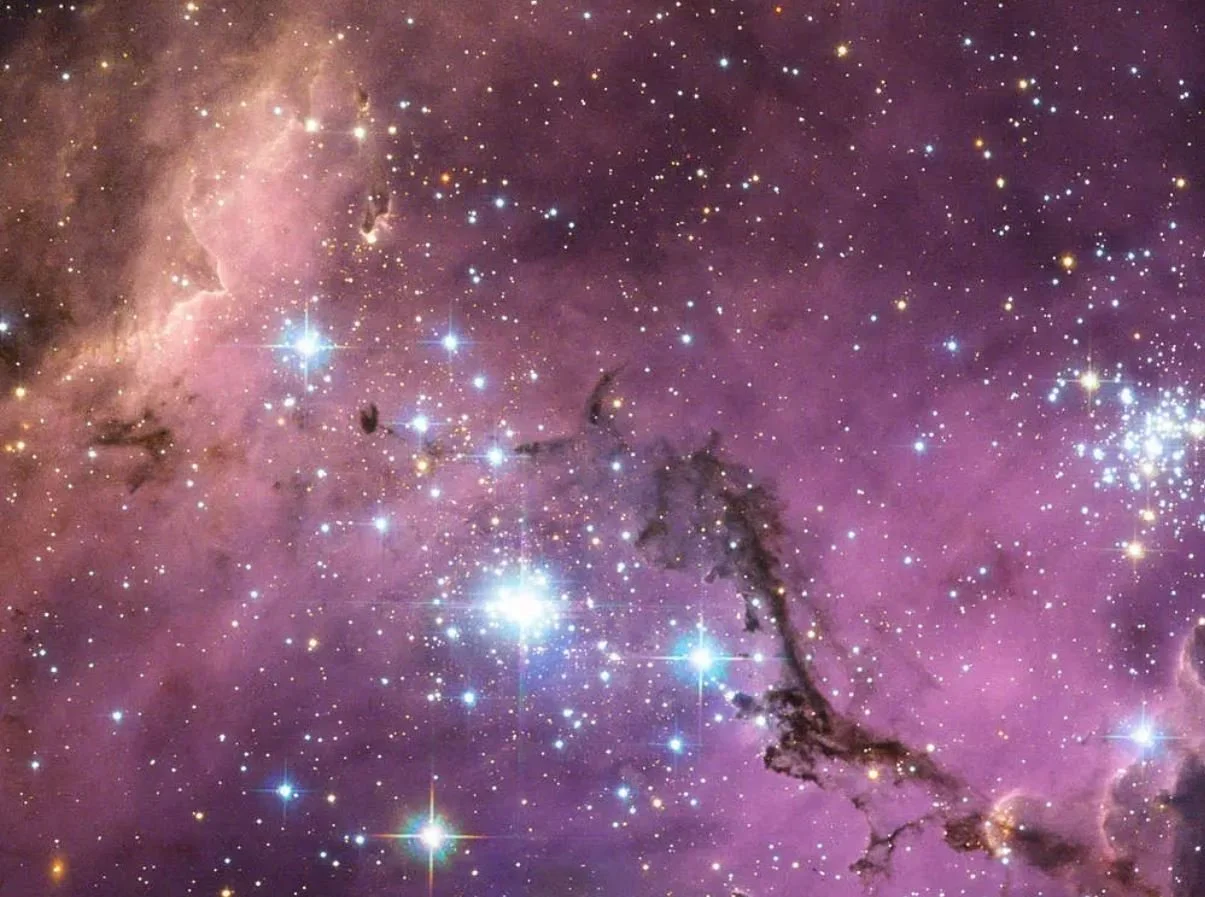
The Youngest Star Clusters in the Large Magellanic Cloud
This study explores the youngest star clusters in the Large Magellanic Cloud using multi-wavelength data and machine learning techniques. Researchers identified clusters, estimated their ages and masses, and found a strong relationship between cluster mass and the most massive star, supporting the "optimal sampling" model of star formation. Their findings provide new insights into how stars form and evolve in dwarf galaxies, helping to refine our understanding of stellar and galactic evolution.
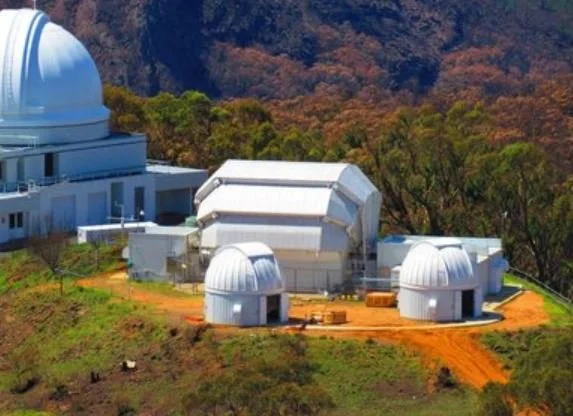
Mapping the Stars: A Catalog of Over 50 Million Stars from SMSS and Gaia
Yang Huang and Timothy C. Beers have compiled a catalog of stellar parameters for over 50 million stars using data from SMSS DR4 and Gaia DR3. This dataset provides accurate metallicity, temperature, and distance estimates, significantly expanding previous surveys. Their work is part of SPORTS, a project to catalog as many Milky Way stars as possible. The results will help astronomers study galactic evolution and the early universe.

Fluorescent Amino Acids on Europa: A Search for Life in the Ice
Europa's icy surface may contain fluorescent amino acids, potential biosignatures of life from its subsurface ocean. Scientists modeled how radiation and UV light degrade these molecules, finding that high-latitude regions offer the best preservation. A future spacecraft using laser-induced fluorescence could detect these compounds, especially in recently resurfaced ice or potential plumes. NASA’s Europa Clipper mission may help confirm whether Europa harbors the building blocks of life.

The Mass-Loss Mystery of Red Supergiants: Investigating Metallicity's Role
The study investigates whether the mass-loss rates of red supergiants (RSGs) depend on metallicity by analyzing thousands of RSGs across multiple galaxies. Results show no strong correlation between metallicity and mass loss, though a "kink" in the mass-loss relation shifts with metallicity. The findings suggest that other factors, like internal turbulence, may drive mass loss rather than metallicity. Future observations, especially with JWST, could clarify remaining uncertainties.

Unraveling the Mystery of the Faintest Galaxies: A Deep Dive into Sagittarius II and Aquarius II
Astronomers used the Gemini/GHOST spectrograph to study Sagittarius II (Sgr2) and Aquarius II (Aqu2), two faint Milky Way satellites. Their analysis suggests Aqu2 is a dark matter-dominated ultra-faint dwarf galaxy, while Sgr2 remains ambiguous, possibly a star cluster. Chemical signatures and star movements were key to these classifications. The study highlights the difficulty in distinguishing faint galaxies from clusters and the need for further observations and simulations.
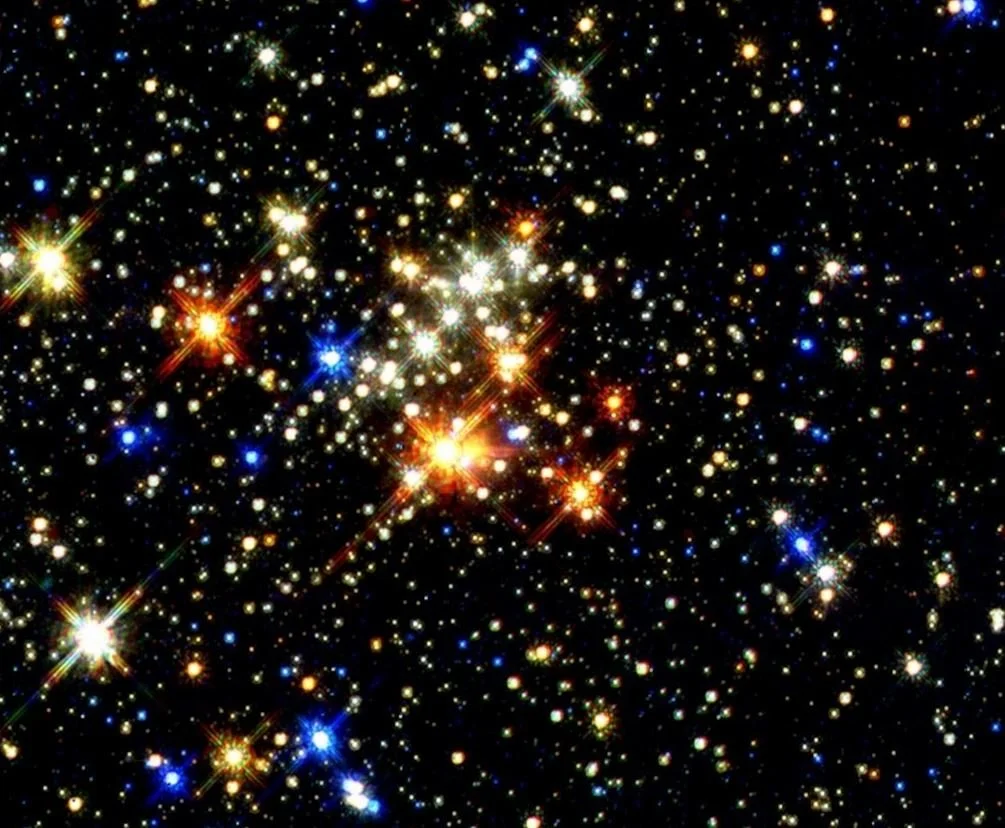
Unearthing Ancient Stars: The Discovery of Two Metal-Poor R-Process Enriched Stars
Astronomers discovered two ancient metal-poor stars enriched in r-process elements, shedding light on the origins of heavy elements. BPS CS 29529-0089, an r-II star, likely formed in the Milky Way’s proto-disk, while TYC 9219-2422-1, an r-I star, originated in the Gaia-Sausage-Enceladus merger. Their chemical signatures suggest enrichment by neutron star mergers and possibly a single Population III supernova, challenging existing theories on galactic evolution.
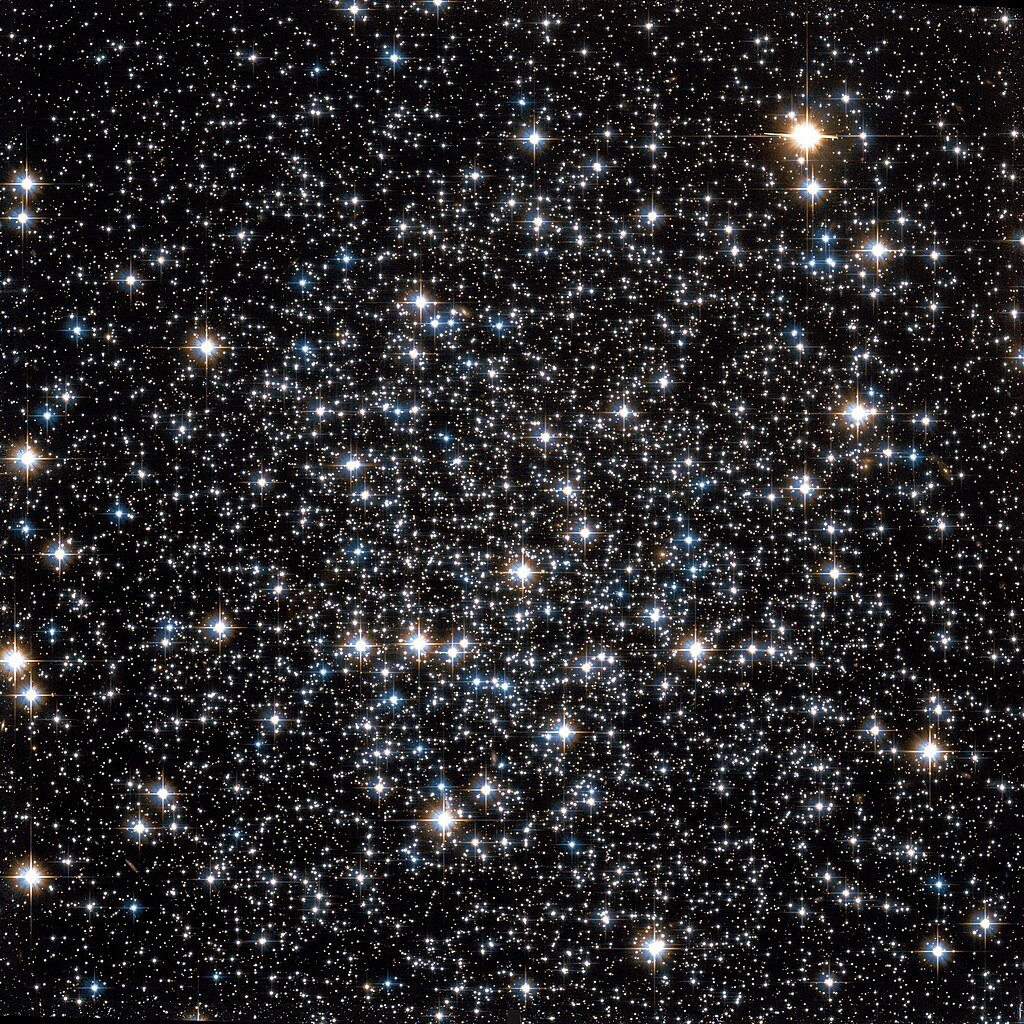
NGC 288: The First "Splashed" Globular Cluster?
NGC 288 appears to be the first known "Splashed" globular cluster—originally formed in the Milky Way but later thrown into a new orbit by the Gaia-Sausage-Enceladus (GSE) merger. Despite its accreted-like motion, its age and chemical composition match in situ clusters, suggesting it was born in the Milky Way. This study highlights how ancient galaxy mergers reshaped the Milky Way's structure, potentially affecting other globular clusters in similar ways.

New Horizons and the Hunt for a Flyby Target
The proposed Roman Space Telescope survey aims to discover and study hundreds of Kuiper Belt Objects (KBOs), providing insights into their formation, cratering history, and binary nature. It may also identify a flyby target for NASA’s New Horizons spacecraft before it leaves the Kuiper Belt. This project will explore previously uncharted regions, testing theories of planetary evolution while also contributing to exoplanet and galactic studies.

Unlocking the Secrets of the Stellar Halo: Dynamical Streams and the Galactic Bar
This study explores moving groups of stars in the Milky Way’s halo, revealing two streams influenced by the galaxy’s central bar. Using Gaia data and simulations, the authors show that these streams result from resonances with the bar’s rotation. By analyzing their motion, they estimate the Milky Way’s mass and bar pattern speed, refining our understanding of the galaxy’s structure and dynamics. Their findings highlight the role of resonances in shaping stellar motions.

Moon Mysteries: How Did Saturn’s Diverse Moon Family Come to Be?
Saturn’s fascinating family of moons showcases incredible diversity, from tiny "ring-moons" nestled within icy rings to Titan, its massive moon with a dense atmosphere. Blanc and colleagues explore theories of their formation, favoring a scenario where Saturn’s rings once extended far beyond their current limits, gradually spreading outwards and forming moons at their edges. Titan's unique characteristics, however, suggest a more complex formation history.
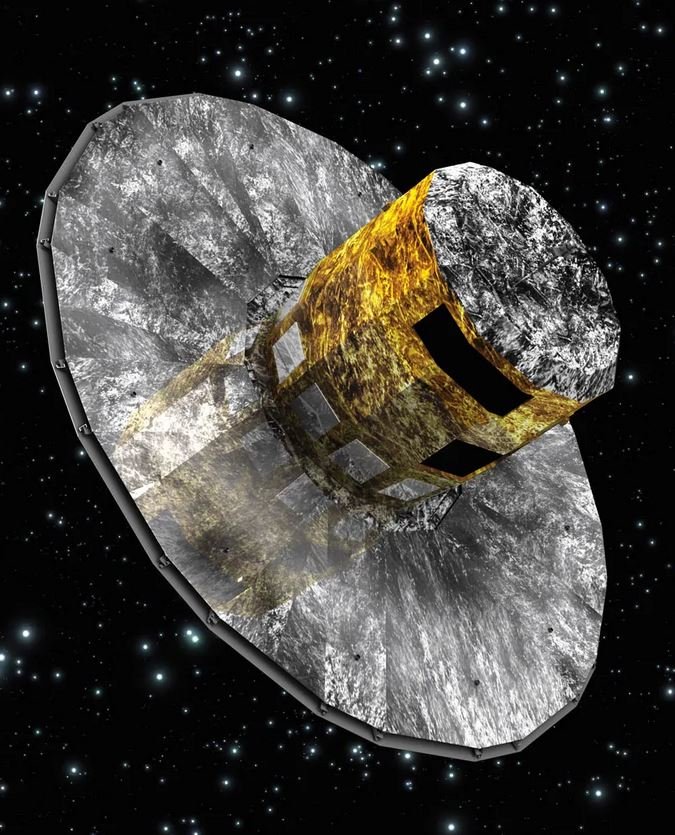
Gaia: A Decade of Mapping the Stars
The Gaia mission has mapped the Milky Way for over a decade, measuring the positions, motions, and properties of billions of stars. Upcoming data releases (DR4 and DR5) will improve precision, expand classifications, and provide time-series data for studying exoplanets and binary stars. The GaiaUnlimited project addresses observational biases, ensuring accurate interpretations. Looking ahead, GaiaNIR could extend these efforts in infrared, revealing hidden regions of the galaxy. Though Gaia's observations have ended, its impact will shape astronomy for years to come.

Peculiar Rainbows in Saturn’s E Ring: Unraveling Luminous Stripes Near Enceladus
Scientists analyzing Cassini data discovered mysterious luminous stripes in Saturn’s E ring near Enceladus, resembling a natural diffraction pattern. These stripes, seen in multiple flybys, suggest an organized ice structure acting as a reflection grating. The bright band, made of crystalline ice with traces of CO₂, likely consists of fresh plume material. This finding hints at unexpected patterns in Saturn’s rings, potentially influenced by Enceladus’ plumes and magnetic interactions.